
Partial demolition is defined as the selective removal of specific parts of a structure while the rest of the building remains intact. Full demolition, by contrast, means clearing the entire structure down to bare ground. The choice between these two approaches shapes your budget, timeline, and design options more than almost any other decision you will make before a rebuild or renovation. Understanding the difference between partial and full demolition upfront saves you from costly surprises later.
What does partial demolition involve?
Partial demolition, also known in the industry as selective demolition or strip out, targets specific sections of a building for removal. A contractor might take out a load-bearing wall, strip an entire floor, or remove a rear extension while leaving the rest of the home standing. The goal is to preserve what is structurally sound and reusable.
This method suits homeowners who want to renovate rather than rebuild from scratch. Common scenarios include removing a dated kitchen or bathroom, opening up a floor plan, or adding a new extension to an existing footprint. Developers use it when a building’s bones are solid but the layout no longer meets modern standards.
The process is labour-intensive. Structural planning and sequencing are required to maintain the building’s stability throughout the work, and original blueprints are often inaccurate. That means on-site engineering adjustments are common, not exceptional. Every load-bearing element must be verified in the field before any removal begins.
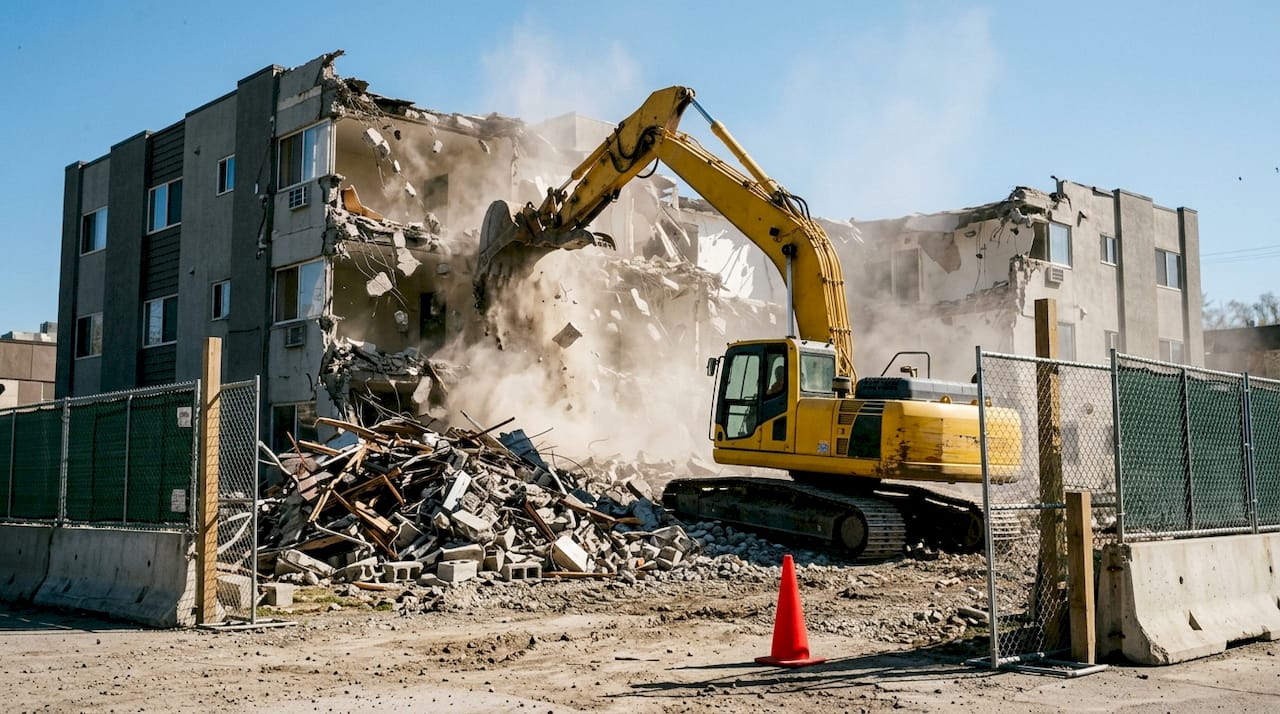
Selective demolition also carries real environmental advantages. Material salvage rates reach up to 70% with partial demolition, compared to less than 30% for full teardowns. That means timber, bricks, roofing materials, and fixtures can be recycled or resold rather than sent to landfill.
Key situations where partial demolition is the right call:
- You are retaining the existing foundation or slab for a new build above
- Council zoning restricts the footprint of any new structure on the site
- The building has heritage elements worth preserving
- Your renovation budget does not require a full rebuild
- You want to minimise waste and meet sustainability targets
Pro Tip: Get a structural engineer to inspect the building before any selective demolition work begins. Original plans are frequently wrong, and discovering a hidden load-bearing wall mid-project will cost you far more than the inspection fee.
When is full demolition the better choice?
Full demolition removes everything. The structure, the foundations, the slab, and all associated materials are cleared from the site. What remains is a clean, level block ready for new construction.
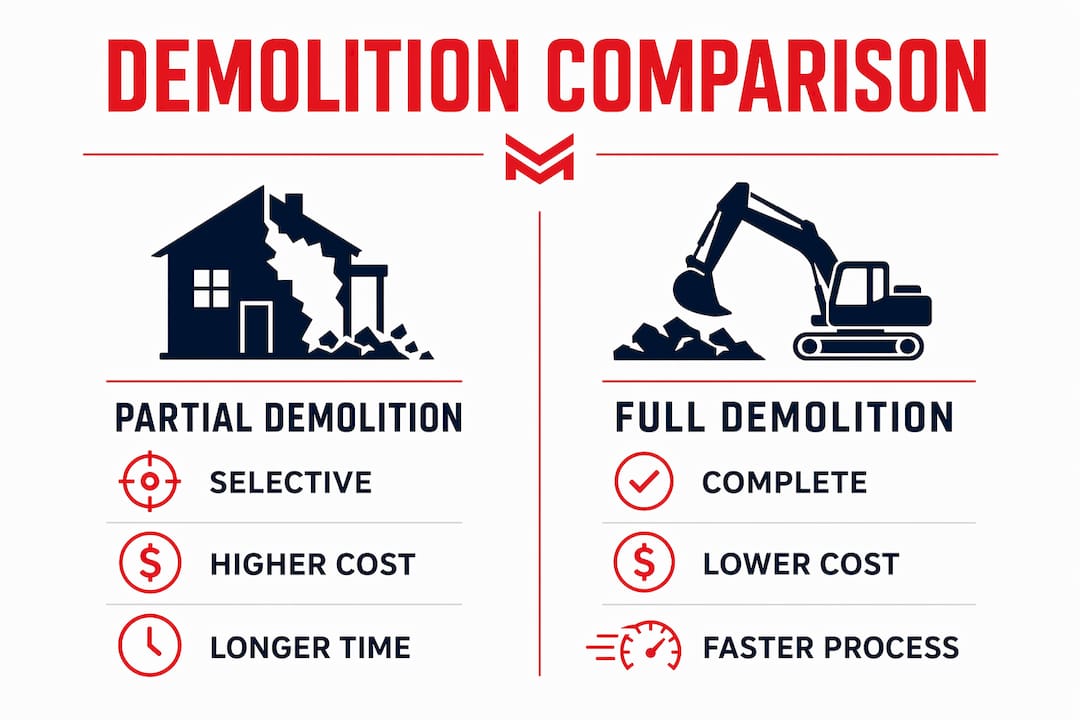
This approach suits projects where the existing building is structurally unsound, riddled with hazardous materials like asbestos, or simply incompatible with the new design. If your renovation costs are approaching or exceeding 50% of the cost of a comparable new build, a full teardown and rebuild is almost always the more economical path.
Full demolition is also faster. Residential full demolition typically takes 3–7 days, compared to 14–28 days for a comparable selective demolition project. That speed reduces holding costs, shortens the period your site is unproductive, and gives your builder a clean slate to work from.
Heavy machinery does most of the work. Excavators, bulldozers, and skid steers clear the site quickly. The lower labour intensity is why full demolition costs $4–$10 per square foot on average, compared to $8–$20 per square foot for selective work.
Situations where full demolition makes the most sense:
- The structure has significant structural damage or rot
- Asbestos or other hazardous materials are widespread throughout the building
- The new design requires a completely different footprint or orientation
- The existing foundations are inadequate for the planned new build
- The renovation cost estimate is close to or above the cost of rebuilding
Pro Tip: If your building was constructed before 1990, arrange an asbestos inspection before you commit to either method. Widespread asbestos contamination often tips the decision firmly toward full demolition.
How do costs, timelines, and environmental impact compare?
The financial difference between the two methods is significant and often misunderstood. Partial demolition costs more per square metre because it requires skilled tradespeople working carefully around retained structures. Full demolition costs less per square metre but involves higher total site clearance costs and more extensive waste disposal.
Full demolition reduces the risk of budget blowouts caused by hidden building conditions. Selective demolition regularly uncovers problems that were invisible before work started: rotted framing, unlicensed wiring, or undocumented structural modifications. Each discovery adds cost and time. Full demolition removes that uncertainty entirely.
| Factor | Partial demolition | Full demolition |
|---|---|---|
| Cost per square foot | $8–$20 | $4–$10 |
| Typical residential timeline | 14–28 days | 3–7 days |
| Material salvage rate | Up to 70% | Less than 30% |
| Budget certainty | Lower | Higher |
| Site readiness after work | Partial | Complete |
The environmental picture favours selective demolition when salvage is managed well. Recovering up to 70% of materials reduces landfill pressure and lowers the carbon footprint of your project. Full demolition generates more waste, though responsible contractors sort and recycle concrete, steel, and timber on site. For a detailed breakdown of demolition costs in Australia, local pricing factors matter as much as the method itself.
What should homeowners consider when choosing?
The condition of the existing structure is the first thing to assess. A building with sound framing, a solid slab, and no widespread hazardous materials is a good candidate for selective demolition. A building with compromised foundations, extensive water damage, or pervasive asbestos is not.
Your design goals matter just as much. If your architect’s plans require a completely different floor plan, a different orientation, or a larger footprint than zoning allows for a new build, selective demolition may not give you enough flexibility. Rebuilding from the ground up gives your designer a blank canvas.
Zoning and council regulations add another layer. Some councils restrict the footprint of new structures on a given lot. Keeping the existing shell, even gutted to the frame, can sometimes bypass those restrictions. This middle-ground option, gutting the interior while retaining the building’s outer shell, is worth discussing with your town planner before committing to either full or partial demolition.
Permitting and utility disconnection are practical steps that catch many homeowners off guard. Utility disconnections take 2–8 weeks to arrange and must be completed before demolition begins. Starting this process late is the single most common cause of project delays. You will need to contact your electricity, gas, water, and telecommunications providers separately, and each has its own lead time.
A numbered checklist of the key steps before demolishing your house:
- Commission a structural engineer’s report on the existing building
- Arrange a hazardous materials inspection, including asbestos testing
- Confirm zoning rules and any heritage overlays with your local council
- Apply for a demolition permit well ahead of your planned start date
- Contact all utility providers and begin disconnection processes immediately
- Get at least three quotes from licensed demolition contractors
- Confirm waste management and recycling plans with your chosen contractor
Pro Tip: Treat your demolition choice as a financial modelling exercise. Get firm quotes for both methods, then add a 15–20% contingency to the partial demolition figure to account for the hidden conditions that selective work almost always uncovers.
Key takeaways
The right demolition method depends on your building’s condition, your design goals, and your tolerance for budget uncertainty.
| Point | Details |
|---|---|
| Cost per square metre | Partial demolition costs roughly twice as much per square foot as full demolition due to labour intensity. |
| Timeline difference | Full demolition completes in 3–7 days; partial demolition typically takes 14–28 days for a residential project. |
| Environmental benefit | Selective demolition salvages up to 70% of materials, making it the greener option when managed well. |
| Budget certainty | Full demolition removes the risk of hidden building conditions blowing out your renovation budget. |
| Utility disconnection | Start utility disconnection 2–8 weeks before your planned demolition date to avoid costly delays. |
My take after years in the Australian demolition industry
Homeowners consistently underestimate how complex partial demolition is. They see it as the cheaper, less disruptive option. In reality, selective work demands more planning, more skilled labour, and more contingency budget than a full teardown. The per-square-metre cost figures tell part of the story, but the hidden conditions tell the rest.
The projects that go smoothest are the ones where the client has done a thorough site inspection before signing anything. A structural engineer’s report and a hazardous materials assessment are not optional extras. They are the foundation of an accurate quote and a realistic timeline.
I have also seen too many projects stall because utility disconnections were left too late. Eight weeks is not an unusual lead time for gas disconnection in parts of NSW. If you start that process on the day you sign your demolition contract, you are already behind.
The decision between partial and full demolition is ultimately about design ambition versus financial risk. If your design can work within the existing footprint and the building is structurally sound, selective demolition is worth the extra cost per square metre. If you are rebuilding from scratch or the existing structure is compromised, full demolition gives you budget certainty and a clean site. Get the inspections done first. The data will make the decision for you.
— Tarek
Missiondemolition: your demolition partner in Sydney
Planning a demolition project and not sure where to start? Missiondemolition handles both partial and full residential demolition across Sydney, with fully licensed and insured teams who know NSW regulations inside out.

From permit navigation and asbestos removal to waste management and site clearance, Missiondemolition manages every stage of the process. The team offers transparent pricing, 24/7 support, and a track record of completing projects safely and on schedule. Whether you are retaining a heritage facade or clearing a block for a new build, Missiondemolition delivers professional demolition services tailored to your project. Contact the team today for an obligation-free quote.
FAQ
What is the main difference between partial and full demolition?
Partial demolition removes specific sections of a building while retaining the rest of the structure. Full demolition clears the entire building, including foundations, leaving a bare site ready for new construction.
Which method costs more: partial or full demolition?
Partial demolition costs more per square foot, averaging $8–$20 compared to $4–$10 for full demolition. The higher cost reflects the skilled labour required to work carefully around retained structural elements.
How long does each type of demolition take?
Full demolition of a residential building typically takes 3–7 days. Partial demolition of a similar structure generally takes 14–28 days because of the careful sequencing required to maintain structural stability.
Do I need a permit for partial demolition in NSW?
Yes. Both partial and full demolition require council approval in NSW. The permit process, utility disconnections, and hazardous materials assessments all need to be arranged well before work begins.
When does full demolition make more financial sense than renovating?
When renovation costs approach or exceed 50% of the cost of a comparable new build, full demolition and rebuilding is generally the more economical choice. Full demolition also reduces the risk of budget blowouts from hidden building conditions.
Recommended
- Strip Out Demolition: Simple Guide by Missiondemolition
- Professional Residential Demolition Sydney: Your Complete Guide by MissionDemolition – My Blog
- Partial House Demolition Sydney | Professional Solutions for Renovations and Property Upgrades – My Blog
- Demolition Permits Sydney | Complete Guide by MissionDemolition – My Blog
