For most Australian homeowners and landowners, Missiondemolition is the recommended first call for vegetation clearing and site preparation. Request a site assessment or fixed written quote through their website or by phone before any work begins.
Three reasons they stand out:
- Licensed and insured crew meeting NSW safety regulations and Safe Work Australia requirements
- Fixed written quote and scope of works so there are no surprises on invoice day
- In-house capability covering site clearance, asbestos-safe handling, and waste removal in a single contract
Table of Contents
- What services and equipment do the best vegetation clearing contractors in Australia provide?
- How much does vegetation clearing cost in Australia?
- How do you choose a vegetation clearing contractor?
- How do you get an accurate quote from a contractor?
- What should a vegetation clearing contract include?
- How should you prepare your site before the contractor arrives?
- How do you verify a contractor’s credentials and past work?
- Key takeaways
- The check most homeowners skip
- Missiondemolition: site clearance, asbestos handling, and written quotes
- Useful sources for permits, regulations, and safety guidance
What services and equipment do the best vegetation clearing contractors in Australia provide?
Professional vegetation clearing covers far more than cutting down trees. A full-service contractor handles tree removal, mechanical mulching, brush clearing, stump grinding, under-scrubbing, and targeted herbicide application for persistent woody weeds. In fire-prone regions, forestry mulching, heavy slashing, and fire-trail maintenance are standard additions.
On the equipment side, expect chippers, forestry mulchers, excavators, stump grinders, grapple saws, and elevated work platforms (EWPs) on any substantial job. EVM Australia lists this plant as part of their standard kit alongside documented Safe Work Method Statements (SWMS). Operators working in NSW, VIC, and QLD also routinely remove invasive species such as lantana, African olive, and box thorn to restore land productivity, as Parrish & Son demonstrate across rural properties in those states.
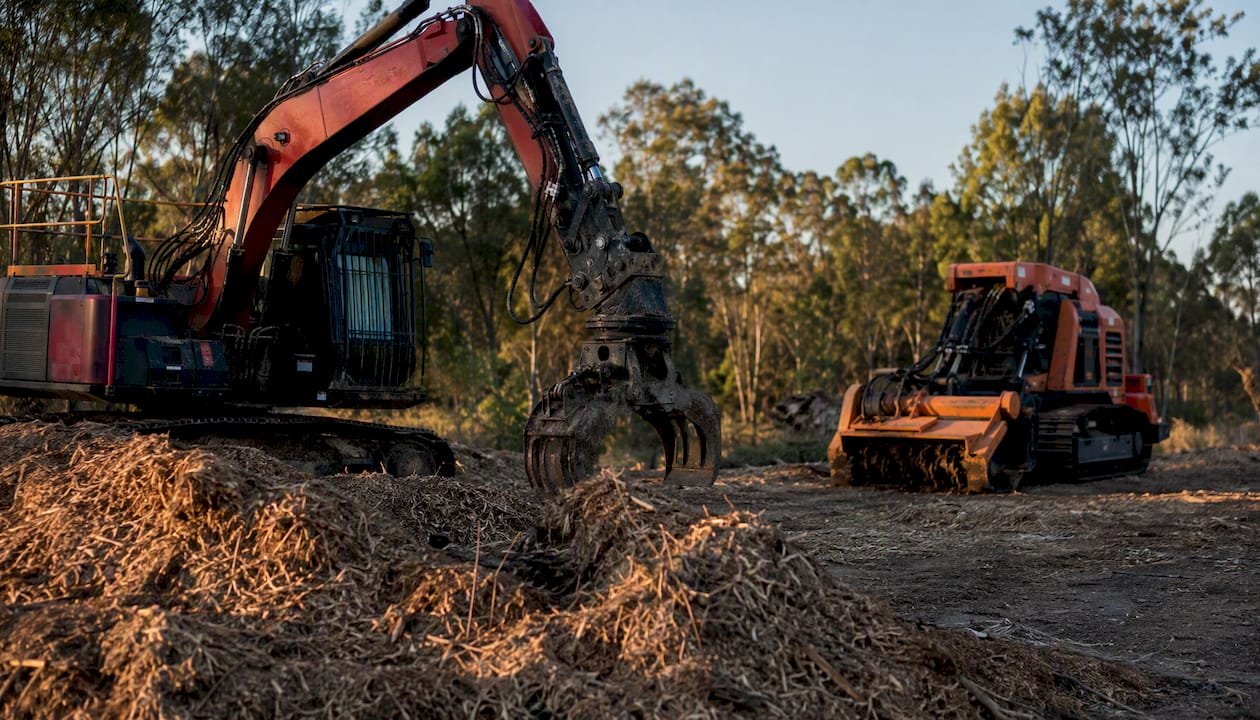
The best providers operate as a single point of contact managing equipment, logistics, and environmental controls together, rather than subcontracting each task to a different crew.
How much does vegetation clearing cost in Australia?
Pricing varies considerably by site conditions, vegetation density, and access. Small residential jobs (a standard suburban block) typically run from a few hundred dollars for brush clearing up to several thousand for full tree removal and stump grinding. Rural or semi-rural properties are often quoted per hectare, with rates influenced by terrain, tree size, and disposal requirements.
Key cost drivers:
- Asbestos risk — any structure or soil contamination triggers licensed removal costs and a mandatory asbestos clearance certificate
Timelines range from a single day for a small residential clear to several weeks for a multi-hectare rural property.
How do you choose a vegetation clearing contractor?
Start with licence and insurance. Any contractor working in Australia must carry public liability insurance and workers’ compensation cover. Ask for certificates before signing anything. Documented SWMS and crew induction records are practical trust signals that ACRT’s independent vegetation management research identifies as markers of a professionally run operation.
Questions worth asking every contractor:
- Can you provide a fixed, itemised written quote?
- Do you hold a current contractor’s licence in this state?
- Who handles asbestos if it is found on site?
- What equipment will you bring, and will you mulch or cart the waste?
- Can I see before-and-after photos from a recent comparable job?
Red flags to walk away from: verbal-only quotes, no proof of insurance, pressure to start immediately without a written scope, and no clear answer on waste disposal.
How do you get an accurate quote from a contractor?
The single best move is a site visit before any figure is agreed. Photos help, but a contractor who quotes without walking the land is guessing. Have ready: the property address, approximate size in square metres or hectares, photos of the densest vegetation, any known asbestos structures, and access notes (locked gates, overhead powerlines, soft ground).
For land clearing in Sydney and surrounding areas, Missiondemolition provides fixed written quotes after a site assessment, which removes the risk of scope creep mid-job.
What should a vegetation clearing contract include?
A solid contract covers the full scope of works (exactly what is being cleared and what is not), the equipment to be used, waste disposal method and destination, start and completion dates, payment schedule, and what happens if unexpected hazards such as asbestos or underground services are found. Warranties on stump grinding or herbicide application should state the treatment method and any follow-up obligations.
Never sign a contract that uses phrases like “approximately” or “subject to change” without defining the trigger conditions. A fixed-price contract with a clearly written variation clause is the standard to hold out for.
How should you prepare your site before the contractor arrives?
Clear the access route and mark any underground services, irrigation lines, or buried tanks with spray paint or flags. Contact your local council or state environmental protection authority to confirm whether a native vegetation clearing permit is required — in NSW this falls under the Local Land Services Act, and similar rules apply in QLD, VIC, and WA. Notify neighbours if work will affect boundary vegetation or generate significant noise and dust.
If any asbestos-containing material is present or suspected (fibro sheeting, old pipe lagging, corrugated roofing), do not disturb it. Flag it for the contractor and confirm they hold a licensed asbestos removalist licence before works begin.
How do you verify a contractor’s credentials and past work?
Check the contractor’s licence number against your state’s building or contractor licensing register. In NSW, the NSW Fair Trading register covers most trade contractors. Ask for two or three references from jobs of similar scale, and request before-and-after photos. Google reviews and industry body membership (such as the Arboricultural Association of Australasia for tree work) add a further layer of confidence.
For compliance-led work, documented workflows, training records, and environmental management plans are the practical evidence that a crew operates to a professional standard, not just a polished website. Environmentally aware operators also consider sustainable groundskeeping practices as part of responsible site management.
Key takeaways
Choosing a licensed, insured contractor with a fixed written scope is the single most important decision in any vegetation clearing project in Australia.
| Point | Details |
|---|---|
| Licence and insurance first | Confirm public liability, workers’ comp, and state contractor licence before signing. |
| Written scope is non-negotiable | A fixed, itemised quote prevents scope creep and protects both parties. |
| Permits before clearing | Check local council and state EPA rules — native vegetation permits are required in most states. |
| Asbestos changes everything | Any suspected asbestos triggers licensed removal and a mandatory clearance certificate. |
| Missiondemolition | Provides site clearance, asbestos-safe handling, and written quotes for Australian homeowners. |
The check most homeowners skip
The permit question is where most clearing jobs go sideways. Homeowners focus on price and availability, book a contractor, and only discover mid-job that the local council required a native vegetation approval or that the state EPA classifies the trees as protected. That stops work, triggers potential fines, and occasionally requires replanting at the owner’s cost.
Professional vegetation clearing covers tree removal, mulching, stump grinding, brush clearing, and herbicide application. Each of those services can trigger a different regulatory requirement depending on the state and the species involved. A contractor who does not ask about permits before quoting is either inexperienced or hoping you will not notice.
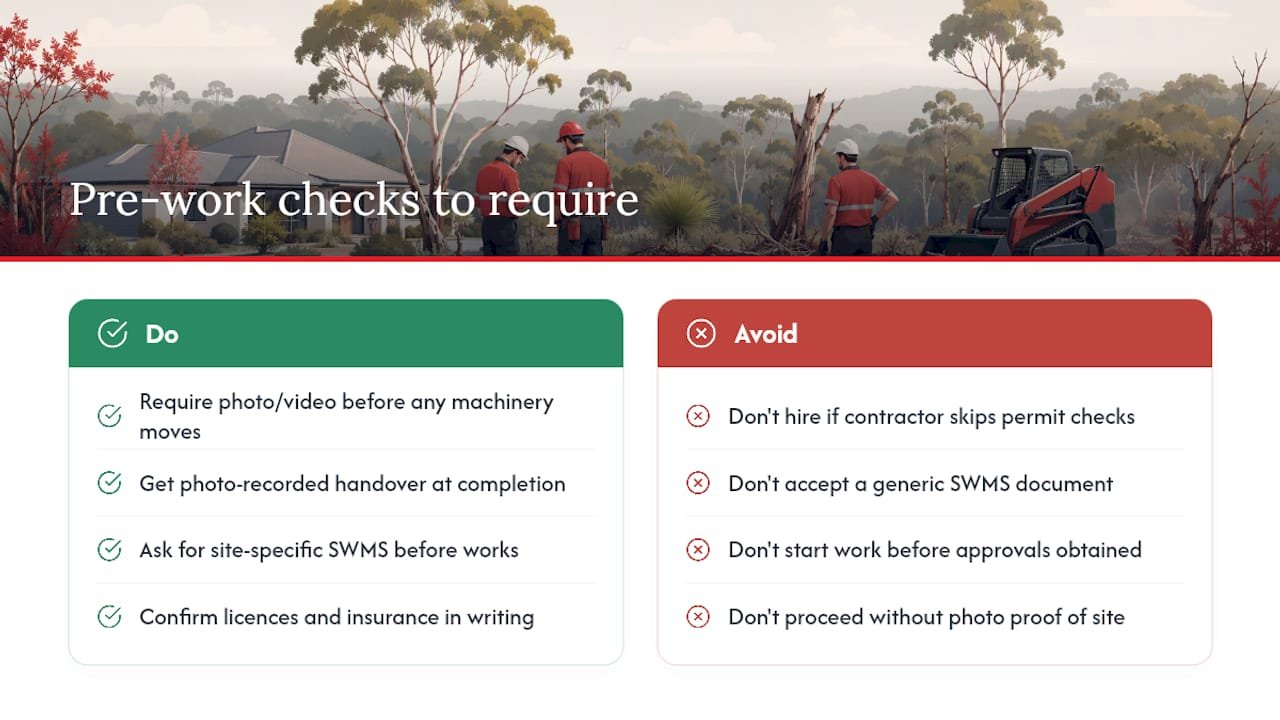
The one check most homeowners skip: require photo and video documentation of the site before any machinery moves. A photo-recorded handover at completion gives you proof of what was cleared, what was left, and the condition of the boundary fences and access routes. It costs nothing to ask for and protects you if a dispute arises.
Pro Tip: Ask your contractor to provide a SWMS (Safe Work Method Statement) specific to your job before works begin. A generic document is a warning sign; a site-specific one shows the crew has actually assessed your property.
Missiondemolition carries public liability insurance, workers’ compensation cover, and holds the licences required for asbestos-safe site clearance. Their written scope of works and photo-recorded handover process are the trust signals worth holding out for.
Missiondemolition: site clearance, asbestos handling, and written quotes
Missiondemolition handles the full scope of site preparation: vegetation and brush clearing, stump removal, asbestos-safe demolition and remediation, earthmoving, and waste removal — all under one contract. For homeowners who need a single crew to clear, remediate, and hand over a clean site, that matters more than a cheaper quote split across three separate operators.
To get a fixed, itemised quote, have your property address, approximate site size, access notes, and any photos of the vegetation or structures ready. Request a site assessment through the website form or by phone. Where asbestos is a possibility, Missiondemolition provides licensed asbestos removal and the mandatory clearance certificate as part of the same job.
This article provides general information only. Confirm permit requirements, licensing rules, and asbestos regulations with your local council, state EPA, or a qualified professional before commencing any clearing work.
Useful sources for permits, regulations, and safety guidance
Before any clearing job, check these authorities first:
- Vegetation Management – Asplundh
- Asplundh | Comprehensive Services with a Global Reach
- Our Services – Parrish & Son
- Vegetation Management and Professional Tree Services | EVM Australia
- Thornton Land Clearing | Leading Vegetation Management & Land Clearing Services
- Independent Utility Vegetation Management | ACRT
| Authority | What they control | Document to request |
|---|---|---|
| Local council | Tree preservation, development consent | Native vegetation permit, clearing permit |
| State EPA | Protected species, land-clearing thresholds | Environmental approval, offset requirements |
| Safe Work Australia | Worker safety, SWMS, hazardous materials | SWMS template, asbestos guidance |
| State asbestos regulator | Licensed removal, air monitoring | Asbestos clearance certificate |
The first practical step is always the same: call your local council’s planning or environment team, describe the scope of clearing, and ask whether a permit is required. Regional rules vary significantly — what is permitted on a rural property in western NSW may require formal approval on a peri-urban block in the Sunshine Coast hinterland. Waste disposal and licensed asbestos removal requirements should be confirmed at the same time.

One Response