A demolition-style site clearance quote is driven by six factors: asbestos removal, waste disposal, labour and plant hire, site access, structural complexity, and council permits. For a standard single-storey house in a metropolitan area with no asbestos complications, expect a total demolition and clearance cost somewhere in the $15,000–$45,000 range, though that band widens fast once asbestos or difficult access enters the picture.
Every credible quote should show these line items separately:
- Asbestos inspection and testing
- Licensed asbestos removal (Class A or Class B)
- Demolition labour and plant (excavator, bobcat, tipper trucks)
- Waste disposal and tipping fees
- Council permits and bonds
- Clearance certificate and waste manifests
A quote that bundles asbestos removal into a single “demolition” lump sum is a red flag. You cannot verify what you are paying for, and you have no protection if the scope changes mid-job.
Key takeaways
Site clearing costs for demolition are driven by asbestos type and extent, waste disposal volume, labour and plant hours, access conditions, and permit requirements. Getting an asbestos survey before approaching contractors is the single most effective step to control costs.
| Point | Details |
|---|---|
| Asbestos drives the biggest swings | Friable asbestos can substantially increase the total demolition cost. |
| Waste disposal is a major cost share | Disposal and tipping fees typically represent a significant portion of the total project cost. |
| Inspection before quoting saves money | An asbestos survey costing $300–$800 eliminates provisional sums and sharpens every contractor’s price. |
| Permits and timing affect price | Delays after mobilisation and rush scheduling both add cost; start permit applications early. |
| Itemised quotes protect you | A quote without separate asbestos, disposal, and clearance line items cannot be compared or verified. |
| Missiondemolition integrates the full scope | Licensed removal, demolition, waste manifests, and clearance certificates under one contract. |
Table of Contents
- How are site clearing costs calculated for demolition jobs?
- How do contractors turn a site inspection into a formal quote?
- What are typical cost bands for residential demolition in Australia?
- How do payment milestones affect your total cost?
- What hidden costs commonly blow out a site clearance budget?
- How can you reduce site clearing costs without cutting corners?
- What questions should you ask when comparing quotes?
- What does a professional site clearance quote actually look like?
- Why experienced, compliant contractors control costs better
- The part of this advice most guides skip
- Missiondemolition: licensed, documented, and ready to quote
- Sources
How are site clearing costs calculated for demolition jobs?
Site clearing costs for a demolition project are built from individual line items, each priced by a different unit. Understanding those units lets you compare quotes properly.
Asbestos inspection and testing: A residential asbestos inspection typically costs a few hundred dollars, varying by property size and sample number (https://tradieverify.com.au/guides/how-to-hire-a-licensed-demolition-contractor-in-australia/), depending on property size and the number of samples sent to a laboratory. This is almost always a separate charge from removal.
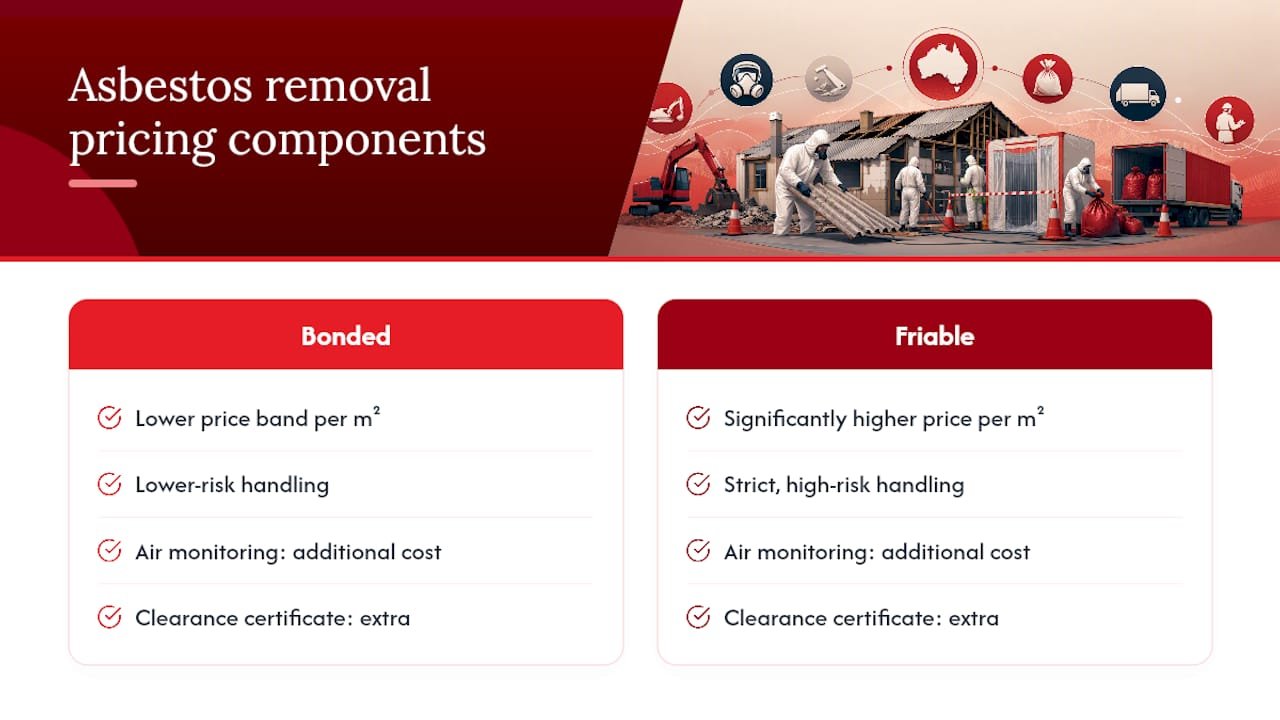
Licensed asbestos removal: Priced per square metre, with bonded (non-friable) asbestos sitting in a lower band and friable asbestos commanding significantly higher rates due to the stricter handling, air monitoring, and disposal requirements. Air monitoring and the independent clearance certificate are additional line items on top of removal.
Demolition labour and plant: Charged by the day or by the job. An excavator with operator, a bobcat, and tipper trucks make up the bulk of this cost. Structural complexity (brick versus weatherboard, double-storey versus single) directly affects how many machine hours are needed.
Waste disposal and tipping fees: Waste disposal commonly represents a significant portion of the total project cost. Tipping fees vary by material type, with asbestos waste attracting premium rates at licensed facilities.
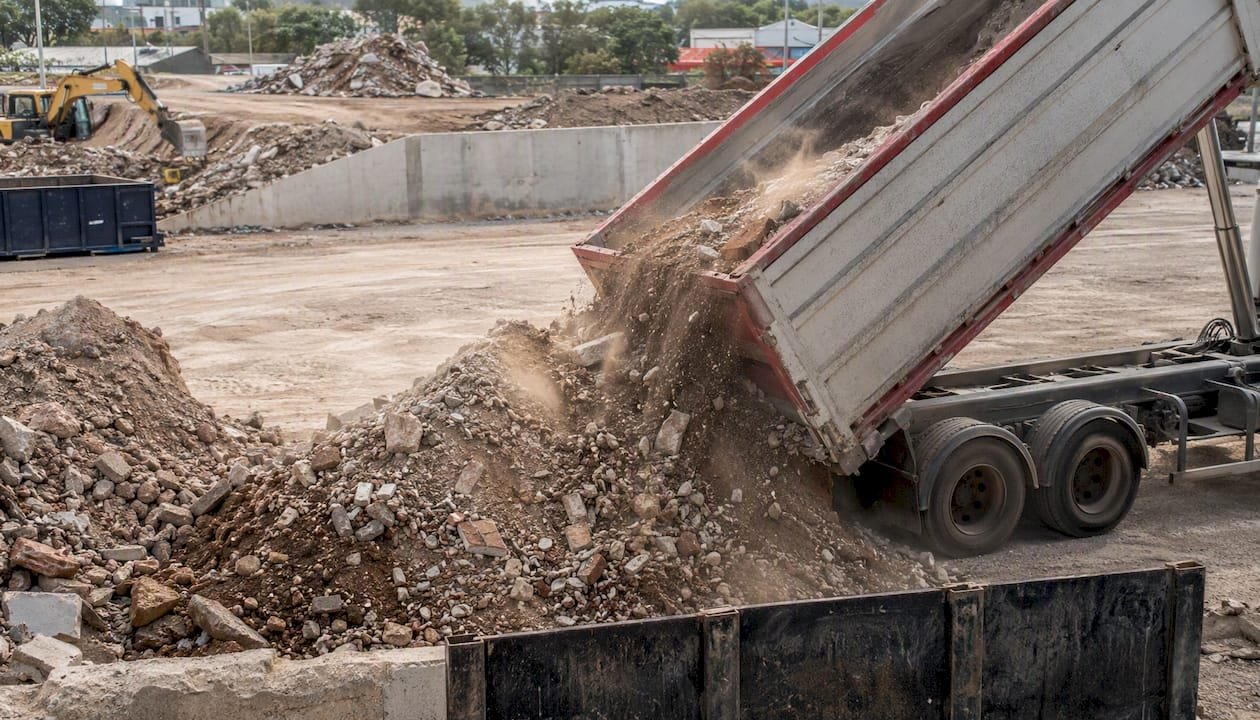
Transport and haulage: Distance from the site to a licensed disposal facility matters. Regional and outer-suburban sites often pay more simply because the nearest licensed asbestos tip is further away.
Council permits and bonds: Permit fees vary by council and project size. Some councils also require a security bond, refundable on satisfactory completion and site inspection.
Slab removal and levelling: Charged separately from the structure demolition. Concrete slab removal adds machine hours and significantly increases waste volume.
Pro Tip: Ask for asbestos removal as its own line item on every quote. When it is separated, you can verify the licence class, the disposal method, and the clearance certificate process independently. A contractor who refuses to separate it is either hiding the cost or the compliance detail.
How do contractors turn a site inspection into a formal quote?
The quoting process follows a logical sequence, and knowing it helps you spot shortcuts.
- Site inspection: The contractor visits the property, photographs the structure, assesses access, and notes any obvious hazardous materials.
- Asbestos survey and sampling: For pre-1990 buildings, a qualified assessor takes samples from suspect materials. Results determine licence class required and removal method.
- Scope definition: The contractor defines exactly what is being removed (structure, slab, fencing, garden sheds) and what remains. Anything not listed is excluded.
- Provisional sums: Where the full extent of asbestos or contamination is unknown, a provisional sum is included. This is an estimate, not a fixed price, and it can move.
- Disposal logistics: The contractor identifies the nearest licensed facility for each waste stream and prices haulage accordingly.
- Traffic and access planning: Inner-city jobs often require hoarding, traffic control, and council road permits, all of which add cost.
Before a contractor can quote accurately, they need: an asbestos inspection report (or agreement on who commissions one), council permit requirements, and confirmation of utility disconnection status.
Quote variations between contractors usually come down to different assumptions about asbestos extent, access difficulty, who arranges permits, whether salvage value offsets any cost, and how waste disposal is handled. A quote that looks cheap often excludes one or more of these items entirely.
What are typical cost bands for residential demolition in Australia?
The ranges below are illustrative. Location, materials, asbestos presence, and access all shift the final number.
A few qualifiers worth noting:
- Inner-city Sydney or Melbourne sites routinely attract a 15–25% premium for access, traffic control, and tighter working windows.
- The presence of friable asbestos can substantially increase the total demolition cost.
- Salvage of timber, bricks, or steel can reduce waste disposal volume and occasionally offset a small portion of cost, though this depends on material condition and contractor policy.
How do payment milestones affect your total cost?
A standard demolition project runs through these stages, each with a payment trigger:
- Deposit, often a minority percentage, is paid on contract signing to secure scheduling and begin permit applications: Paid on contract signing to secure scheduling and begin permit applications.
- Progress payment: Often triggered by completion of asbestos removal and issue of the clearance certificate.
- Second progress payment (larger jobs): On completion of demolition works before waste haulage.
- Final payment: On delivery of all documentation: waste manifests, clearance certificate, and council sign-off.
Withholding final payment until you receive the clearance certificate and waste manifests is standard practice and protects you legally.
Scheduling affects cost in two ways. Rush jobs that compress the timeline into weekends or require urgent permit processing attract premium rates. Council hold-ups, on the other hand, can leave plant and labour idle, which some contracts price as a standing charge. Locking in permits before the contractor mobilises avoids both problems.
Pro Tip: Book your asbestos inspection before you approach demolition contractors for quotes. Contractors who quote without an inspection report are guessing on the most variable cost item in the job.
What hidden costs commonly blow out a site clearance budget?
The most frequent budget surprises fall into a predictable pattern:
- Unexpected asbestos: A pre-demolition inspection misses asbestos in wall cavities, under floor coverings, or in pipe lagging. Discovery mid-job triggers a stop-work, a new removal scope, and additional clearance testing.
- Contaminated soil: Old fuel tanks, chemical storage, or historical land use can mean contaminated soil requiring specialist disposal at rates far above standard tipping fees.
- Buried services: Unmarked drainage, old fuel lines, or decommissioned pits found during excavation add time and cost.
- Council conditions: Some councils impose conditions after permit approval, such as specific working hours, dust suppression requirements, or neighbour notification obligations.
- Extended haulage: If the nearest licensed asbestos disposal facility is at capacity or distant, haulage costs climb.
- Air monitoring and re-testing: If a clearance test fails, the site must be re-cleaned and re-tested before work continues.
NSW guidance is clear that getting hazardous material removal right the first time is the single most effective way to avoid these compounding costs.
Regulatory penalties for non-compliant asbestos disposal are not a minor inconvenience. They can exceed the cost of the original removal job and leave the property owner, not just the contractor, liable.
Red flags in a quote that signal hidden cost risk: no asbestos line item, vague wording like “waste disposal as required,” no clearance certificate included, and no mention of air monitoring.
How can you reduce site clearing costs without cutting corners?
- Commission an asbestos survey early. A confirmed asbestos report eliminates provisional sums and lets contractors price accurately. It also gives you leverage to compare quotes on identical scope.
- Improve site access before the contractor arrives. Removing fencing, gates, or garden obstacles that restrict machine access reduces machine hours.
- Salvage materials where practical. Usable timber, bricks, or steel reduce waste volume. Confirm with your contractor whether they credit salvage value or simply reduce disposal charges.
- Obtain demolition permits before mobilisation. Permit delays after the contractor has mobilised cost money. Starting the application process early, ideally before you finalise the contract, avoids standing charges.
- Combine services under one contractor. A single contractor managing asbestos removal, demolition, and site clearance reduces coordination costs and eliminates the risk of scope gaps between separate trades.
Pro Tip: Combining services only saves money when the contractor holds the right licences for every scope item. Ask to see their asbestos removal licence class, public liability certificate, and workers’ compensation policy before signing anything.
What questions should you ask when comparing quotes?
Use this checklist before accepting any quote:
- Do you hold a Class A licence for friable asbestos and Class B for non-friable? Can I see the licence number?
- What public liability and workers’ compensation insurance do you carry?
- Is an independent asbestos clearance certificate included in this quote?
- Will you provide EPA-compliant waste manifests for all asbestos waste?
- Who arranges utility disconnections, and is that cost included?
- What is provisional in this quote, and what triggers a variation?
- What is excluded from this scope?
- What is the payment schedule, and when is the final payment due?
- Can you provide references or a portfolio of comparable completed projects?
- What is the timeline from mobilisation to handover?
Red flags that should stop a conversation: verbal-only quotes with no written scope, no asbestos line item, vague disposal wording, no site inspection before quoting, and no mention of a clearance certificate.
What does a professional site clearance quote actually look like?
A properly structured quote for a standard three-bedroom house demolition with asbestos works might look like this:
| Line item | Unit | Indicative price shape |
|---|---|---|
| Asbestos inspection and sampling | Fixed | $300–$800 |
| Bonded asbestos removal | Per m² | Lower per-m² band |
| Friable asbestos removal | Per m² | Higher per-m² band |
| Air monitoring (during removal) | Fixed | Separate charge |
| Independent clearance certificate | Fixed | Separate charge |
| Demolition labour and plant | Per day / fixed | Major cost component |
| Concrete slab removal | Per m² or fixed | Significant addition |
| Skip/bin and tipping fees | Per tonne | A significant portion of the total |
| Transport and haulage | Fixed or per load | Distance-dependent |
| Council permit fees | Fixed | Council-set |
| Asbestos waste manifest | Fixed | Regulatory requirement |
| Site levelling and compaction | Fixed | Final stage |
All figures above are indicative price shapes only. Your actual quote will depend on property size, asbestos type and extent, access conditions, and your council’s permit requirements. Treat any quote without a site inspection as an estimate, not a price.
Exclusions to expect in a standard contract: demolition of structures not listed in scope, removal of contaminated soil beyond a stated depth, and any works triggered by council conditions issued after contract signing.
Why experienced, compliant contractors control costs better
An experienced contractor does not just remove a building. They manage the sequence: asbestos clearance before demolition, permits before mobilisation, waste manifests before disposal. That sequence is what keeps a project on budget.
Trust signals to look for and expect:
- Current asbestos removal licence (Class A and/or Class B as appropriate)
- Public liability insurance certificate (minimum $10 million is standard for residential work)
- Workers’ compensation policy
- EPA-compliant waste disposal manifests for every asbestos load
- Independent clearance certificate from an accredited assessor
- References from comparable residential or commercial projects
- Itemised, written quote with exclusions and provisional sums clearly stated
Pro Tip: An integrated contractor who handles asbestos removal, demolition, and site clearance under one contract gives you a single point of accountability. If something goes wrong, there is no argument between trades about whose scope it falls under.
The part of this advice most guides skip
Most cost guides focus on the price per square metre or the headline demolition range. The more useful question is: what is the cost of getting it wrong?
A property owner who hires a cheap contractor without verified asbestos licences does not just risk a fine. They risk site decontamination orders, stop-work notices, and personal liability for illegal disposal, all of which can cost more than the original job. The NSW government’s own guidance makes this explicit: correct removal the first time is the cost-effective path.
The second thing guides understate is the power of the asbestos survey. Commissioning one before you approach contractors converts the most unpredictable cost item into a fixed scope. Contractors who quote on a confirmed asbestos report give you a more reliable number than those quoting on assumptions. That single step, costing $300–$800, can save thousands in provisional sum variations.
Missiondemolition: licensed, documented, and ready to quote
Missiondemolition handles the full scope: licensed asbestos removal (Class A and Class B), demolition of residential and commercial structures, concrete slab removal, site clearance, and final handover with all documentation. Every job includes EPA-compliant waste manifests, an independent clearance certificate, and permit management, so you are not chasing paperwork from three different contractors.
For a fixed-scope, itemised quote with no hidden provisional sums, request a site inspection from Missiondemolition. If asbestos is your primary concern, the licensed asbestos removal service covers testing, removal, air monitoring, and clearance certification under one contract. Contact the team to book your site inspection and get a line-item quote you can actually compare.
Sources
- Asbestos removal costs — Asbestos NSW
- Asbestos removal cost Australia | What’s The Damage?
- Asbestos removal costs in Australia: what to consider in 2026 | Demo Insurance

One Response