The costliest strip-out mistakes are all preventable: undiscovered asbestos, live services nobody isolated, scope left too loose, waste dumped without a manifest, structural elements ripped out by accident, unlicensed project managers, contractors picked on price alone, and service upgrades nobody costed. Each has a one-line fix you can apply today.
- Undiscovered hazardous materials — stop work immediately and commission a licensed asbestos inspection before any further demolition.
- Live or unmapped services — trace and physically isolate power, water and gas before the first wall comes down.
- Scope ambiguity — lock a written scope schedule with a formal variation process before signing.
- Poor waste planning — segregate waste streams from day one and insist on signed waste manifests.
- Accidental structural damage — get an engineer’s sign-off on what’s load-bearing before strip-out starts.
- Unlicensed project management — check licence numbers against the QBCC register before handing over control.
- Contractor selection errors — verify public liability, contract works insurance and a current SWMS.
- Unexpected service upgrades — build a contingency line into your feasibility, not an afterthought.
If there’s any doubt about hazardous materials on site, get a licensed operator like Mission Demolition to inspect before you touch a wall.
Key Takeaways
Strip-out projects fail on paperwork and pre-start checks far more often than on physical demolition, and every major error listed here has a documented, immediate fix.
| Point | Details |
|---|---|
| Due diligence before design | Confirm overlays, easements and contamination risk before committing to a feasibility or architect’s concept. |
| Asbestos stops the clock | Suspect material means stop work, secure the area, and order licensed testing before anything else proceeds. |
| Lock scope in writing | A signed scope schedule with a formal variation process prevents the disputes that eat project margin. |
| Budget hidden service costs | Set aside a dedicated soft-strip contingency for service upgrades, council fees and unplanned testing. |
| Missiondemolition coordinates the risk | Licensed asbestos removal, SWMS documentation and waste manifests are handled as one process, not separate chases. |
Table of Contents
- What common strip-out errors do property developers keep repeating?
- How does asbestos discovery derail a strip-out timeline?
- Why do scope disputes happen so often on strip-out contracts?
- What hidden costs actually blow strip-out budgets?
- What waste and safety documentation protects your compliance position?
- How do you keep a strip-out project on schedule and on budget?
- When do you need a licensed specialist instead of a general contractor?
- Get a licensed strip-out done without the guesswork
- Frequently asked questions
- Sources
What common strip-out errors do property developers keep repeating?
Most strip-out failures trace back to decisions made weeks before the demolition crew ever arrives. Developers who’ve done ten projects still get caught by the same handful of oversights that first-timers make, because strip-out risk hides in paperwork and site history, not in the physical work itself.
Pre-start due diligence gaps that surface too late
Rushed feasibility studies routinely skip planning overlays, easements, contamination history and heritage listings, and those gaps only surface once demolition crews are already on site. Casa Intelligence’s analysis of local site assessments found repeated cases where early assumptions produced unworkable development approval outcomes, forcing costly redesigns after money had already been committed. OwnerDeveloper’s review of hundreds of Australian projects lists insufficient due diligence and zoning oversights among the most repeated causes of delay and margin erosion.
Before any strip-out permit is lodged, confirm with practical examples from case studies of electrical work to guide your approach:
- Planning overlays and zoning conditions specific to the site
- Easements and any encroachments affecting demolition access
- Bushfire, flood or contamination risk flagged on the property title
- Heritage listings or conservation area restrictions
- Strata by-laws or common property constraints for multi-unit sites
- A hidden-services survey covering stormwater, sewer and power runs
Pro Tip: Brief your surveyor and a planning consultant in the same week, before you commit to an architect’s concept. A desktop planning check now is cheaper than a redesign after strip-out has started.
A viable feasibility can turn unworkable fast when a missed easement forces a setback change after the strip-out is half done.
How does asbestos discovery derail a strip-out timeline?
Asbestos remains the single most common show-stopper in older strip-out projects, and the process for handling it is non-negotiable once suspect material turns up. The correct flow is stop work, secure the area, order licensed testing, then engage a licensed removalist. Skipping the testing step to “save time” is the single most expensive shortcut a developer can take, because insurers and certifiers will not sign off work performed around undocumented hazardous material.
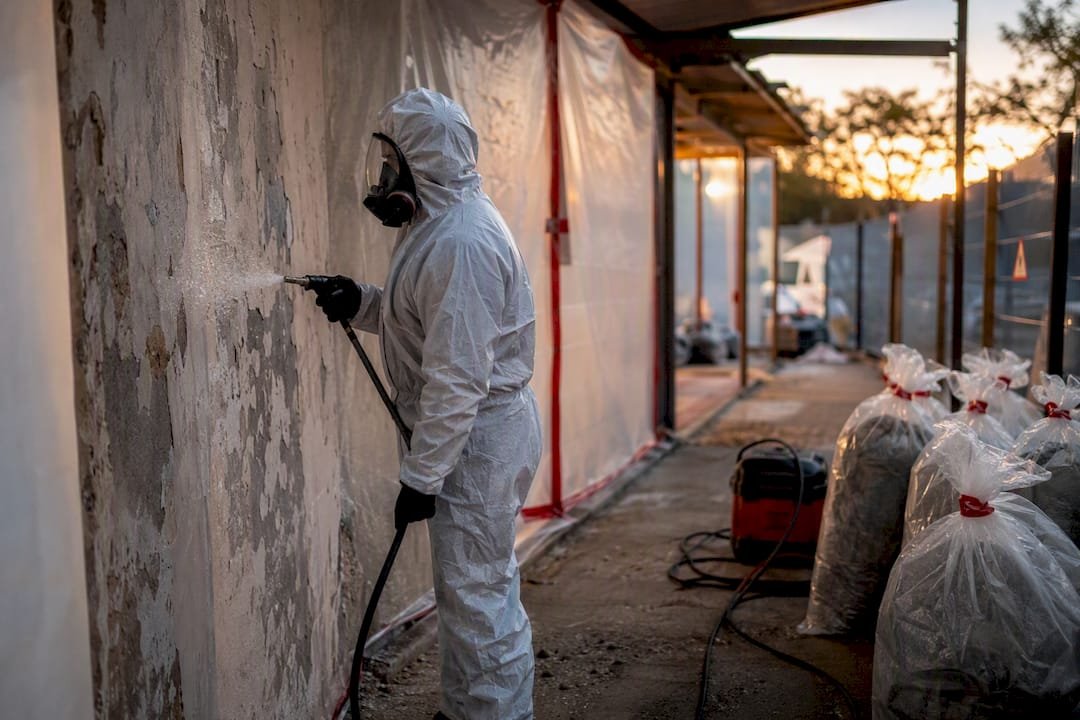
Safety non-negotiables: a current SWMS for the removal crew, a signed asbestos waste manifest tracking disposal to a licensed facility, and a clearance inspection certificate before any trade re-enters the space. Without these three documents, you cannot legally close out the strip-out phase.
Pro Tip: Build asbestos capability into your tender documents, not your contract negotiations. Ask every bidder for their licence number, their insurance certificate of currency, and a sample clearance report from a past job before you shortlist them.
Mission Demolition handles this sequence as standard on every strip-out, from initial identifying suspect materials through to the final clearance inspection, so certifiers and insurers get the paper trail they need without you chasing it.
Why do scope disputes happen so often on strip-out contracts?
Vague scope is where most strip-out disputes start, and it’s entirely avoidable with a properly drafted schedule. Insist on these before signing:
- A written scope schedule specifying exactly what’s demolished, retained and protected
- Clearly defined PC sums and provisional items for uncertain work
- A formal variation process requiring written approval before extra work proceeds
- Confirmed public liability and contract works insurance
- Licence verification against the QBCC register where the work falls under Queensland jurisdiction
Watch for red flags at tender stage: missing insurance certificates, no mention of asbestos licensing, or vague exclusions around retained structural elements. SCM Projects Qld’s guidance warns that unlicensed project management can void insurance entirely, leaving the developer exposed for the full cost of any incident. A common dispute pattern: a contractor demolishes a partition the developer assumed was included, the developer assumed it was retained, and the resulting variation claim eats weeks of goodwill that a one-page scope schedule would have prevented.
What hidden costs actually blow strip-out budgets?
Strip-out feasibility budgets routinely miss the line items that don’t show up until the work is underway. Watch for:
- Service isolation and reconnection fees for power, water and gas
- Council street-works permits and traffic management approvals
- Service upgrades where existing sewer or power infrastructure can’t support the new design
- Section contributions or local council fees triggered by the works
- Additional contamination testing once strip-out exposes old fill or fuel tanks
- Asbestos disposal surcharges, which run well above general waste rates
A single unplanned sewer diversion can consume an entire month’s contingency on a small site. OwnerDeveloper’s research names underestimated costs, including demolition and service upgrades, as a primary driver of margin erosion across hundreds of projects.
What waste and safety documentation protects your compliance position?
Every strip-out needs a paper trail that proves the work was done safely and disposed of legally. That means a current SWMS for every crew on site, waste tracking manifests for each load leaving the property, licensed handlers for any hazardous material, and a documented site induction for workers and visitors.
- Segregate waste streams (timber, metal, general, hazardous) from the first day, not retrospectively
- Use a licensed hazardous-waste handler for any asbestos-contaminated material
- Keep signed manifests for every skip and truckload leaving site
- Require a clearance certificate before reoccupation where asbestos was present
Soft-strip contractor guidance points to mixed, undocumented waste as a recurring cause of blown budgets and stalled site access, since skip-stacking and re-sorting eat days you don’t get back. Missing manifests or improper disposal also create enforcement risk that follows the developer, not just the contractor. Mission Demolition’s waste removal process builds manifest tracking into every job for exactly this reason.
How do you keep a strip-out project on schedule and on budget?
Weak project controls, not weak trades, cause most of the delays developers blame on “the market” or “bad luck.” OwnerDeveloper identifies cashflow mismanagement, unrealistic timelines and weak stakeholder communication as repeat causes of budget blowouts across the projects it reviewed.
A simple weekly tracking set covers:
- Daily progress against the program, flagged variations, and any safety incidents
- Waste volumes and manifest numbers logged against each skip
- Clearance certificates filed as they’re issued, not chased at project close
Match contractor payment milestones to funds actually available, and hold back a defects and clearance retention until final certificates land.
Pro Tip: Run one short site meeting weekly with the site supervisor, the developer’s rep and any specialist contractor active that week. Anyone with a pending variation or safety issue must attend and sign the meeting notes. That single habit resolves most communication breakdowns before they become disputes.
When do you need a licensed specialist instead of a general contractor?
Some decisions aren’t negotiable. A licensed asbestos removalist is mandatory the moment suspect material is confirmed, full stop. A structural engineer must sign off any retained wall, beam or slab before it’s loaded or altered. A traffic or access plan is required wherever public footpaths or roads are affected by skips, trucks or scaffolding.
Using unlicensed providers for regulated work can void your insurance and expose you personally to the cost of any incident. Mission Demolition brings licensed asbestos removal, structural coordination and access planning together under one project, so you’re not chasing three separate specialists mid-job.
What one contractor learned the hard way
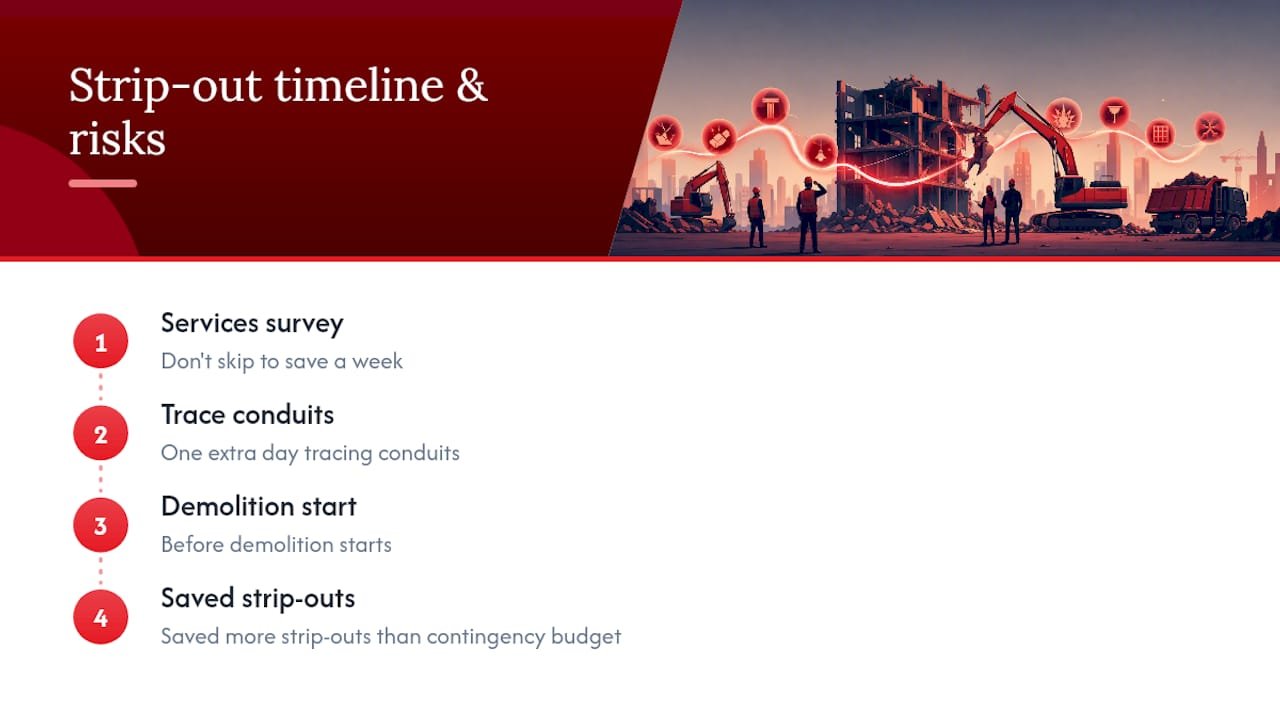
The biggest avoidable error I’ve seen is skipping the services survey to save a week. One extra day tracing conduits before demolition starts has saved more strip-outs than any amount of contingency budget ever has.
Get a licensed strip-out done without the guesswork
Mission Demolition runs strip-out and asbestos removal as one coordinated project, not two contractors handing off blame when something goes wrong. That’s the practical difference for a developer: one licensed team managing the inspection, the removal, the utility disconnections and the clearance paperwork, instead of you chasing five separate certificates before a certifier will sign off.
What you get on every job:
- Licensed asbestos removal with clearance inspection built into the process
- Current SWMS documentation for every crew on site
- Signed waste manifests tracked from skip to disposal facility
- Full insurance lines, including public liability and contract works
- Coordinated utility disconnection so services don’t stall your program
If there’s a wall, a shed or a full internal fit out that needs to come out safely, request a site inspection for your residential demolition or check asbestos removal in Sydney if hazardous material is even a possibility. Get the quote before you commit a start date, not after.
Frequently asked questions
What’s the most common strip-out error property developers make?
Skipping proper due diligence before strip-out starts, particularly on zoning overlays, easements and hazardous material history, is the single most repeated mistake across Australian projects.
Do I need a licensed asbestos removalist for every strip-out?
Only if suspect material is present or the building’s age suggests it might be, but testing before demolition begins is the only way to know for certain.
How much contingency should I budget for a strip-out phase?
There’s no universal figure, but a dedicated soft-strip contingency separate from your general project buffer, with a clear escalation trigger, protects against the service upgrades and testing costs that most feasibility studies miss.
What documents prove a strip-out was done compliantly?
A current SWMS, signed waste manifests for every load, and an asbestos clearance certificate where hazardous material was removed are the minimum paper trail a certifier or insurer will expect.
Sources
- Common Property Development Pitfalls (2025) | OwnerDeveloper
- Most development mistakes happen before you break ground | Casa Intelligence
- Common Mistakes to Avoid During a Soft Strip Project – Soft Strip Contractor
- Property development: what they don’t tell you – SCM Projects Qld
