If you find asbestos in soil, stop work immediately and treat it as a potential airborne hazard. Whether you need removal or containment depends on the material’s form, quantity and depth. Friable asbestos or mixed contamination always requires a Class A licensed removalist, while more than 10 square metres of non-friable material needs a Class A or B licence holder. Smaller, non-friable finds may fall to a competent person, though getting a professional opinion first is the safer move.
TL;DR:
- Small, visible asbestos fragments may underestimate buried contamination, making professional sampling and testing essential before any work begins.
- Removal is required for friable asbestos or mixed contamination, while containment and on-site treatment are suitable for specific conditions such as site use and soil type.
- Contractors must hold the appropriate licenses, with Class A for friable asbestos and Class B for larger quantities of non-friable asbestos-contaminated soil, and must provide validation reports before site clearance.
- Proper documentation, including remedial plans, validation reports, and waste manifests, is crucial to protect property owners during resale or redevelopment.
- Blanket excavation is not always the best option; risk-based assessments and targeted remediation methods like capping or treatment often reduce costs and disturbance.
Table of Contents
- How to identify and assess asbestos in soil removal needs
- Remediation options: remove, contain or treat on-site
- Licences, legal duties and waste transport rules
- A practical step-by-step process from discovery to handover
- What a licensed contractor actually delivers on site
- Why the “just dig it all up” instinct usually costs more than it’s worth
- Getting a compliant quote for your soil remediation project
- Where to check the current rules
- Sources
How to identify and assess asbestos in soil removal needs
Asbestos in soil rarely announces itself. Sometimes it’s obvious: cracked fibro sheeting poking through topsoil after a garden bed dig, or grey fragmented debris scattered near an old shed footprint. Other times it’s buried 300mm down and only surfaces when an excavator bucket clips it during a driveway upgrade.
The critical thing to understand is that asbestos in soil only becomes dangerous when fibres go airborne. Intact sheeting sitting undisturbed under lawn poses far less immediate risk than crushed, weathered fragments exposed to wind and foot traffic, a point SafeWork NSW makes central to how it wants landholders to think about risk.
Visible signs worth stopping work for include:
- Fibro sheet fragments, often grey or off-white, sometimes with a corrugated profile
- Loose fibrous material embedded in fill or demolition rubble
- Old pipe lagging or insulation remnants near building footings
- Discoloured or unusually textured patches in disturbed soil, particularly near demolished structures built before 1990
Small visible fragments often understate the real scale of contamination underneath. A handful of chips on the surface can sit above a much larger buried deposit, which is why SafeWork NSW recommends professional sampling rather than a visual guess whenever fragments turn up.
Assessment typically follows a grid-based inspection pattern, supplemented by hand-picking in suspect zones and, on larger or more complex sites, activity-based sampling that mimics how the soil will actually be disturbed during construction. A qualified consultant uses these findings to build a Conceptual Site Model, essentially a working map of where contamination sits, how deep it goes, and what land uses it affects. Where laboratory confirmation is required, samples typically go to an accredited lab for testing using methods such as polarised light microscopy or electron microscopy.
Every finding, sample location and photograph should feed into an asbestos register. This isn’t paperwork for its own sake. It protects future owners, tradespeople and councils from unknowingly disturbing contamination years later during a renovation or landscaping job.
Pro Tip: Photograph every suspect fragment before touching it, with something for scale in frame, like a tape measure or coin. Consultants and regulators both rely heavily on this kind of documentation when scoping a remediation plan.
Remediation options: remove, contain or treat on-site
There’s no single correct remediation method for asbestos-contaminated soil. The right call depends on the extent of contamination, the site’s future use, and what a risk assessment turns up, which is exactly the risk-based approach Australian regulators expect consultants and contractors to follow rather than defaulting straight to excavation.
Removal (dig-and-dump) is the most familiar option and often the right one for friable material, shallow contamination near occupied areas, or sites heading toward residential redevelopment. Contaminated soil is excavated under controlled conditions, double-bagged or bulk-bagged where required, transported by a licensed carrier, and disposed of at an EPA-licensed landfill. It’s thorough, but it’s also the most expensive path and generates the most truck movements and landfill volume.
Containment or capping leaves asbestos in place under an engineered barrier, sometimes clean fill, sometimes a hardstand or pavement. Regulators including SafeWork NSW recognise this as a genuinely valid outcome, not a shortcut, provided the capped area is recorded on the property’s asbestos register and, for significant contamination, flagged under contaminated land frameworks so it isn’t disturbed by a future owner unaware of what lies beneath.
On-site treatment, meaning screening, tilling or mechanical separation, aims to pull asbestos fragments out of the soil matrix so the clean fraction can be reused or disposed of at lower cost. WorkSafe Victoria notes raking, hand-picking and mechanical screening as recognised removal methods for visible non-friable material, but flags that screening needs its own risk assessment and air monitoring because the process itself can turn non-friable asbestos friable. Screening tends to work best in sandy, loose soils; clay-heavy ground or crushed demolition debris makes fragment separation far less reliable.
A few things shape which path makes sense:
- Depth and extent — shallow, widespread contamination often favours capping; deep pockets near footings may need targeted excavation
- Future land use — a site heading to childcare or residential use typically demands a higher standard of clearance than one staying industrial
- Soil type — sandy soils suit mechanical screening; clay and rubble-heavy fill usually don’t
- Landfill and transport cost — dig-and-dump volumes add up fast once you’re paying for controlled waste transport per tonne
Western Australia’s asbestos guidelines frame this clearly: preferred options minimise airborne fibre exposure and reduce landfill disposal where that’s practical, rather than treating full excavation as the default gold standard. Screening and treatment can cut landfill volumes substantially by allowing clean soil fractions to be reused on-site, but only with strict dust control and independent validation confirming no fragments remain. Whatever path gets chosen, it has to be documented in a site-specific remedial action plan and signed off with independent validation once work is finished, a requirement EPA NSW applies regardless of which remediation method is used.
Licences, legal duties and waste transport rules
Australia’s asbestos licensing system draws sharp lines around who can legally touch contaminated soil, and getting this wrong carries real regulatory exposure for property owners, not just contractors.
- Class A licence covers removal of any quantity of friable asbestos, or soil where friable and non-friable material are mixed together. This is the highest tier and applies to the riskiest jobs.
- Class B licence permits removal of more than 10 square metres of non-friable asbestos-contaminated soil, along with associated debris.
- Competent person allowance applies only to minor, clearly non-friable contamination of 10 square metres or less, though WorkSafe WA still recommends professional assessment even at this threshold, since visual estimates of extent are notoriously unreliable.
Regulator responsibilities split by jurisdiction and by function. SafeWork bodies (SafeWork NSW, WorkSafe Victoria, WorkSafe WA) oversee licensing, work method statements and site safety compliance. Environmental Protection Authorities regulate waste classification, transport and landfill disposal. Local councils get involved where development approvals, contaminated land notations or nearby amenity impacts are in play.
Once soil leaves the site, it’s controlled waste. EPA NSW requires asbestos-contaminated soil moved off-site to comply with controlled waste transport regulations, meaning licensed carriers, sealed and labelled loads, and disposal only at facilities licensed to accept asbestos waste. Soil is typically wetted down before loading to suppress dust, and covered during transit.
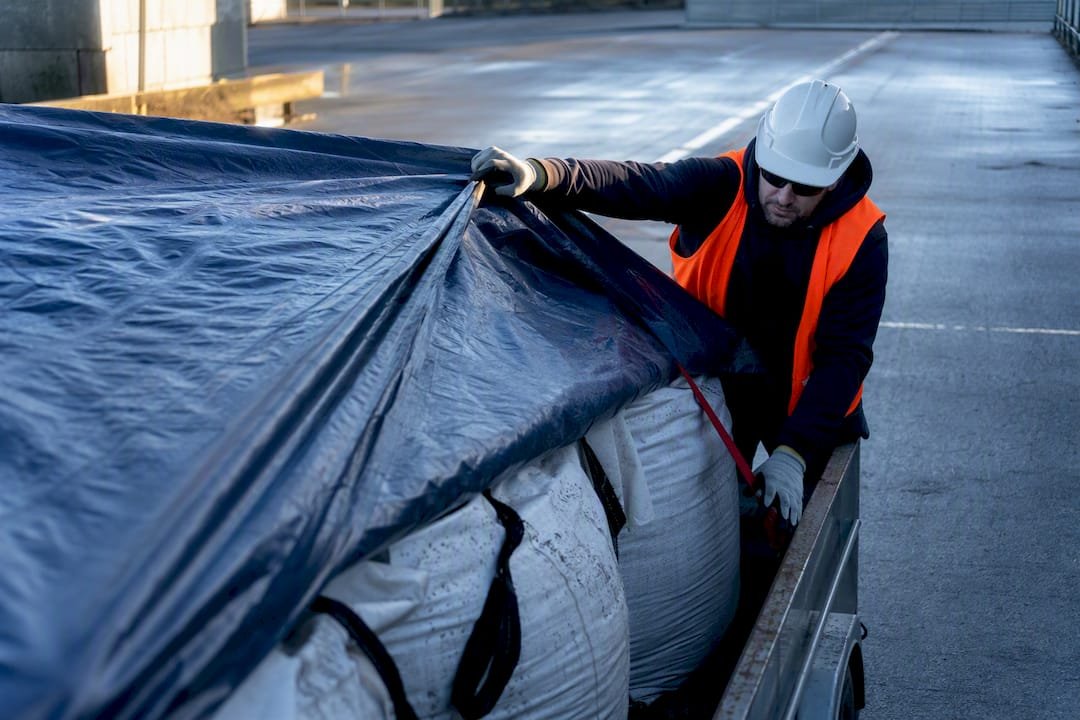
Before you sign off on any project, insist on a validation report and a clearance certificate confirming the site meets the standard required for its intended use. Keep waste transport manifests and register updates on file. If you ever sell the property, buyers and their conveyancers will ask for exactly this paperwork.
A practical step-by-step process from discovery to handover
Finding suspected asbestos mid-project is stressful, but the sequence that gets you through it safely and legally is fairly consistent across jobs.
- Secure the site first. Stop all work in the affected area, keep people and pets away, and if it’s safe to do so, lightly dampen the exposed material to limit dust without creating runoff. Don’t attempt to cover it with a tarp weighted by disturbed soil, that can spread fragments further.
- Photograph and document everything before anything is touched again. Note the location relative to fixed landmarks, approximate depth if visible, and any history you know about the site, previous demolitions, old sheds, fill brought in from elsewhere.
- Engage a contaminated land consultant to scope the extent of contamination and draft a site-specific remedial action plan. Ask specifically for a sampling plan, a written method statement, and confirmation of which licence class the removal work will require.
- Select a licensed removalist matched to the licence class the consultant identifies. Ask about their air monitoring protocols, pre-wetting procedures and decontamination setup, not just their quote. Our guide to choosing asbestos removal contractors covers the right questions to ask before signing anything.
- Expect proper on-site controls during the work itself: exclusion zones, air monitoring at the site boundary, pre-wetting to suppress dust, decontamination units for workers leaving the zone, and HEPA-filtered cabins on excavators where soil is being actively disturbed.
- Get your handover documents. A validation report, a clearance certificate, waste transport manifests, and an updated asbestos register entry should all land in your hands before the site is considered closed out.
Pro Tip: Ask your consultant for the remedial action plan in writing before removal starts, not after. It should specify exactly which areas are being treated, what method is being used, and what the pass/fail criteria for validation will be. If a contractor can’t produce one, that’s a red flag worth walking away from.
What a licensed contractor actually delivers on site
A compliant asbestos removal job in soil looks a certain way, and it’s worth knowing what to expect before you hire anyone. Mission Demolition holds the licensing required to handle both friable and non-friable asbestos contamination across residential, commercial and industrial sites, and works within the same risk-based framework regulators expect.
On a properly run job, you should see:
- Pre-wetting of contaminated soil before any excavation begins, to limit airborne fibres
- Sealed, labelled transport to an EPA-licensed landfill, with manifests kept for your records
- HEPA cabin filtration on machinery operating in or near the contamination zone
- Independent air monitoring during active works, particularly where friable material is involved
- A written remedial action plan matched to your site’s Conceptual Site Model
At handover, ask for the validation report and clearance certificate together with your updated waste manifests, that’s the paperwork that protects you if the property changes hands later.
Why the “just dig it all up” instinct usually costs more than it’s worth
The biggest misconception property owners bring into an asbestos soil job is that full excavation is automatically the safest, most thorough choice. It isn’t always. Regulators built the risk-based framework precisely because blanket removal can mean more excavation, more truck movements, more landfill volume and more disturbance risk than a well-managed cap or targeted treatment would create.
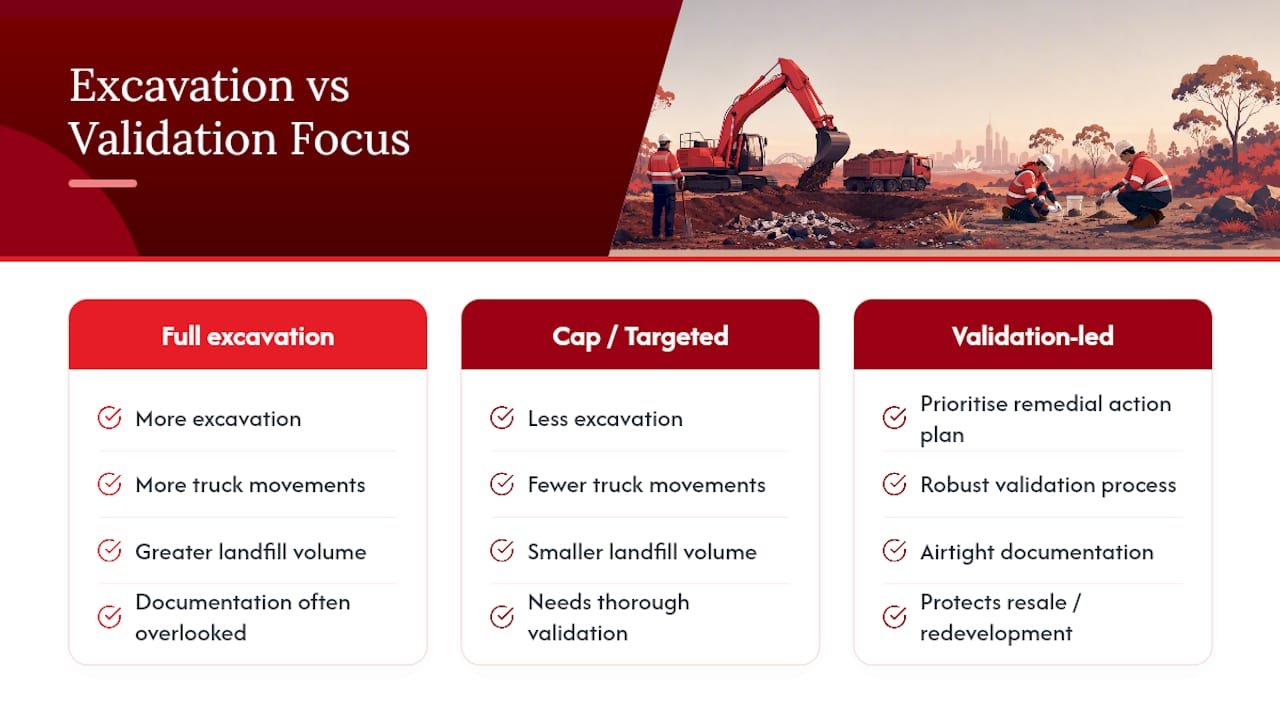
What’s underrated is validation. Owners fixate on the removal method and barely think about who’s checking the work afterwards, yet a validation report and clearance certificate are what actually protect you at resale or redevelopment. A cheap removal with weak documentation is a worse outcome than a slightly pricier job with airtight paperwork.
If you take one thing from this: prioritise the consultant’s remedial action plan and the contractor’s validation process over the headline price. That’s where compliant jobs separate from the ones that come back to bite an owner years later.
— Tarek
Getting a compliant quote for your soil remediation project
Sorting asbestos out of soil isn’t a job for guesswork or a general landscaper with a shovel. Mission Demolition holds the licensing to handle friable and non-friable contamination alike, and runs every job through the same risk-based process regulators expect, from sampling through to independent validation.
Before you call for a quote, have a few things ready: any known site history (old structures, previous demolitions, fill brought in from elsewhere), photos of visible fragments if you’ve spotted any, and details of what the land will be used for once work is done. That last point matters, because the standard required for a residential backyard differs from a commercial yard staying industrial. If sampling hasn’t happened yet, that’s fine, it’s often the first step Mission Demolition arranges anyway.
Get in touch through the asbestos removal services page or by phone, and expect a straightforward conversation about scope before any site visit is booked.
Where to check the current rules
For the latest regulatory detail, consult SafeWork NSW’s soil guidance, WorkSafe WA’s licensing thresholds, WorkSafe Victoria’s removal methods, and the Model Code of Practice from Safe Work Australia.
This article is general information, not a substitute for advice from a qualified doctor. Consult a qualified healthcare professional about your own circumstances before acting on anything here.
Sources
- Asbestos in soils – WorkSafe – LGIRS
- Asbestos in soil
- Managing asbestos in or on soil | SafeWork NSW
- Guidelines for the assessment, remediation and management of asbestos contaminated sites in WA (Chapter 6)
