
Most interior demolition and strip-out work in Australia runs between $40 and $65 per square metre, with a typical room strip-out landing somewhere between $2,000 and $8,000 and a full house interior stripped back to the frame reaching $15,000 or more. Asbestos and poor site access are what actually blow out those figures. Before you accept any number, arrange an asbestos check and get two or three written quotes from licensed contractors.
TL;DR:
- Asbestos presence and poor site access are the primary factors that significantly increase demolition costs beyond the typical $40 to $65 per square meter range.
- Structural materials like reinforced concrete or brick walls, and the need for permits or engineering assessments, can cause costs to rise substantially, sometimes into the thousands.
- Pre-demolition asbestos testing and removal, which are required by Australian regulations for homes built before the 1990s, can be a major cost driver if hazardous materials are found.
- Accurate demolition quotes rely on an in-person site inspection, detailed scope, and transparent breakdowns of waste disposal, asbestos removal, and labour costs.
- Smaller jobs such as single non-load-bearing wall removal or bathroom strip-outs usually cost under $3,500, while full house interior gutturals often exceed $15,000, depending on access and hazardous materials.
Table of Contents
- How much does interior demolition cost per square metre?
- What actually drives the price up or down?
- Do you legally need an asbestos check before demolition?
- How do you estimate your own demolition cost before calling a contractor?
- What do common interior demolition jobs actually cost?
- What should you ask for when comparing demolition quotes?
- How does a full-service demolition quote actually work?
- When does demolition make more sense than renovation?
- Ready to get an accurate quote for your project?
- Sources
- FAQ
How much does interior demolition cost per square metre?
Contractors quote interior demolition four different ways, and knowing which one you’re being charged tells you a lot about the job itself.
Per-square-metre pricing is the most common approach for strip-outs and room removals. Australian rates typically sit between $40 and $65 per m2 for straightforward jobs, according to hipages’s cost guidance. That range assumes reasonable access, no hazardous materials, and standard timber or plasterboard construction. It climbs fast once you’re dealing with reinforced concrete, double brick, or a house perched on a steep block with no truck access.
Hourly and daily rates show up on smaller or unpredictable jobs, like a single wall removal or a bathroom gut-out where the contractor can’t pin down scope in advance. ServiceSeeking’s pricing data puts the average hourly rate for demolition work around $99.63, though this varies significantly by state and by whether machinery is involved. Daily rates for a two-person crew with basic tools generally fall within a moderate range, excluding disposal.
Fixed-price quotes are what most homeowners actually want, and reputable contractors will offer one once they’ve inspected the site. A fixed quote is only as good as its inclusions list. Contractors prefer fixing the price when the scope is clear: a defined room, a known wall, a shed with no surprises underneath the cladding. They avoid fixing price on jobs where hazardous material status is unknown, because uncovering asbestos mid-job changes everything about how the work proceeds.
A few things consistently move the unit rate up or down:
- Ground-floor access with a clear driveway keeps costs at the low end of any range.
- Narrow terrace frontages, apartment corridors, or upper-storey work usually add an access surcharge because materials have to be carried, not wheeled.
- Local tipping fees vary by council and by waste type, and mixed construction waste costs more to dump than clean timber.
- Distance to the nearest approved disposal facility adds transport time that gets built into the quote.
If a quote looks unusually cheap, check what pricing model it’s using before you compare it to anything else. A daily rate on a job that should be quoted per square metre, or a per-m2 rate that quietly excludes disposal, will look competitive right up until the invoice arrives.
What actually drives the price up or down?
Two houses of the same floor area can come in thousands of dollars apart, and it’s rarely the demolition itself that explains the gap. Access and machine productivity often matter more than square footage once you’re comparing real Australian job sites.
Here’s what typically moves the number, roughly in order of impact:
- Asbestos and hazardous materials. Testing, licensed removal, and disposal to an approved facility are the single biggest cost variable in older Australian homes, particularly anything built before 1990.
- Site access and logistics. Narrow frontages, no driveway access, multi-storey work, or the need for traffic control and permits all add labour hours before a single wall comes down.
- Structure and materials. Timber-framed partition walls are cheap to remove. Load-bearing brick, reinforced concrete slabs, and structural steel require more machinery, more time, and sometimes engineering sign-off.
- Ancillary costs. Disconnecting power, gas, and plumbing before demolition, meeting council conditions, and protecting neighbouring trees or fences all add line items that inexperienced quotes sometimes miss.
- Waste volume and tipping fees. A gutted kitchen generates far more waste than a single wall, and mixed waste streams cost more per tonne than clean, sorted material.
Waste disposal alone can represent a meaningful chunk of the invoice, especially on larger strip-outs where every cupboard, tile, and stud wall has to leave the site. If you’re weighing up how disposal volume affects budget on a broader renovation, it’s worth looking at how skip hire and waste management costs scale with job size, even allowing for regional pricing differences.
Pro Tip: Ask your contractor for a breakdown that separates labour, disposal, and any asbestos-related costs into distinct line items. A single lump-sum figure hides which part of the job is actually expensive, and makes it impossible to negotiate intelligently.
The order above isn’t fixed for every property. A perfectly accessible, asbestos-free 1990s house might have its biggest cost driver be a load-bearing wall that needs a structural engineer’s sign-off, while a tight inner-city terrace with full asbestos sheeting could have access as the smaller issue by comparison. Get a site inspection before you assume which factor applies to you.
Do you legally need an asbestos check before demolition?
Yes, in practice. Safe Work Australia’s model code of practice requires that asbestos likely to be disturbed during demolition work be identified and removed beforehand wherever that’s practicable. If your home was built or renovated before the early 1990s, you should treat asbestos as present until testing proves otherwise.
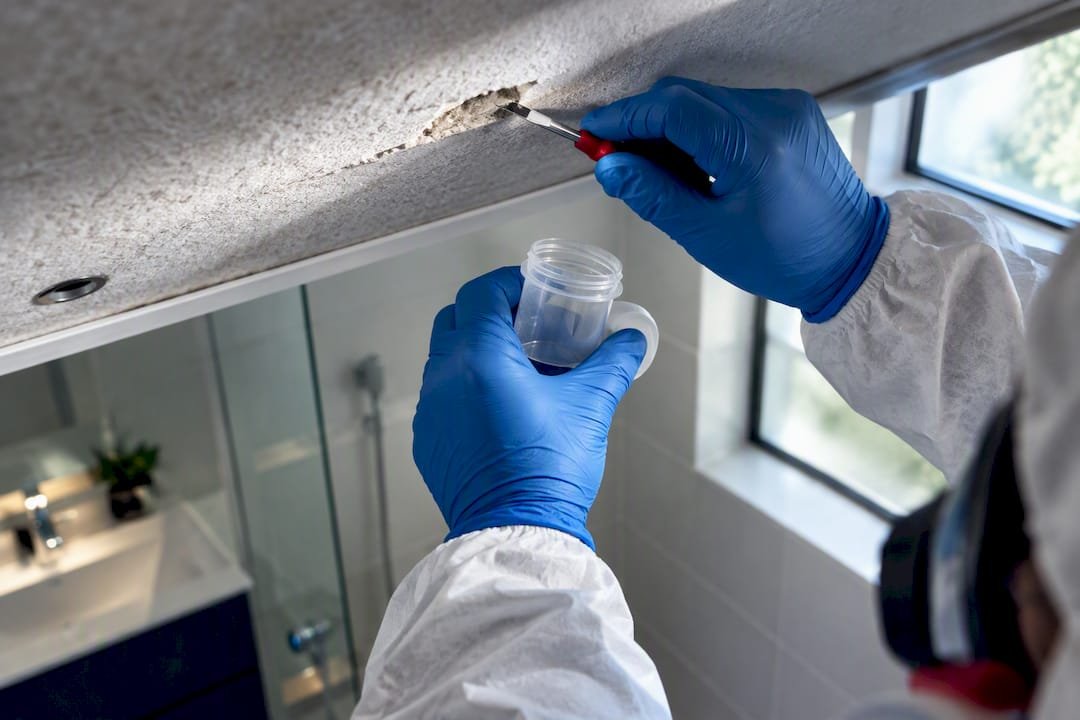
The regulatory picture has two layers. Nationally, Safe Work Australia’s demolition code of practice sets out duties for principal contractors, including WHS management planning and a pre-demolition risk assessment, with stricter requirements once construction work reaches $250,000. On top of that, state regulators like WorkSafe Victoria and EPA Victoria set their own rules for asbestos handling, building permits, and where waste can be legally dumped. Requirements differ between states, so what applies in Victoria won’t necessarily match Queensland or New South Wales.
The practical sequence looks like this:
- Presume. Any pre-1990 building material is treated as asbestos-containing until a licensed assessor says otherwise.
- Inspect. A licensed asbestos assessor tests suspect materials and issues a written report.
- Remove, if needed. A licensed asbestos removalist carries out containment and removal, disposing of material at an approved facility rather than a standard tip.
- Clearance certificate. An independent clearance inspection confirms the area is safe before general demolition resumes.
Skipping the inspection step is the single most expensive mistake homeowners make. If asbestos turns up mid-job, work stops, the site needs to be contained, and a licensed asbestos removalist has to be brought in under time pressure, usually at a higher rate than if the work had been scheduled from the start. Early asbestos inspection reduces overall project cost by letting removal happen as a planned, staged part of the job rather than an emergency interruption. Contractors also tend to price more competitively when a pre-issue asbestos report already exists, because it removes a major unknown from their quote.
If you’re planning renovation timing around this, it’s worth reading through how an asbestos removal timeline typically fits ahead of the rest of the demolition schedule.
How do you estimate your own demolition cost before calling a contractor?
You can get a genuinely useful ballpark figure in about twenty minutes, using nothing more than a tape measure and your phone camera.
- Measure the floor area and wall lengths of the space you want demolished. Round up rather than down, since offcuts and irregular corners always add a bit of extra material.
- Photograph access points including the front door, hallway width, stairs, and any narrow gates or driveways a skip bin or small excavator would need to pass through.
- Apply a benchmark rate. For a straightforward internal strip-out with no known hazards, multiply your floor area by $40 to $65 per m2. A 20 m2 bathroom and laundry strip-out, for instance, lands somewhere between $800 and $1,300 before disposal.
- Add a contingency allowance. Budget an extra 15 to 25% on top of your base estimate to cover the possibility of asbestos discovery, hidden wiring or plumbing behind walls, and reinstatement work like patching floors where a wall used to sit.
- Check your figure against comparable jobs. Airtasker’s national pricing data puts the median whole-project demolition cost around $16,000, with most projects falling somewhere between $12,000 and $40,000 depending on scope. A single-room strip-out will sit well below that median; a full interior gut job could sit near or above it.
This method gives you a number to sanity-check contractor quotes against, not a figure to hold anyone to. An off-site estimate can’t see what’s inside your walls, can’t confirm whether your slab is reinforced, and can’t tell you what your local council will require for a tip permit. A proper site inspection is the only way to convert a ballpark into a number you can actually budget against, and it’s a step every reputable contractor will insist on before issuing a fixed quote.
What do common interior demolition jobs actually cost?
Prices vary by state and by property, but these ranges reflect what Australian homeowners commonly see quoted for typical jobs.
- Single non-load-bearing wall removal: roughly $300 to $1,200, generally including labour, basic patching, and waste removal for a standard timber or plasterboard stud wall.
- Load-bearing wall removal: $2,500 to $8,000 or more, once you factor in a structural engineer’s assessment, a temporary support beam, and the actual demolition and reinstatement work. The engineering report alone can run several hundred dollars before any physical work starts.
- Kitchen strip-out: $1,500 to $4,000, covering cabinetry removal, tiling, benchtops, and basic disposal. This figure commonly excludes plumbing and electrical disconnection, which some contractors quote separately.
- Bathroom strip-out: $1,200 to $3,500, similarly excluding disconnection of water and waste lines unless specified.
- Full interior strip-out (whole house down to the frame): $15,000 to $40,000-plus, scaling heavily with floor area, number of storeys, and whether asbestos removal is required.
- Shed or garage removal: according to TheQuoteYard’s Victorian pricing guide, typical bands run from a few hundred dollars for a small timber shed up to several thousand for a larger colorbond garage with a concrete slab to break up and remove.
These figures assume standard access and no hazardous materials. Add asbestos sheeting, poor access, or an inner-city location with tight council conditions, and any of these ranges can shift upward by a third or more.
What should you ask for when comparing demolition quotes?
A cheap quote and a complete quote are not the same thing, and the gap between them usually shows up as an unpleasant surprise on the final invoice.
Before you accept any quote, ask the contractor to provide:
- Their ABN and current public liability insurance certificate.
- Any relevant demolition or asbestos removal licences, matched to the scope of your job.
- Confirmation of what waste disposal and tipping fees are included, and whether they’re itemised separately.
- Written confirmation of who arranges service disconnections (power, gas, water) before work begins.
- An asbestos clearance certificate process, if any hazardous material is present or suspected.
Your inclusions checklist should cover waste removal, tipping fees, any required council permits, service disconnections, and final site clean-up. If a quote is silent on any of these, ask directly rather than assuming it’s covered.
Market surveys consistently find that headline rates often exclude disposal or licensed asbestos removal, which is exactly why two quotes with wildly different numbers sometimes turn out to cover the same actual scope once you read the fine print. Consumer Affairs Victoria offers useful general guidance on what to check before signing a contractor agreement, including dispute resolution avenues if something goes wrong after the fact.
Pro Tip: Get all quotes based on the same site inspection and the same written brief. A phone quote and an on-site quote are not comparable, and neither is a quote based on your description versus one based on the contractor actually seeing the space.
A sound process looks like this: shortlist two or three licensed contractors, have each one inspect the site in person, request a written quote with full inclusions, then compare on scope before you compare on price.
How does a full-service demolition quote actually work?
A proper interior demolition quote is really a small project plan, not just a number. Quotes are typically structured around a site assessment, an asbestos check with liaison to a licensed assessor where needed, permit advice specific to your council, licensed removal work where hazardous materials are confirmed, full waste disposal, and clearance documentation once the job wraps up.
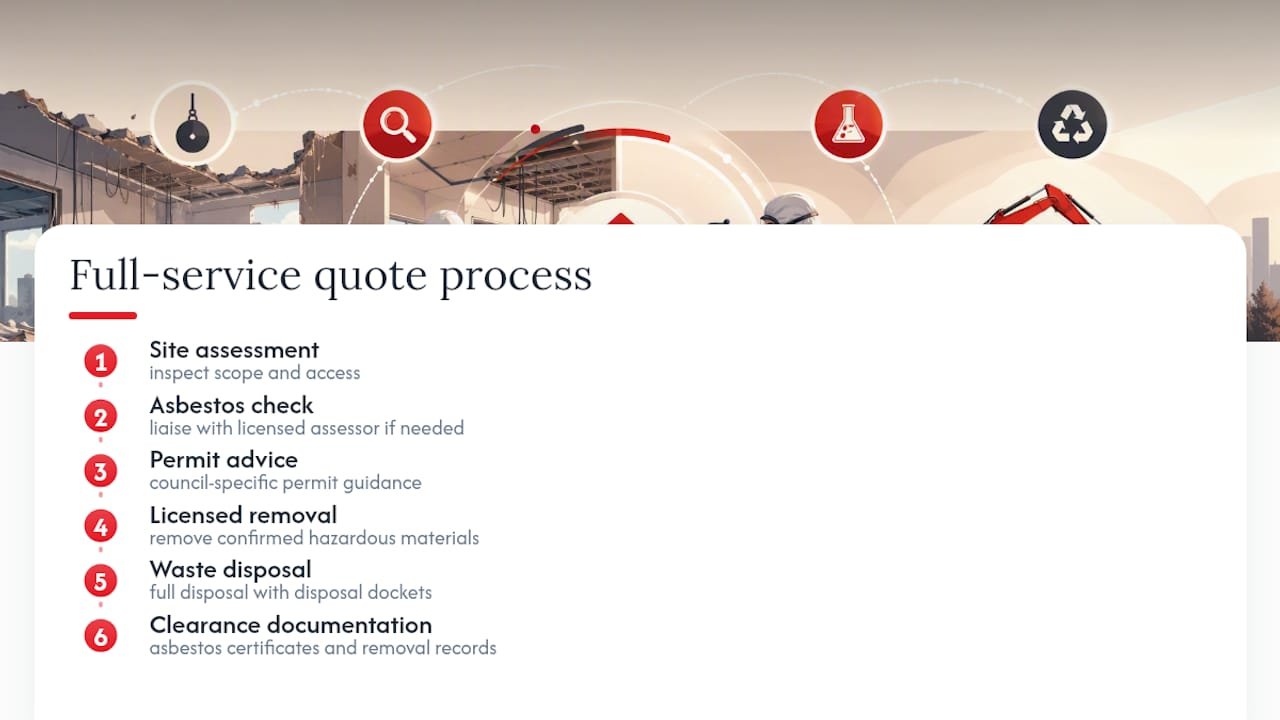
That documentation matters more than most homeowners expect going in. A clearance certificate for asbestos work, disposal dockets showing where waste actually went, and a written record of what was removed and when all protect you if a question ever comes up during a future sale or renovation. Missiondemolition’s approach to interior strip-out work is built around giving property owners that paper trail as standard, not as an add-on.
Handling both structured demolition and licensed asbestos remediation under one contract also removes a coordination headache. Instead of managing a demolition contractor and a separate asbestos removalist on different schedules, one team sequences the whole job. That matters most on older Sydney properties, where the asbestos question isn’t hypothetical. It’s usually the first thing that needs answering before any other cost gets locked in.
When does demolition make more sense than renovation?
Demolition earns its cost when the structure itself is the problem, not the finishes. If you’re fighting a failing foundation, outdated wiring throughout the whole house, or a floor plan that no amount of cosmetic work will fix, a full interior strip-out or knockdown often costs less over time than staged renovation that keeps running into the same underlying issues.
Renovation wins when the bones are sound and you’re mainly changing surfaces and layout within existing load paths. The trade-off isn’t just money. It’s disruption. A full interior strip-out can put you out of a kitchen or bathroom for weeks, and living on site during major structural work is genuinely hard on a household.
Resale value plays into this too. In some suburbs, a full knockdown-rebuild adds more value than a renovated original footprint ever could, particularly on larger blocks with redevelopment potential. In heritage-sensitive or character-driven suburbs, the calculation flips entirely. There’s no universal answer here, only a decision that depends on your block, your budget, and how long you plan to stay.
— Tarek
Ready to get an accurate quote for your project?
Every range in this guide is a starting point, not your number. The only way to know what your interior demolition will actually cost is a site visit from someone who can see your walls, your access, and your building materials in person. Interior demolition and strip-out work quotes are generally based on a site assessment, an asbestos check, permit advice where your council requires it, licensed removal if hazardous material turns up, and full waste disposal with clearance documentation at the end.
If you’re planning a room strip-out, a full interior gut job, or you’re not yet sure which category your project falls into, book a site inspection for interior strip-out work or reach out through Missiondemolition’s main services page to get a written quote. If your property is older and you suspect hazardous materials, start with an asbestos inspection and testing request instead, so the demolition quote you eventually get is built on a confirmed scope rather than a guess.
Sources
For rules specific to your state, go straight to the regulator rather than relying on a contractor’s word for it.
- How to safely remove asbestos (model code of practice) — Safe Work Australia
- How much do demolition costs run in 2026 — ServiceSeeking
- How much does it cost to demolish a house 2026 — hipages
FAQ
How can I calculate the cost of demolition in Australia?
Measure your floor area, multiply by a benchmark rate of $40 to $65 per m2 for a straightforward strip-out, then add 15 to 25% contingency for hidden issues like asbestos or damaged framing. This gives a workable ballpark, but a site inspection is needed for an accurate fixed quote.
Is it cheaper to renovate or demolish?
It depends on the condition of the structure, not just the size of the job. Renovation is usually cheaper when the foundation and frame are sound, while demolition tends to pay off when structural problems or an unworkable floor plan would make staged renovation drag on and cost more over time.
How do you calculate demolition costs?
Start with a per-square-metre or hourly benchmark, then adjust for the biggest cost drivers: asbestos, site access, structure type, and waste volume. National project data from Airtasker puts the median whole-project demolition cost around $16,000, with most jobs ranging between $12,000 and $40,000.
How much is demolition per m2?
Interior demolition and strip-out work typically costs $40 to $65 per square metre for standard jobs with reasonable access and no hazardous materials. Rates rise well above that range once asbestos removal, poor access, or reinforced structural elements are involved.
Does Missiondemolition publish fixed prices for interior demolition?
Missiondemolition doesn’t list a flat rate because interior demolition pricing depends on floor area, access, and whether asbestos is present. Request a site inspection for a written quote based on your specific property.
