A final site clean is the last, handover-ready clean that makes a property inspection-ready. It needs a surface-by-surface written scope, verified hazard controls and documented sign-off, not a general tidy-up. Before booking anyone, confirm whether asbestos clearance is required, then work from a checklist and schedule the clean inside the practical-completion window.
TL;DR:
- A final clean must be documented with a detailed surface-by-surface scope, photos, and a defect log to ensure clear expectations and avoid disputes.
- The schedule should be as close to practical completion as possible, with at least a one-day buffer free of trades to prevent re-soiling surfaces.
- For sites with asbestos or silica hazards, clearance certificates and strict safety controls, including controlled dust suppression methods, are legally required before re-occupancy.
- Larger or sensitive projects should always involve licensed professionals, with clear scope, schedule, and proof of waste disposal and clearance certificates to prevent delays.
- Most handovers fail due to vague scope definitions; attaching a detailed checklist to the contract helps clarify what constitutes a complete final clean.
Table of Contents
- What a final site clean includes: scope and deliverables
- Stages and timing: rough, detail and final cleans
- Detailed final-clean checklist by area
- Health, safety and hazardous-material controls during final cleaning
- When to hire a professional final-clean or site-clearance contractor
- How Mission Demolition handles site clearance and final cleaning
- Final inspection, sign-off and common handover documentation
- What most handovers get wrong
- Mission Demolition’s site clearance and final-clean support
- Regulatory and guidance documents cited
- Sources
- FAQ
What a final site clean includes: scope and deliverables
A final clean covers every surface a person will touch, see or breathe near before occupation: dust removal from all horizontal and vertical surfaces, fixtures and fittings, floors, glazing, vents and sanitaryware, plus removal of packaging and construction debris. It does not cover construction defects. Paint overspray, sealant gaps, scratched glazing and unfinished trims are trade rectification items, not cleaning tasks, and a good scope separates the two so nobody argues about it at handover.
Before you sign a contractor, ask for:
- A written, surface-by-surface scope naming each area and finish, not a one-line “final clean” brief.
- Before and after photos of every room, taken on the same walkthrough path each time.
- A defect log that flags trade issues separately from cleaning issues.
- A signed sign-off form dated to the handover, not the invoice date.
That written scope becomes the reference document for the walkthrough later, so keep it attached to the contract rather than emailed separately.
Stages and timing: rough, detail and final cleans
Construction cleaning generally runs in three stages, each with a different owner and purpose.
- Rough or contractor clean: happens during the build, usually done by trades clearing their own offcuts and packaging as work finishes in each area.
- Builders or detail clean: a thorough pass once most trades are off site, removing dust, adhesive residue and construction film from fixtures, glass and floors.
- Final or sparkle clean: the last pass immediately before handover, focused on presentation, fine dust and any marks left by the detail clean or late trades.
Schedule the final clean as close to practical completion as the programme allows, ideally with a trade-free buffer of at least a day so nobody re-soils finished surfaces. Lock in power and water access times with the site supervisor, protect any newly laid flooring or benchtops before cleaners arrive, and confirm who holds keys or access codes on the day. A final clean booked before the last trade leaves is money wasted.
Detailed final-clean checklist by area
A surface-by-surface checklist keeps quotes comparable and prevents disputes later. Use this as a starting brief and adjust it to the finishes on your job.
Kitchen: wipe down and degrease all appliances inside and out, clean benchtops and joinery fronts, remove adhesive and paint from splashbacks, and flush and polish sinks and taps.
Bathroom: scrub sanitaryware and grout lines, clean shower screens and frames, clear drains of construction debris, and polish tapware and mirrors.
Floors and skirtings: remove adhesive residue and paint spots without damaging the finish, and apply the manufacturer’s recommended protection or polish to timber, tile or polished concrete.
Windows, doors and glazing: clean frames, sills and tracks, remove protective film, and polish glass on both sides including any high or awkward panes.
Fixtures and finishes: dust and wipe light fittings and switches, clean supply and exhaust vents, and detail built-in joinery inside and out.
External areas and waste: segregate construction and demolition waste for correct disposal, wash down concrete paths and driveways, and clear gutters and downpipes of building debris.
- Kitchen surfaces get degreased before benchtops, not after, so grease doesn’t redeposit.
- Grout and sealant lines are cleaned, not just wiped, since residue there is what inspectors notice first.
- Window tracks and sills are checked separately from the glass itself, they collect the most construction dust.
- External wash-down water is directed away from stormwater drains where local rules require it.
Pro Tip: Walk the site with your checklist before the cleaners arrive and again straight after, using the same room order both times, so nothing gets missed in the gap.
Health, safety and hazardous-material controls during final cleaning
Final cleaning on a construction site is not just a presentation job, it’s a controlled activity when silica dust or asbestos are present. Where more than 10 square metres of non-friable asbestos or any friable asbestos has been removed, an independent hygienist must issue a clearance certificate before anyone re-occupies the site. Our asbestos clearance certificate guide walks through that process in more detail.
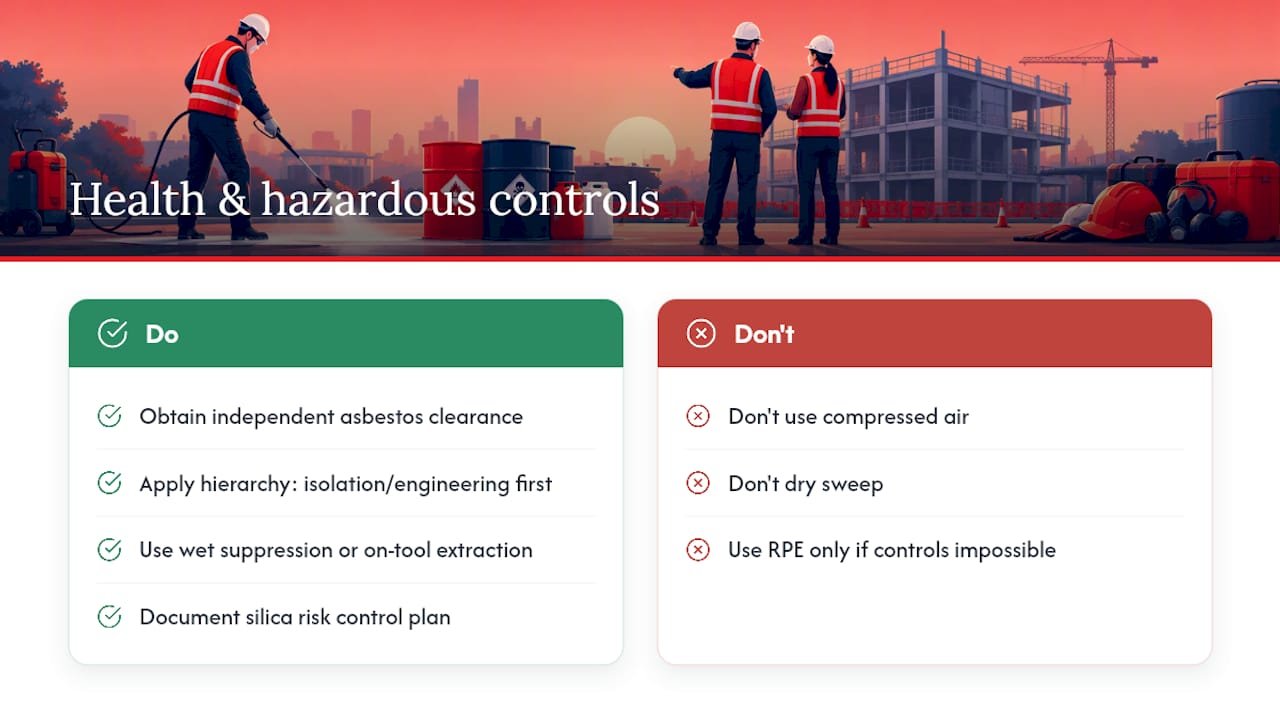
For respirable crystalline silica, Safe Work Australia’s guidance requires the hierarchy of controls to be applied: isolation or engineering controls such as wet suppression, on-tool extraction or local exhaust ventilation come first, with respiratory protective equipment used only when those controls can’t be implemented.
Housekeeping can eliminate or reduce silica exposure; acceptable methods include wet-downs, low-pressure water, wet sweeping or M or H class vacuum cleaning, with compressed air and dry sweeping explicitly ruled out.
Source: National guide for working with silica and silica containing products
A documented silica risk control plan covering chosen controls, monitoring and equipment maintenance is an explicit expectation under the model code of practice for managing silica risks, and it should sit in your project file alongside cleaning logs.
Before the clean starts, confirm in writing who supplies the clearance certificate, where hazardous waste is going, and what evidence you’ll receive to prove it got there.
When to hire a professional final-clean or site-clearance contractor
Hire a professional when the project is larger than a single dwelling, involves sensitive finishes like polished concrete or engineered stone, or has any history of asbestos or silica-generating work. Programme risk matters too: a missed final clean can delay practical completion by days.
A good brief includes:
- A surface-by-surface scope matched to the checklist above, not a generic description.
- The exact schedule window, including trade-free buffer time.
- Deliverables required: photos, a signed sign-off form, waste disposal dockets and any clearance certificates.
Ask contractors about their licences, cleaning methods, whether they use M or H class vacuums, their asbestos protocols, and their insurance cover. Ask for references from similar jobs.
Pro Tip: A bid that skips these questions or quotes a flat price with no scope attached is the one most likely to end in a dispute over what “clean” meant.
Watch for vague line items like “general clean” with no area breakdown, that’s usually where scope disputes start.
How Mission Demolition handles site clearance and final cleaning
Mission Demolition specialises in safe, fast, and affordable demolition and asbestos removal services, working with residential, commercial and industrial clients on tailored solutions that comply with strict safety standards and prioritise environmentally responsible waste disposal.
- The company combines modern equipment with experience to manage demolition and licensed asbestos removal, handling hazardous materials from start to finish.
- The company has experience completing numerous projects, applying care to structured demolition and asbestos concerns on every job.
- Our site-clearance checklist covers the audit points worth adapting into a tender scope.
- Our asbestos abatement guide explains clearance steps clients should expect when asbestos affects a handover.
Final inspection, sign-off and common handover documentation
Handover should close with a short, structured walkthrough, not a rushed final look.
- Gather documentation first: cleaning sign-off form, any clearance certificates, waste disposal dockets, before and after photos and the defect log.
- Walk the site with the right people: the project manager, the cleaning contractor and, where asbestos was involved, the independent hygienist who issued clearance.
- Separate defects from cleaning issues as you go, using the checklist from earlier sections to flag which trade owns each item.
- Sign off against the scope, not against a general impression, since the written scope is what protects both sides if something is disputed later.
Agree acceptance criteria before the clean starts and attach them to the scope document, that single step prevents most disputes at this stage.
What most handovers get wrong
Most handover disputes I’ve seen trace back to one thing: nobody wrote down what “clean” meant before the work started. A checklist attached to the contract fixes that before it becomes a problem.
— Tarek
Mission Demolition’s site clearance and final-clean support
Mission Demolition handles the parts of a handover clean that carry real risk: asbestos-safe removal, site clearance and the documentation that proves it was done properly. Engaging us starts with a site assessment, followed by a written scope, photographic evidence and coordination of any clearance certificates your project needs.
If your site has any history of asbestos or hazardous materials, get in touch through our demolition and asbestos removal services page to book a site assessment before you schedule the final clean.
Regulatory and guidance documents cited
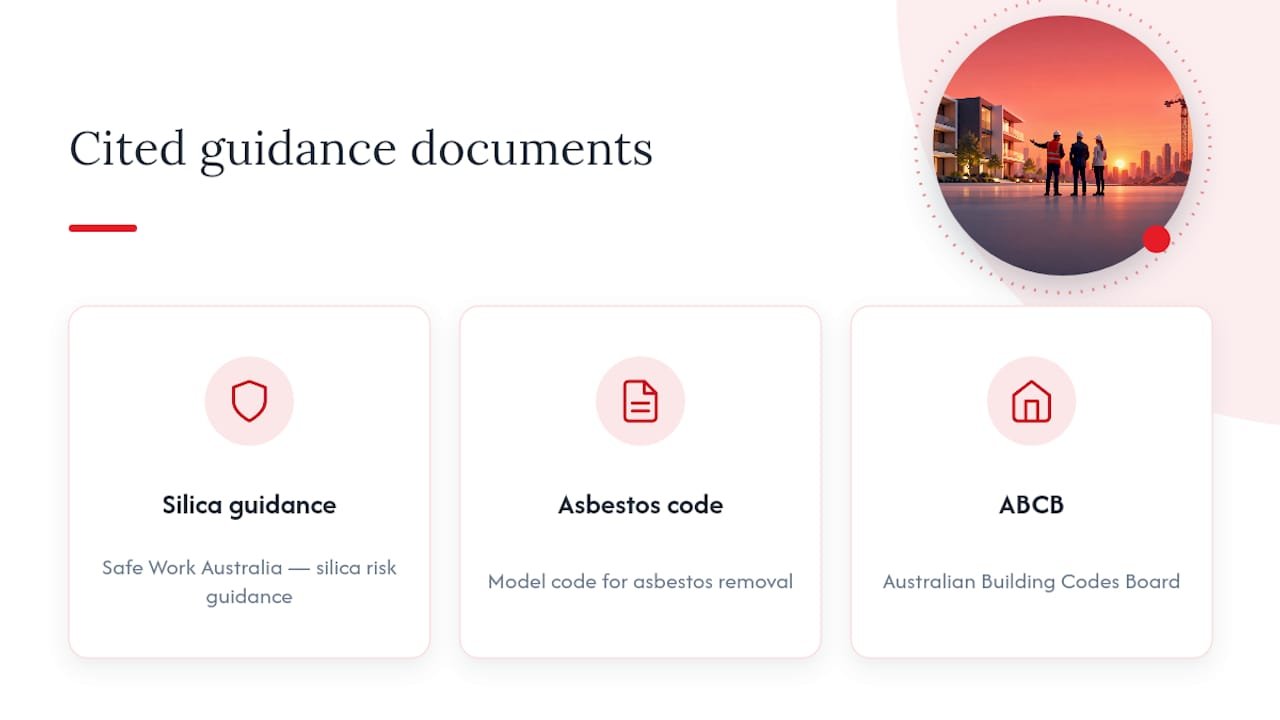
For the safety detail behind this guide, see Safe Work Australia’s silica risk guidance, model code for asbestos removal, and the Australian Building Codes Board.
FAQ
What is the difference between a builders clean and a final clean?
A builders clean is a thorough detail pass once most trades are off site, removing construction dust and residue. A final clean is the last pass immediately before handover, focused on presentation and any marks left afterward.
What is the 5-5-5 rule for cleaning?
Definitions of this rule vary across cleaning guides and aren’t tied to a specific regulatory standard for construction handovers. Rather than rely on it, work from a written, area-by-area scope like the checklist in this guide.
Is a professional final clean worth the cost?
For larger projects, sensitive finishes or any site with asbestos or silica history, a professional clean reduces the risk of a failed inspection or a disputed handover. Mission Demolition’s site-clearance checklist is a useful starting brief for comparing quotes.
What should a cleaner cover in a short final clean?
Even a short final clean should prioritise kitchens, bathrooms, floors and glazing, since these are what inspectors check first. A tight scope focused on those areas, backed by before and after photos, gets more done than a vague general tidy.
