
If a structure is at immediate risk of collapse, protect life first: evacuate the area, isolate gas, water and power, cordon off the site, call emergency services if anyone is in danger, and notify the relevant work health and safety regulator before any demolition work starts. Everything after that first hour, from structural assessment to asbestos control, follows a regulator-aligned sequence.
TL;DR:
- Emergency demolition is triggered by imminent structural failure or hazards that require urgent action, with asbestos considerations adding urgency to notifications.
- Initial response must prioritize life safety by evacuating the site, isolating utilities, cordoning the area, and engaging qualified structural and asbestos experts.
- Regulatory notifications, especially involving asbestos, must be made as soon as reasonably practicable, with proper documentation of hazards, timing, and actions taken.
- A licensed demolisher and asbestos removalist must lead the work, supported by a site-specific safe work method statement and continuous supervision.
- Partial or make-safe demolition methods are often appropriate first steps; full demolition is only necessary if the structure cannot be stabilized or repaired.
Table of Contents
- What emergency demolition means and when it applies
- Immediate steps checklist for owners and site managers
- Regulatory notifications and state differences
- Asbestos and hazardous materials in emergency demolition
- Who can lawfully carry out emergency demolition
- Make-safe, partial and full demolition: choosing the right method
- Site safety controls: exclusion zones and traffic
- Waste handling and clearance before reoccupation
- How Mission Demolition manages emergency demolition safely and lawfully
- Practical quick advice from a demolition supervisor’s point of view
- Get emergency demolition help now
- Sources
- FAQ
What emergency demolition means and when it applies
Emergency demolition is not the same as wanting a job done quickly. It applies when a structure is structurally unsound or collapse is imminent, and the risk to people or property cannot wait for the standard planning and notification cycle. WorkSafe Queensland’s demolition guidance frames it this way: protect life first, get emergency services involved if people are at risk, isolate services, arrange an urgent structural assessment, notify the regulator and council where required, then choose make-safe, partial, or full demolition under a site-specific safe work method statement.
Common triggers include a fire-damaged frame that has lost load-bearing capacity, storm or flood damage that has undermined footings or walls, a vehicle impact that has compromised a structural member, or a council or building inspector issuing a formal safety notice ordering the structure be made safe or removed. In each case, the defining feature is that the building itself has become the hazard, not that the owner wants faster turnaround.
Asbestos changes the picture further. Under Queensland’s asbestos notification framework, buildings constructed before December 31, 1989, and certain non-building structures or plant built before December 31, 2003, are treated as likely to contain asbestos, which triggers special emergency notification and exposure control obligations the moment demolition becomes urgent. That threshold matters because a genuinely emergency structural situation involving an older building is rarely just a structural problem: it is a structural problem with an asbestos overlay that has to be managed at the same time, not afterwards.
Jurisdictions frame the emergency threshold slightly differently, and the practical effect is that a site manager working across state lines cannot assume one regulator’s rules apply everywhere. NSW, Queensland and other states each publish their own guidance on what counts as an emergency, what notification is expected and how quickly. The safest approach for any supervisor is to check the relevant state regulator’s current guidance for the property’s location before assuming a national default exists, because none does in a single unified form. What stays consistent everywhere is the underlying principle: life safety and hazard control come first, paperwork and demolition method come second.
Immediate steps checklist for owners and site managers
The first few hours after discovering an unsafe structure set the tone for everything that follows. Acting in the wrong order, for instance starting demolition before isolating services or assessing asbestos risk, creates new hazards on top of the original one.
- Protect people first. Evacuate the building and surrounding area, keep a safe distance, and call emergency services immediately if anyone is trapped, injured or still inside.
- Isolate utilities. Contact the electricity, gas and water providers to arrange isolation, or use existing site isolation procedures only if it is safe to access the relevant points.
- Secure the scene. Cordon the area with fencing or barrier tape, post signage, and start taking photographs and notes of the damage before anything is disturbed.
- Arrange an urgent structural assessment. Bring in a structural engineer or competent person to assess stability and nominate a competent supervisor to oversee the response.
- Notify the regulator and council. Contact the relevant work health and safety regulator as required for your state, open a site-specific safe work method statement (SWMS) and start an emergency plan.
Pro Tip: Photograph the damage from multiple angles before any make-safe work begins: insurers and regulators both ask for this evidence later, and it is far harder to reconstruct once debris has been moved.
These steps are sequential for a reason. Isolating services before anyone approaches damaged walls or floors prevents a structural failure from becoming an electrocution or gas explosion as well. Cordoning the scene protects passers-by and preserves the site for the structural assessment that follows, since trampled debris or moved materials can obscure the cause of failure and complicate both the engineering report and any insurance claim.
Nominating a competent supervisor early matters because emergency sites tend to attract well-meaning but unqualified help, neighbours offering to prop a wall, a tenant trying to retrieve belongings, a contractor starting work before the SWMS exists. A single point of authority on site, backed by a documented plan, is what keeps those good intentions from creating a second incident. The SWMS does not need to be exhaustive on day one, but it does need to exist before physical demolition or make-safe work begins, covering at minimum the hazards identified, the controls in place and who is responsible for each task.
Regulatory notifications and state differences
Ordinary demolition notice periods do not apply once a structure becomes an emergency, and treating them as if they do is one of the more common compliance mistakes on urgent sites. Standard demolition notification in NSW is typically expected five-day before work begins, but SafeWork NSW’s asbestos notification guidance makes clear that emergency situations follow a different, faster path.
In NSW, if asbestos is involved and demolition needs to happen urgently, the process is:
- Call SafeWork NSW on 13 10 50 to report the emergency and get immediate guidance.
- Lodge formal notification as soon as reasonably practicable, using the emergency notification form referenced in SafeWork NSW’s Form 65 guidance for emergency demolition involving asbestos.
- Keep evidence of the timeline of events, since “as soon as reasonably practicable” is judged against what you actually knew and when.
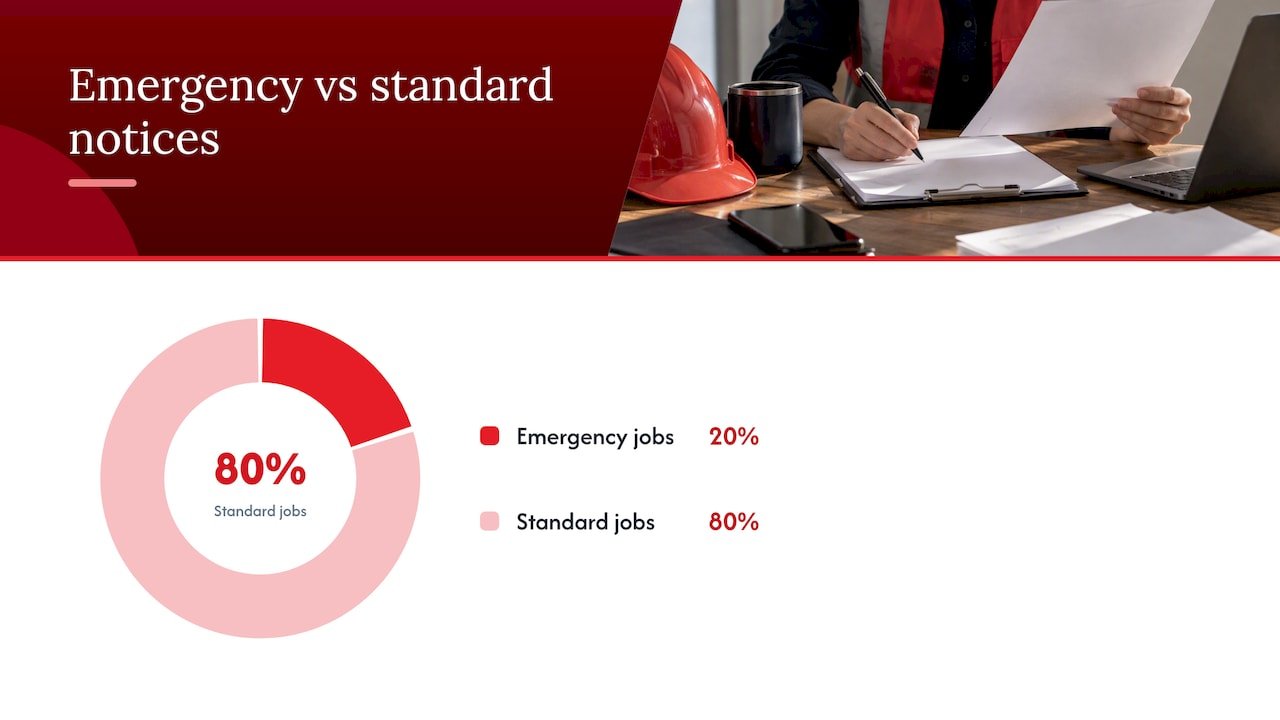
One in five demolition jobs never involves the standard five day window at all when an emergency applies: the exact NSW guidance is that emergency services organisations may notify as soon as reasonably practicable rather than waiting for the ordinary lead time, which is a meaningful shift in obligation, not just a courtesy extension.
Queensland works on a similar principle through WorkSafe Queensland’s asbestos and demolition guidance: immediate notification is expected before starting emergency demolition where asbestos is suspected, with Form 65 referenced as the relevant documentation. The expectation is the same as in NSW in substance even though the process and forms differ: speed does not remove the duty to notify, it changes when and how you do it.
Before making that call, have the following ready so the notification is useful rather than a back-and-forth:
- The property address and a brief description of what has happened (fire, storm, structural failure, impact damage).
- Whether the building predates 1990, which raises the likelihood of asbestos-containing materials.
- Whether anyone has been injured or is still at risk.
- What isolation and cordon measures are already in place.
- The name and contact details of the structural engineer or competent person engaged, if one has been arranged.
A prompt, well-prepared call to the regulator does two things at once: it satisfies the legal notification duty and it often gets you faster, more specific guidance on what the regulator expects next for your particular site.
Asbestos and hazardous materials in emergency demolition
Age is the first and most reliable indicator of asbestos risk. Any building constructed before December 31, 1989, or certain non-building structures and plant built before December 31, 2003, should be treated as asbestos-risk until proven otherwise, under the threshold WorkSafe Queensland applies to demolition notification. Fire, storm and impact damage can also expose materials, such as fibro sheeting, pipe lagging or vinyl floor backing, that were previously intact and contained.
Visible damage is not a reliable boundary for contamination. Disturbance from collapse, fire or emergency access can spread fibres well beyond the area that looks damaged, which is why WorkSafe Queensland’s asbestos and demolition guidance treats containment as a site-wide concern rather than a spot-fix.
Where asbestos cannot reasonably be removed before emergency demolition proceeds, the guidance sets out specific control measures:
- Fine wet spray suppression to keep fibres from becoming airborne during disturbance, with runoff controlled rather than allowed to spread across the site.
- Containment barriers around the affected area to limit the spread of dust and debris.
- Double-layer 200 micron polythene wrapping for any asbestos-contaminated material removed, labelled clearly before it leaves the site.
- Controlled removal of contaminated surface soil where fibres have settled, rather than leaving it in place or disturbing it further with heavy plant.
Pro Tip: If you are not certain whether debris contains asbestos, treat it as if it does. Wet suppression and containment cost far less than a second clean-up after a fibre release.
Licensed asbestos removal is required once the material is confirmed or reasonably suspected, and a clearance certificate is the document that confirms the area is safe to reoccupy or continue works. This is not a formality: reoccupying or resuming demolition without that clearance risks a second exposure event and a separate regulatory breach on top of the original incident, so it belongs in the same file as your notification records and SWMS. Mission Demolition’s guidance on stopping asbestos exposure after a house fire covers the practical side of identifying hidden asbestos once a structure has been fire damaged, which is one of the more common emergency triggers.
There are also clear things not to do, and they matter because well-meaning first responders and property owners sometimes make the exposure worse while trying to help.
- Do not use a household or shop vacuum on debris that might contain asbestos: standard vacuums release fibres rather than capturing them.
- Do not use high-pressure water to clean up debris, since it can aerosolise fibres instead of containing them.
- Do not dry-sweep or dry-brush suspected asbestos material.
- Do not allow untrained people, including well-meaning neighbours or tenants, to handle or move damaged sheeting or lagging.
A licensed asbestos removalist working under wet suppression and containment protocols is the safe route, and it is one of the areas where cutting corners under time pressure tends to cause the most long-term cost, both in health terms and in regulatory exposure.
Who can lawfully carry out emergency demolition
A person conducting a business or undertaking, commonly referred to as a PCBU, carries the primary duty to manage health and safety risks during demolition, emergency or not. That duty does not pause because the situation is urgent. SafeWork NSW’s Code of practice: Demolition work requires a PCBU to prepare and implement an emergency plan, and to ensure a SWMS, competent supervision and tested emergency procedures are in place even when the demolition itself is time critical.
In practice this means:
- A licensed demolisher, appropriate to the scale and type of structure, is engaged rather than unlicensed labour, even under time pressure.
- A SWMS is documented before physical demolition or make-safe work begins, covering the hazards identified on site and the controls in place.
- Licensed asbestos removal is used wherever asbestos is confirmed or suspected, rather than being handled by the general demolition crew.
- A competent supervisor is on site for the duration of the works, with clear authority to pause or stop work if conditions change.
The emergency plan itself should cover evacuation procedures, early notification of emergency services, medical assistance arrangements and communication protocols, and it needs to be tested and reviewed rather than written once and filed away, as the Code of practice sets out.
Record-keeping is not an afterthought here. Keep the regulator notification records, the SWMS, a site diary noting decisions and timings, and photographic evidence of the site before, during and after works. These records serve three audiences at once: the regulator checking compliance, the insurer assessing a claim, and the engineer or supervisor who needs a clear record if a dispute arises later about what was known and when.
Make-safe, partial and full demolition: choosing the right method
Not every emergency ends in full demolition, and jumping straight to complete removal is often the wrong call. A make-safe is usually the first practical step: temporary propping of unstable elements, removal of loose debris that could fall, and fencing to keep people away from the danger zone while a fuller assessment happens.
Partial demolition can be safer than full demolition in situations where only part of a structure has failed and removing the whole building would disturb elements that are still stable. Sequencing matters enormously here: removing a single structural element can redistribute loads onto adjacent members that were never designed to carry them, which is why demolition is fundamentally a sequencing problem rather than just a removal task. Competent supervision has to manage that sequence continuously, adjusting as conditions on site change rather than following a fixed plan regardless of what is found.
- Temporary propping supports compromised walls or floors until a permanent decision on demolition or repair is made.
- Debris removal clears immediate falling hazards without touching structural elements that are still load-bearing.
- Staged removal takes down unstable sections in a planned order, checking stability after each stage rather than all at once.
Pro Tip: Never remove a structural element “because it looks unstable anyway” without engineering sign-off: the load it was carrying has to go somewhere, and guessing wrong can trigger the exact collapse you were trying to prevent.
Operational controls run alongside the method decision. Plant needs to be positioned outside the zone of potential collapse, not just outside the visible debris field. Weather assessment matters more in an emergency than in a planned demolition, since wind loading on a partially collapsed structure behaves differently to wind loading on an intact one. Supervision has to include clear stop-work criteria, agreed in advance, so that if ground conditions shift, if a new crack appears, or if weather deteriorates, the crew has an unambiguous trigger to down tools rather than a judgement call made mid-task.
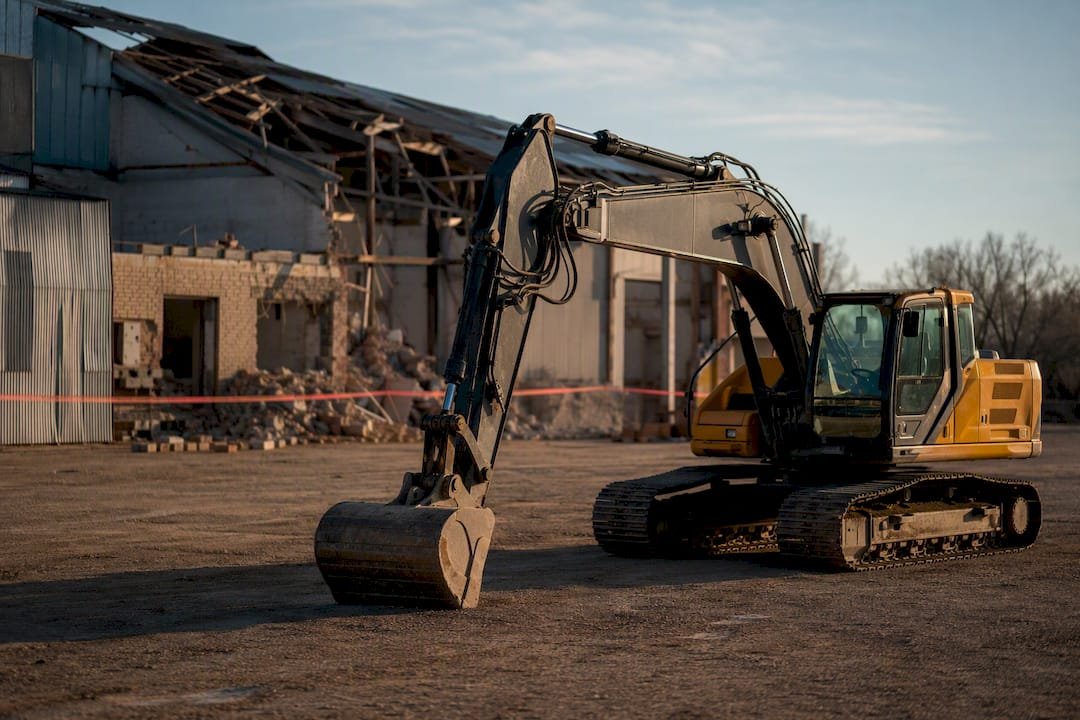
An engineering assessment underpins all of this. The engineer’s job is not just to confirm the building is unsafe, which is usually already obvious, but to identify which sequence of removal keeps the site stable at every stage rather than only at the end. Mission Demolition’s overview of what demolition planning involves touches on this sequencing logic in more routine, planned demolition contexts, and the same principle applies under emergency conditions, just compressed into a much shorter timeframe.
Site safety controls: exclusion zones and traffic
Exclusion zones need to be sized to the actual risk, not to a standard distance copied from an unrelated job. A zone that is too small leaves workers and the public exposed to falling debris or a secondary collapse; a zone that is unnecessarily large creates its own problems, closing roads or access points that did not need to close.
- Size the exclusion zone to the structure’s height and condition, accounting for the possibility of a secondary collapse spreading debris further than the original failure.
- Set up traffic control where the site adjoins a road or footpath, including pedestrian diversions and, where needed, temporary road closures coordinated with council.
- Position plant outside the exclusion zone whenever it is not actively engaged in make-safe or demolition work, to avoid it becoming a secondary hazard if the ground shifts.
- Keep the public physically separated from the site with solid fencing rather than tape alone, since tape does not stop someone walking through out of curiosity.
- Establish communication protocols and stop-work triggers before work begins, so supervisors and workers share the same signal for pausing work immediately if conditions change.
Plant placement deserves particular attention on emergency sites, because the ground itself may be compromised in ways that are not visible. An excavator or elevated platform positioned on ground weakened by the same event that damaged the structure can tip or sink, turning a make-safe operation into a second incident. Supervisors need to treat the surrounding ground with the same suspicion as the structure itself until it has been checked.
Waste handling and clearance before reoccupation
Waste segregation starts on day one, not after the bulk of the demolition is finished. Hazardous materials, particularly asbestos, need to be kept separate from general demolition waste from the moment they are identified, not consolidated into a single skip for later sorting.
- Asbestos waste is double-bagged in 200 micron polythene and clearly labelled before it leaves the site, in line with the removal standards set out in asbestos codes of practice.
- Contaminated surface soil is scraped and removed to the depth the fibres have settled to, with containment measures preventing further spread during that removal.
- All hazardous waste goes to an authorised landfill licensed to accept it, not a general construction waste facility.
- A clearance certificate is obtained after licensed asbestos removal, confirming the area is safe before anyone reoccupies it or resumes general demolition work.
Clearance is the step that is easiest to skip under time pressure and the most consequential one to skip. Reoccupying a site, or letting a demolition crew resume general work, without that certificate on file risks a second exposure event and a compliance breach layered on top of the original emergency. Keep it with your other handover documents rather than treating it as a separate administrative task.
Handover documentation for council, insurers and the property owner should include the regulator notification records, the SWMS, the clearance certificate where asbestos was involved, and photographic records from before, during and after the works. Mission Demolition’s guide to asbestos abatement in Sydney sets out what a licensed clearance process looks like in more detail, and post-demolition dust and ash clean-up, of the kind described by specialist services such as compliant construction dust cleanup, is often the final practical step before a site is genuinely ready to hand back.
How Mission Demolition manages emergency demolition safely and lawfully
Emergency demolition services alongside licensed asbestos removal, residential, commercial and industrial demolition, and site clearance are offered by professional operators working to the same regulatory sequence described throughout this article rather than skipping steps because a job is urgent.
A typical emergency response from a professional operator follows a consistent pattern: initial assessment of the structure and any asbestos risk, a make-safe stage to remove immediate danger, licensed handling of any hazardous material found, the required regulator and council notifications, a site-specific SWMS, and a clearance process before the site is handed back. Emergency demolition work is structured around that same order, because skipping a step under pressure tends to create the next emergency rather than resolve the current one.
Property owners engaging any contractor for emergency work should expect a few baseline things: current licensing for demolition and, where relevant, asbestos removal; appropriate insurance; and clear, timely communication about what is happening on site and why. Licensed asbestos removal capability is held by professional operators who structure emergency demolition and site clearance work to meet those same expectations, treating compliance and clear client communication as part of the job rather than an add-on.
Practical quick advice from a demolition supervisor’s point of view
The two mistakes I see most often on emergency sites are starting full demolition before anyone has properly assessed asbestos risk, and under-sizing the exclusion zone because everyone is focused on the building rather than what happens if it fails further. Both come from treating urgency as a reason to skip a step rather than a reason to do the steps faster and in the right order.
What actually keeps a site under control is unglamorous: a documented SWMS that gets updated as conditions change, a competent supervisor with clear authority to stop work, and stop-work criteria that everyone on site actually knows rather than ones buried in a document nobody reads. Supervisors who run tight emergency sites tend to use simple tricks: clear radio protocols so instructions do not get garbled between workers, staged removal sequences checked after each stage rather than planned once and followed blindly, and a habit of treating “it looks fine” as the least reliable assessment available to them.
— Tarek
Get emergency demolition help now
If you are dealing with a structure that has become unsafe, waiting for a standard quote process is not the right move, and you do not need to manage regulator notifications, asbestos risk and make-safe sequencing on your own. Emergency demolition services alongside licensed asbestos removal and site clearance are built around the same protect-life-first sequence covered in this article rather than a rushed shortcut version of it.
What that looks like in practice:
- An initial assessment and make-safe response to remove the immediate danger.
- Support through the regulator notification process, including asbestos notification where it applies.
- A documented SWMS, licensed asbestos handling where needed, and clearance assistance before the site is handed back.
If your property has an unstable structure or fire, storm or impact damage that needs urgent attention, contact Mission Demolition through the emergency demolition services page for a direct response rather than a generic quote queue.
This article is general information, not a substitute for advice from a qualified lawyer. Consult a qualified legal professional about your own circumstances before acting on anything here.
Sources
FAQ
What are the typical steps in a demolition project?
A standard demolition project moves through site assessment, permits and notification, service disconnection, asbestos inspection, the demolition itself and finally waste removal and site clearance. In an emergency, the sequence compresses and notification timing shifts, but the same core steps, protecting people, isolating services, assessing structure and managing hazardous materials, still apply in order.
What are the standard requirements for emergency egress?
Emergency egress requirements vary by building type and jurisdiction, and are generally set out in the relevant building code and work health and safety regulations for the structure’s location. For an emergency demolition site specifically, the practical priority is keeping evacuation routes clear and ensuring anyone still inside can get out safely before any make-safe or demolition work begins.
What are the three types of demolition?
The three broad approaches are make-safe (temporary stabilisation such as propping and debris removal), partial demolition (removing only the unstable or damaged section) and full demolition (removing the entire structure). An emergency situation often starts with a make-safe response before a decision is made on whether partial or full demolition is needed, based on the structural engineer’s assessment.
How many days does it take to demolish a house?
There is no fixed duration published by regulators, since timing depends on the size of the structure, whether asbestos is present, and how quickly notifications and clearances are processed. In a genuine emergency, the initial make-safe response typically happens within hours, while full demolition and site clearance, including any required asbestos clearance certificate, follow once assessments and notifications are complete.
Do I need a licensed contractor for emergency demolition?
Yes, a person conducting a business or undertaking has ongoing duties to manage risk during demolition, and a licensed demolisher, with licensed asbestos removal where relevant, is required rather than unlicensed labour, even under time pressure. Mission Demolition provides licensed asbestos removal alongside its emergency demolition services to meet that requirement directly.
