
Most small, detached garages built from timber, steel or fibro usually fall under a Class 10 exemption and can come down without a formal demolition permit, provided they stay under common floor area thresholds and the property has no heritage listing. Masonry construction, asbestos, safety risks or a heritage overlay typically flip that exemption off. When in doubt, check your council or state planning portal before you touch a wall, and work through the checklist below.
TL;DR:
- Many councils exempt garages under about 40 square metres if they are not masonry, unless heritage rules, boundary risks, or attachment triggers approval.
- Arrange a written hazardous materials survey before lodging or demolition; identified asbestos may require licensed removal and a clearance certificate before general work proceeds.
- Rules and forms differ by state: NSW may allow complying development, Victoria can require Section 29A consent, and Western Australian councils commonly use BA5 permits.
- Some councils target about 10 business days; applicants may get up to 21 days for requested details, and permits commonly last about two years.
- Councils often prefer registered demolition contractors; owner applications may face close scrutiny, so verify registration, insurance, and asbestos credentials before hiring.
Table of Contents
- When a demolition permit is usually required
- How the rules differ by state and what to lodge where
- Asbestos and hazardous materials: what forces extra approval
- Step-by-step checklist to prepare your application
- Who should apply and why a registered demolisher helps
- What to expect for timing, fees and permit validity
- How a full-service contractor manages permits and hazards
- What actually matters when you cut through the noise
- Mission Demolition: how we can help with garage demolition and permits
- FAQ
- Sources
When a demolition permit is usually required
Most garages fall under Class 10a of the National Construction Code, the category for private sheds, carports and similar outbuildings not used for habitation. Councils generally treat these as lower risk than a house or granny flat, which is why many allow demolition without a separate permit under set conditions.
The most common exemption test combines two factors: the garage must not be built from masonry, and its floor area must sit under the commonly applied threshold, which is around 40 square metres. Bayside City Council’s guidance on demolition exemptions sets out this standard, noting that masonry construction removes the exemption even when the garage is small. A brick or besser-block garage, in other words, usually needs a permit regardless of size.
Several other triggers override the exemption:
- Heritage listing on the property or in the local planning overlay
- Risk to public safety, such as a garage near a boundary, footpath or neighbouring structure
- Demolition that is attached to or part of a larger structure rather than a standalone building
- Removal of a substantial structural part of the main dwelling, not just the garage itself
How the rules differ by state and what to lodge where
Demolition approval runs through state building legislation, so the paperwork and the name on the form change once you cross a border.
- New South Wales: many garage demolitions can proceed as complying development (CDC) if they meet the criteria in the Demolition Code, part of the Codes SEPP, including compliance with Australian Standard AS 2601-2001. Section 10.7 planning certificates are worth checking for heritage or zoning flags before you lodge.
- Victoria: the 40 square metre, non-masonry exemption is common, but some councils require a report and consent process under Section 29A before work starts, particularly near boundaries or easements.
- Queensland: building approval is required for many demolitions, though smaller outbuildings can be exempt depending on size and material, similar to the NSW and Victorian tests.
- Western Australia: most councils use the BA5 demolition permit form, with checklists covering rodent baiting and service notifications, as shown in the City of Gosnells’ demolition permit guidance.
- Tasmania: demolition work is classed by risk level, and garages are often treated as low risk, though separate planning or heritage approval can still apply.
Confirm the current form name and threshold with your own council before assuming an exemption applies.
Asbestos and hazardous materials: what forces extra approval
Older garages, especially those with fibro cladding or cement sheet roofing, are a common source of asbestos-containing material. A hazardous-materials survey by a competent person before demolition is the standard first step, and it is what separates a straightforward teardown from one that needs licensed handling.
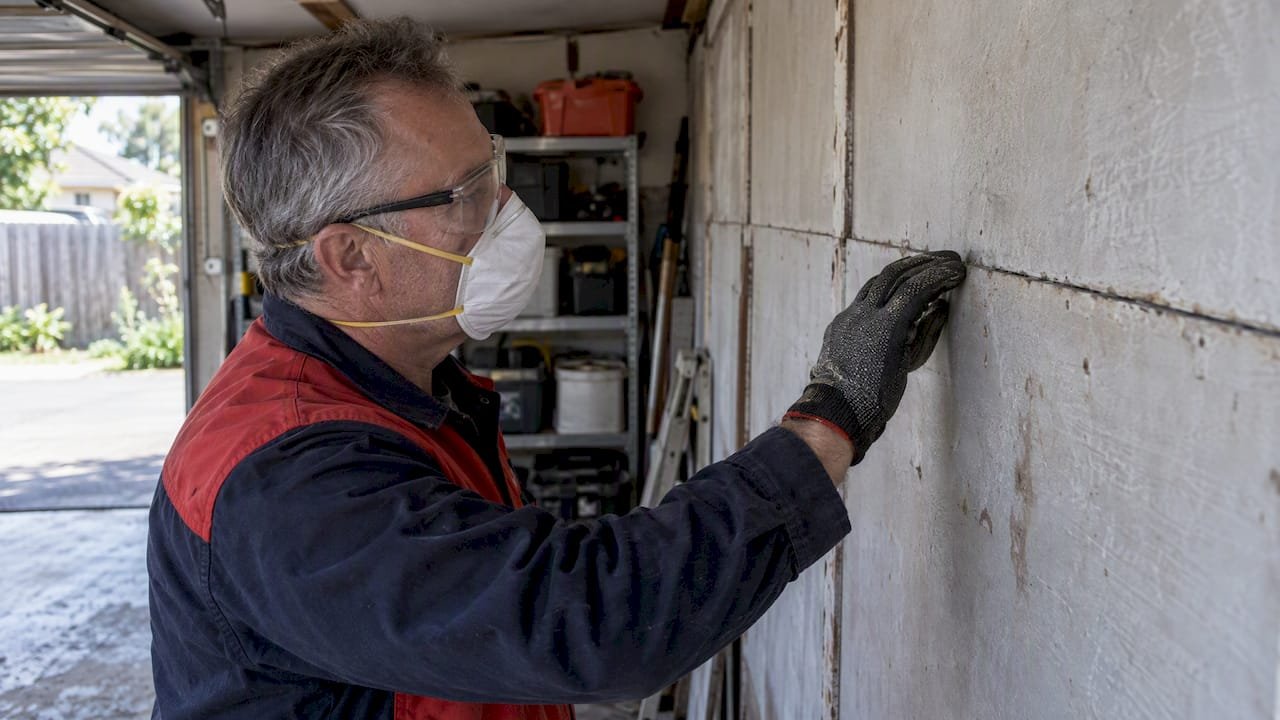
Licensed removal is mandatory once asbestos is identified above the thresholds set by state regulators. SafeWork NSW’s licensing guidance confirms that removal above certain quantities requires a Class A licence, and a clearance certificate is generally needed before general demolition can proceed. Equivalent regulators apply the same principle in other states.
Before demolition starts, check for:
- A written hazardous-materials survey report, not a verbal assessment
- Confirmation of whether a Class A or Class B licensed removalist is required
- A clearance certificate issued after asbestos removal, kept on file
- Notification to the relevant state regulator where thresholds are triggered
Step-by-step checklist to prepare your application
Councils across Australia ask for a similar document set whether you are lodging a BA5 form in Western Australia or a CDC package in New South Wales.
- A scaled site plan showing the garage, retained buildings and boundaries.
- The completed demolition permit form (BA5 or your council’s equivalent), with fees paid.
- Evidence that electricity, gas, water and telecommunications services have been disconnected.
- A “Before You Dig” enquiry result if any excavation is planned.
- A pest control or rodent baiting certificate, where the council requests one.
- A waste management plan, plus asbestos removal details or a clearance certificate if applicable.
- Proof of contractor licensing and insurance, or competency evidence for an owner-demolisher application.
A typical demolition management plan sequences these steps in order: hazardous-materials survey, licensed asbestos removal if needed, service disconnection, lodgement with a site plan and waste plan, then soft strip and mechanical demolition, as outlined in Orange City Council’s demolition management plan example.
Pro Tip: Photograph service disconnection points before demolition starts. Councils and insurers both ask for this evidence more often than homeowners expect.
Who should apply and why a registered demolisher helps
Councils generally prefer, and in many cases require, that the permit be held by a registered demolition contractor rather than the property owner. Owner-demolisher permits exist in some states but demand strong evidence of competency, and most councils scrutinise these applications closely.
Credentials worth checking before you engage anyone:
- Demolition contractor registration with the relevant state authority
- A current asbestos removal licence, where the job needs one
- WorkSafe registration where the work involves higher-risk activities
- Public liability insurance and written proof of service disconnection
A contractor working to Australian Standard AS 2601-2001 handles the sequencing, waste disposal and service isolation as part of the job, which is usually why permits move through council faster when a registered demolisher lodges them.
What to expect for timing, fees and permit validity
Processing times vary by council, but some local governments publish a target of around 10 business days to determine a straightforward application, as the Shire of Coolgardie’s demolition fact sheet notes, with up to 21 days allowed for an applicant to supply further information if requested.
Common causes of delay include incomplete applications, missing service disconnection proof, an unexpected asbestos finding partway through assessment, or a heritage or neighbour consent issue that was not flagged at lodgement. Permit validity commonly runs around two years, with extensions available on request before expiry.
How a full-service contractor manages permits and hazards
A typical professional workflow runs through site assessment, a hazardous-materials survey, licensed asbestos removal where needed, service disconnection, permit lodgement support, then demolition and licensed waste disposal. Standard demolition checklists used by WA councils reflect this same sequence, which is why experienced contractors build it into their quoting process rather than treating it as an afterthought.
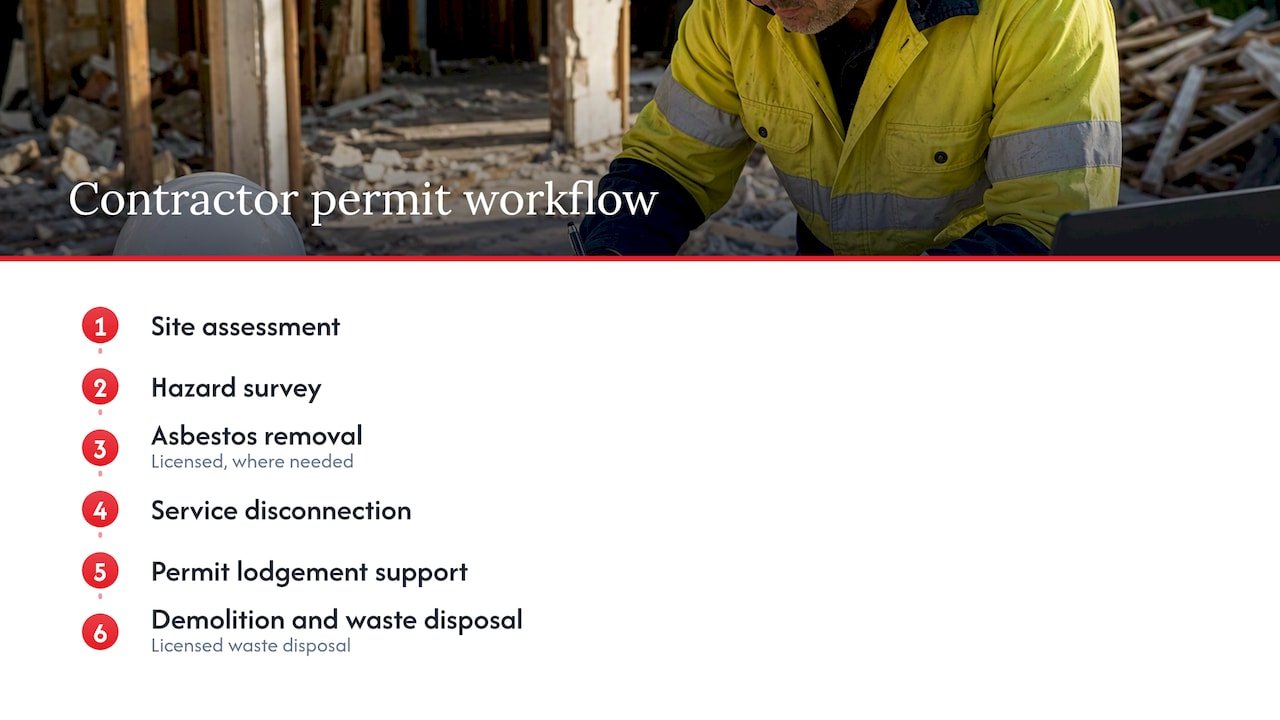
Before any work starts, it pays to ask for the contractor’s asbestos removal licence, public liability insurance and a sample clearance certificate from a past job. Keeping these on file protects you if a council or insurer asks for evidence later.
What actually matters when you cut through the noise
The exemption thresholds get most of the attention online, but they solve the easiest part of the problem. The harder part is confirming whether your particular garage, with its specific construction material, heritage overlay status and proximity to boundaries, actually clears the bar your council applies. Generic “under 40 square metres” advice is a starting point, not a verdict.
Where most homeowners go wrong is assuming the size test is the only test. A tiny timber garage next to a shared driveway can still need a permit on safety grounds, and a garage that looks exempt on paper can hide fibro sheeting that changes the entire process once a survey finds it.
My view: get the hazardous-materials survey done before you lodge anything, not after. It is the one step that determines whether your project is a weekend job or a licensed removal process, and doing it early stops a mid-demolition surprise from blowing out your timeline and your budget.
— Tarek
Mission Demolition: how we can help with garage demolition and permits
We handle the permit paperwork, the hazardous-materials survey and the demolition itself as one job, so you are not chasing a council form on one hand and a licensed asbestos removalist on the other. Our garage demolition team works across Sydney and Australia, and our demolition permits guide walks through what your local council typically asks for.
When you contact us, expect a site visit, a hazard check, a written quote and permit-handling support as part of the same conversation. For garages with fibro or cement sheet, our asbestos garage removal service includes licensed removal and clearance certification before demolition proceeds.
| What you get | Detail |
|---|---|
| Site visit and hazard check | Included before any written quote |
| Permit-handling support | Covers site plan, forms and council liaison |
| Asbestos removal, where needed | Licensed removal with clearance certificate |
Ask for a written scope and your compliance evidence, licence, insurance and clearance certificate, before work begins. Request a quote and we will confirm what your garage actually needs.
FAQ
Do I need permission to demolish my garage?
In most states, a small, non-masonry garage under common size thresholds can be exempt from a formal demolition permit, but masonry construction, heritage listing or safety risks usually require one. Check your council’s demolition exemption criteria before starting work.
What are the three types of demolition?
Demolition is commonly grouped by method: mechanical demolition using excavators or similar machinery, deconstruction or soft strip where materials are removed by hand for reuse or recycling, and selective demolition targeting specific parts of a structure while retaining the rest. A typical project, including garage removal, often combines a soft strip stage with mechanical demolition.
Do you need a demolition licence in Victoria?
Victoria does not require a separate demolition “licence” for most small garage work, but it does apply the common 40 square metre, non-masonry exemption test, and some projects need report and consent under Section 29A. Licensed asbestos removal applies separately if hazardous material is present.
Do I need a building permit after 7 years?
This question usually relates to retrospective approval for existing unpermitted structures rather than demolition itself, and the rules vary by state and council. If your garage was built without a permit, check with your local council on retrospective approval pathways before planning demolition.
Sources
Start with your state’s planning department and your local council’s demolition or building page, since thresholds and form names change between jurisdictions. For asbestos-specific obligations, SafeWork NSW’s licensing guidance sets out Class A removal rules, and equivalent regulators publish similar guidance in other states. Western Australian homeowners can check council BA5 checklists such as the one from the City of Gosnells, while NSW residents should review the Demolition Code for complying development criteria. Always confirm the current version of your local council’s page, since these details are updated from time to time.
- Demolition | Bayside City Council
- Demolition of buildings – Rules for exempt and complying development (NSW)
- Class A asbestos removal licence | SafeWork NSW
- Demolition permit guidance | City of Gosnells (example WA council)
