
Last Updated: November 8, 2026
Quick Summary
A full house demolition timeline in Australia is driven mostly by approvals, asbestos clearance and paperwork rather than the machine work itself. A complying development certificate can be issued in around 20 days, while a development application may take 40 to 90 days or more. The demolition itself may only take one to three days on site.
- A complying development certificate can be issued in around 20 days.
- A development application may take 40 to 90 days or more.
- Machines may run on site for only one to three days.
- Houses built before the late 1980s may contain asbestos and need inspection.
- A clearance certificate must be issued before structural demolition can begin.
Table of Contents
- What the Full House Demolition Timeline Covers, From First Enquiry to Site Handover
- How Long Does House Demolition Take on Site?
- House Demolition Preparation Checklist: What to Complete Before Work Starts
- Demolition Approval Timeframe: Permits, Councils and Asbestos Clearance
- Which Tasks Run in Parallel and Which Form the Critical Path
- Why House Demolition Delays Happen and How Much Buffer to Allow
- Booking Your Demolition Quote and Confirming Your Start Date with Mission Demolition
- Frequently Asked Questions
Knocking down a whole house in Sydney rarely takes just a few days. Most of the time goes into approvals, asbestos clearance and paperwork, while the machines themselves may only run for one to three days on site. Planning around that gap helps homeowners know what to expect from the first enquiry to the day the block is handed back. This guide explains each stage in plain terms.
What the Full House Demolition Timeline Covers, From First Enquiry to Site Handover
A full house demolition timeline is the full run of tasks from first contact to a cleared block. It starts with a site visit and quote, then moves to approvals, asbestos work, service disconnections, the demolition itself, and waste removal.
The total length depends mostly on approvals. A complying development certificate can be issued in around 20 days, while a development application may take 40 to 90 days or more. NSW Planning Portal guidance on complying development
Here is the typical sequence:
- Site inspection and written quote
- Council approval and documentation
- Asbestos survey and licensed removal
- Clearance certificate issued
- Utility disconnection (water, gas, electricity, sewer)
- Structural demolition and site clearing
- Waste removal and recycling
- Site handover to the owner
How Long Does House Demolition Take on Site?
The on-site duration depends on the size of the house, its construction, and site access, and is confirmed in the quote for each project.
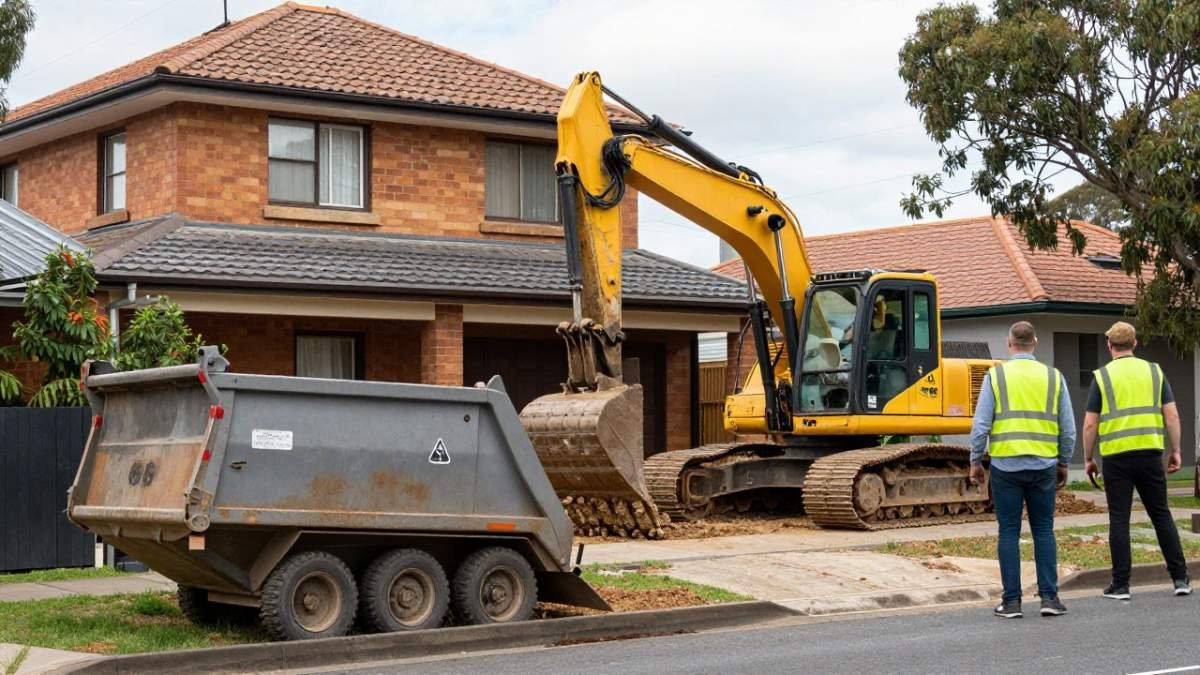
Much of the overall schedule is typically taken up before the first machine arrives.
House Demolition Preparation Checklist: What to Complete Before Work Starts
Preparation is where most of the schedule is won or lost. The checklist below separates what the homeowner must do from what the demolition contractor, utility providers and council each control, because a task sitting with the wrong party is the most common reason a start date slips. Work through it in the order shown, each block unlocks the next. See a fuller pre-start checklist covering the asbestos survey, licensed removal and clearance documents.
Stage 1: Confirm the approval pathway (owner and contractor)
- Owner: confirm who holds the approval, a complying development certificate or a development application, and check the consent conditions for any pre-demolition requirements such as a dilapidation report on neighbouring properties.
- Contractor: review the approved plans and consent conditions against the site, and flag anything that will need a variation before work is priced.
- Owner: check whether the property is heritage-listed or in a heritage conservation area; this is the single most common cause of an approval being sent back for more information.
Stage 2: Resolve hazardous materials (contractor-led, owner-funded)
- Contractor: arrange a licensed asbestos assessment of the whole structure, not just the obvious areas, eaves, wet areas, floor coverings and external cladding are common locations.
- Contractor: where asbestos is found, engage a licensed removalist and book the clearance inspection. The clearance certificate must be issued before structural demolition can lawfully begin.
- Owner: disclose anything you know about previous renovations, buried materials or illegal additions; undisclosed works are a frequent source of mid-project delays.
Stage 3: Disconnect services (owner and utility providers)
- Owner: lodge disconnection requests with the electricity, gas, water and sewer providers. These are the owner’s accounts, so the requests usually must come from you, not the contractor.
- Contractor: confirm the disconnection dates align with the planned start, and arrange for any temporary power needed for the demolition crew.
- Owner: keep the disconnection confirmations, the contractor will need them before machines arrive.
Stage 4: Site access and neighbours (contractor-led)
- Contractor: confirm truck and excavator access, including any crane or pump placement, and check whether a road occupancy or parking permit is needed.
- Contractor: issue written notice to adjoining neighbours with the work dates and a contact number.
- Owner: remove valuables, fixtures you are keeping, and any hazardous items stored on site.
Stage 5: Waste and handover logistics (contractor-led)
- Contractor: book skip bins or waste collection and confirm the recycling and disposal route for the expected volume.
- Contractor: confirm the site cleanup and handover standard with the owner before work starts, so there is no disagreement at the end.
Watch out: a checklist item marked complete by the wrong party, for example, an owner assuming the contractor has lodged the utility disconnections, is the most common cause of a last-minute start-date delay. Confirm in writing who owns each line before you sign the contract.
Demolition Approval Timeframe: Permits, Councils and Asbestos Clearance
Approval is often the stage that sets the timeline. In NSW, some demolition can proceed under a complying development certificate, while larger or more complex projects usually need a development application assessed by the local council.
Councils most often hold up projects when documents are incomplete. Missing site plans, unclear asbestos information or no heritage check are common causes. Submitting a full, accurate package at the start saves the most time. SafeWork NSW guidance on asbestos removal
Asbestos Inspection and Clearance Certificates
Houses built before the late 1980s may contain asbestos (National Asbestos Awareness Week). A licensed assessor should inspect the property before any demolition starts. Where asbestos is found, a licensed removalist must take it out and a clearance certificate must confirm the site is safe before the structure comes down. Check the asbestos clearance levels and who signs the certificate before work proceeds.
Clearance can take several days to arrange, so book it early.
Which Tasks Run in Parallel and Which Form the Critical Path
Some tasks can happen at the same time, such as utility disconnection and waste bin booking alongside the approval process. See typical house demolition costs and how asbestos, permits and access affect them.
The critical path is the chain of tasks that cannot start until the previous one finishes. Approval, then asbestos clearance, then demolition is the usual chain. Any delay on that chain moves the handover date, while delays on parallel tasks may not.
Knowing this helps you spot where to push, starting with the approval and asbestos survey.
Why House Demolition Delays Happen and How Much Buffer to Allow
Delays are normal, but they are not all equal. The table below sets out the common delay scenarios, the typical schedule impact most practitioners see, and the contingency that actually protects the handover date. Use it to decide where a buffer is genuinely needed and where it is wasted.
| Delay scenario | Typical impact | Does it move the critical path? | Contingency |
|---|---|---|---|
| Incomplete council paperwork or missing heritage check | Days to several weeks, depending on how quickly the package is resubmitted | Yes, approval gates everything | Submit a complete package at lodgement; have the contractor review it before it goes in |
| Asbestos found beyond the original assessment | Several days to a few weeks for removal and a new clearance certificate | Yes, clearance must precede structural demolition | Commission a full assessment, not a partial one, and budget a contingency for latent asbestos |
| Utility disconnection not confirmed by the start date | Days, occasionally longer if the provider needs to attend site | Yes, machines cannot work near live services | Lodge disconnections as soon as approval is likely, and keep the confirmations on file |
| Wet weather or high winds | Days per event; repeated events can add a week or more | Sometimes, earthworks and crane work are weather-sensitive, but internal strip-out may continue | Build a weather allowance into the programme for the season you are building in |
| Tight or restricted site access | Days to a week, depending on whether a crane or smaller plant is needed | Yes, it changes the method, not just the speed | Confirm access at quote stage so the method and programme reflect it |
| Hidden structural issues or unapproved additions | Days to weeks, depending on engineering input required | Yes, the demolition method may need to change | Have the contractor inspect the structure before pricing, and disclose known works |
| Neighbour dispute or access refusal | Days, occasionally longer if a formal process is needed | Yes, access is a precondition for work | Issue written neighbour notice early and keep a record of it |
How much buffer to allow
The appropriate buffer depends on the approval pathway, the likelihood of asbestos, and the complexity of the site, and is confirmed in the quote. The buffer should sit at the end of the critical path, after approval, asbestos clearance and disconnection, not spread evenly across the programme, because delays on parallel tasks usually do not move the handover date.
What to do when a delay hits
- Confirm which task is on the critical path. A delay to a parallel task such as bin booking rarely matters; a delay to approval or clearance always does.
- Ask for a revised programme in writing. A contractor who can show the new critical path is easier to hold to a date than one who gives a verbal reassurance.
- Check the contract for delay provisions. Confirm how variations, latent conditions and weather days are treated before work starts, so a delay does not become a cost dispute.
- Protect downstream dates. If you have a builder or finance settlement booked, tell them as soon as the programme moves rather than at the original handover date.
Watch out: a buffer that is too small is worse than no buffer at all, because it creates false confidence in the handover date. If asbestos is likely or the approval is a development application, plan for the upper end of the range rather than the midpoint.
Booking Your Demolition Quote and Confirming Your Start Date with Mission Demolition
If you are planning a full house demolition in Sydney, the best first step is a site inspection and written quote. You can request a free demolition and asbestos removal quote to get started.
Once the quote is accepted, the start date is confirmed against approvals, asbestos clearance and service disconnections. Clear dates from the start make the whole project easier to manage.
Ready to plan your demolition? Mission Demolition is fully licensed and insured, with asbestos and demolition licences in place.
Frequently Asked Questions
How long does a full house demolition take?
On site, the duration depends on the size and construction of the home and on access to the site. The on-site figure is only part of the picture. Asbestos inspection, council approval, utility disconnection and waste removal all happen before or around the machine work, and these stages usually add weeks to the overall timeline. Ask your demolition contractor for a stage-by-stage schedule so you can see where time is committed and where buffers sit.
How long do demolition approvals take in Sydney?
Approval timeframes depend on the council, the complexity of the site and whether a development application or complying development certificate is needed. Simple demolition may be approved within a few weeks, while applications requiring further information can take considerably longer. Lodge your application early, make sure your plans and asbestos reports are complete, and respond quickly to any council requests for information to keep the process moving.
What needs to be done before a house is demolished?
Before demolition starts you typically need council approval, a hazardous materials or asbestos inspection with clearance documentation where required, and a disconnection of water, gas, electricity, sewer and telecommunications services coordinated with each provider. You should also confirm site access, arrange waste removal and let neighbours know work is coming. Completing these steps before the demolition crew arrives prevents the most common causes of lost days on site.
What can delay a house demolition?
The most common delays come from council approval taking longer than expected, asbestos found in areas not covered by the original inspection, utility providers being slow to disconnect services, and restricted site access or difficult ground conditions. Weather can also stop work on some days. Allowing a realistic buffer of a few weeks in your overall schedule helps absorb these risks without pushing back your rebuild start date.