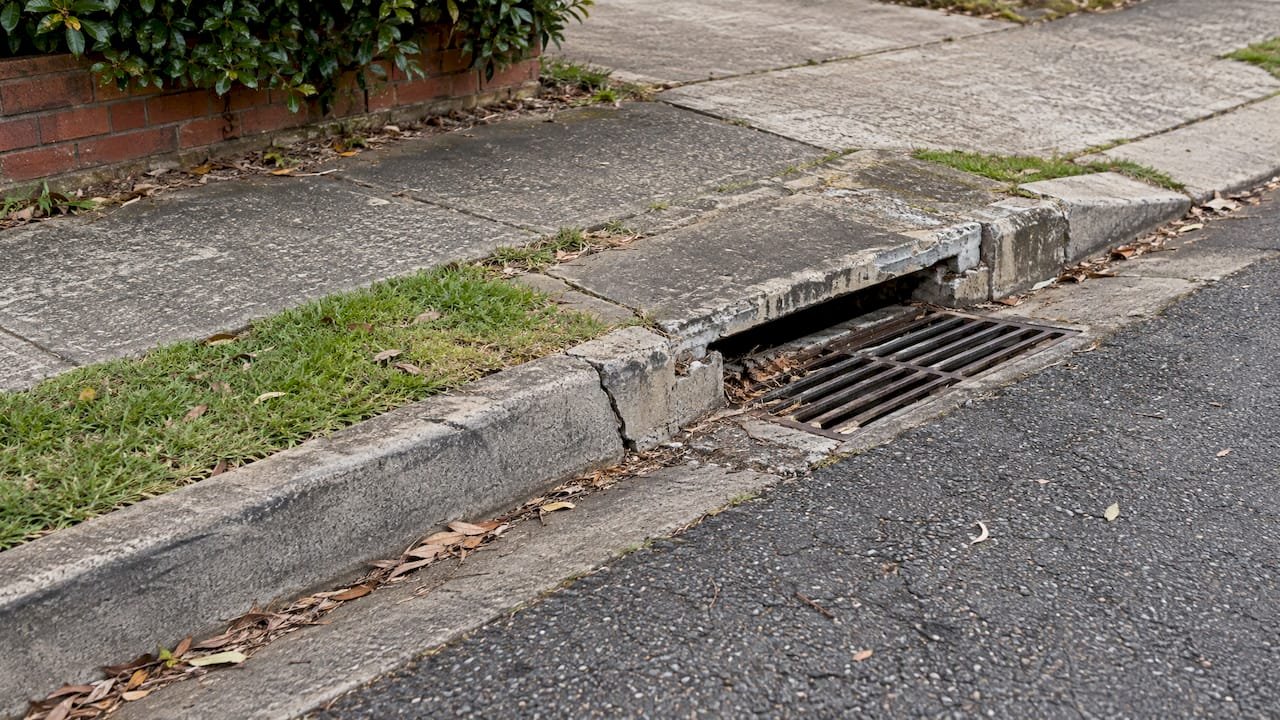
In NSW, a demolition bond is a refundable security deposit paid to your local council before work starts. It covers damage to council property such as the kerb, footpath, nature strip and drainage. Whether you pay one, and how much, depends on your approval pathway, the estimated cost of the work, whether your land is next to a public road, and your council’s own published schedule. There is no single statewide dollar figure.
This guide explains the rule, shows how councils differ, and walks through lodging and refund. It is written for homeowners, builders, developers and project managers who need to budget for the bond and get it back in full.
TL;DR
- A bond is a refundable deposit held by council against damage to council assets during demolition. It is not a fee and it is not the Long Service Levy.
- For complying development, the rule sits in section 157 of the Environmental Planning and Assessment Regulation 2021: $25,000 or more estimated cost, land next to a public road, and an amount published by council.
- The amount comes from your council’s fees and charges or consent conditions, so the same job can carry very different bonds in different council areas.
- Pay before work starts, record the condition of the footpath and kerb first, and request the refund once the final inspection is done.
Table of Contents
- What a demolition bond actually is
- When a bond is required
- How councils differ: examples from published schedules
- How the bond amount is worked out
- Bond or Long Service Levy: do not mix them up
- How to lodge a demolition bond
- Getting the bond back
- What else holds up a demolition start
- Who handles the paperwork on your project
- Our view on bonds
- FAQ
- Sources
What a demolition bond actually is
A demolition bond, also called a security deposit or damage deposit, is money (or a guarantee) held by council while you work. Demolition puts heavy trucks, excavators and falling debris next to public assets. If a kerb is cracked or a stormwater pit is damaged, the council uses the bond to repair it. If nothing is damaged, you get the money back.
The NSW Planning Portal’s MyHome Planner demolition page says that when you demolish under a complying development certificate (CDC), you may also need to pay a security deposit or bond to your council for potential damage to council property. It also says your council can tell you which approval type, a development application (DA) or a CDC, suits your project.
A CDC is a fast-track approval issued by council or a private certifier when a project meets set state rules. A DA is the full council assessment. Both pathways can lead to a bond, but the legal mechanism differs, as covered below. If you are still deciding between the two, our guides to CDC demolition in NSW and demolition permits in Sydney set out the approvals.
When a bond is required
Complying development: the section 157 test
For a CDC, the Regulation sets three conditions that must all be met. Under section 157 of the Environmental Planning and Assessment Regulation 2021, security is required where the CDC authorises demolition of a work or building, a new building or an addition, and:
- the estimated development cost, including GST, is $25,000 or more;
- the land is adjacent to a public road; and
- the council has specified a security amount on its website for development of the same type, circumstances or land size or description.
When those three line up, the CDC must require the security to be given to council before work commences. Most suburban house demolitions sit on a street frontage, so the road condition is usually met. The cost threshold is the one owners most often misjudge: it is the estimated cost of the development, not only the demolition line item, so a knockdown-and-rebuild can cross it easily.
Development applications: council conditions
For a DA, the bond is usually imposed as a condition of consent. Northern Beaches Council explains that the deposit for a DA or engineering application is reasonably determined by council under the Local Government Act 1993, the Roads Act 1993 and the Environmental Planning and Assessment Act 1979. For a CDC, by contrast, the deposit is fixed in line with council’s annual fees and charges, as the Regulation requires.
Exempt demolition
Some small structures can be demolished as exempt development, which needs no approval. The NSW Department of Planning’s fact sheet on demolition rules, based on information current in January 2022, limits this to minor structures that could be built as exempt development and says the work must follow AS 2601-2001. Other buildings can usually be demolished under a CDC issued under the Demolition Code. If you think your project might qualify, read demolition without a DA in NSW before assuming anything.
How councils differ: examples from published schedules
Because each council sets its own triggers and amounts, the practical answer is always local. These published examples show the range.
| Council | What it publishes |
|---|---|
| MidCoast Council | Damage bond for developments including demolition where the estimated cost is $50,000 or more and the site fronts a sealed road. Bond value and administration fee are in its Fees and Charges. |
| Georges River Council | Refundable bonds for demolition, minor building work of $25,000, swimming pools, domestic building work between $25,000 and $2,000,000, major developments over $2,000,000, and works adjacent to a public road. |
| Blacktown City | For complying development covered by section 157, the amount is charged under its Goods and Services Pricing Schedule. Council may use the security to make good damage, including inspection costs. |
| Northern Beaches Council | CDC deposit fixed under annual fees and charges, paid before works in a form such as cash, cheque or bank guarantee. |
Notice the different thresholds ($25,000 against $50,000) and the different documents each council points to. Check your own council’s website for the current schedule before you budget, because fees and charges are reset each financial year.
How the bond amount is worked out
For a CDC, the amount is whatever council has specified on its website for development of the same type, circumstances or land size or description. That is the wording of section 157(1)(d). In practice you find it in the council’s fees and charges schedule, often under headings such as “security deposit”, “damage bond” or “infrastructure bond”.
For a DA, the amount is set in the consent. A Woollahra Council consent from October 2021 shows how large and layered these can be on a big project: a property damage security deposit of $152,386, a tree damage security deposit of $36,000, an infrastructure works bond of $50,497 and a $202 administration fee, all payable before the relevant certificate was issued. That is a major development, not a typical house knockdown, but it shows that a consent can split the security into several heads, each with its own purpose.
Two more points affect the figure:
- Administration and inspection fees. Councils often charge a separate fee for administering and inspecting the bond. MidCoast, for example, deducts its administration and inspection fees from the refund.
- Road use. If you need to occupy the footpath or road with a hoarding, crane or skip, councils may apply separate security. Wollondilly’s road occupancy application sets a bond for high impact or high risk roadworks or structures permits at $50,000 including GST or 20% of the estimated value of the works, whichever is greater, under the version of the form published for 2021/22. City of Sydney’s draft code of practice for temporary structures on roads says demolition of masonry elements is not minor work, so performance bonds apply whatever the footway surface.
Bond or Long Service Levy: do not mix them up
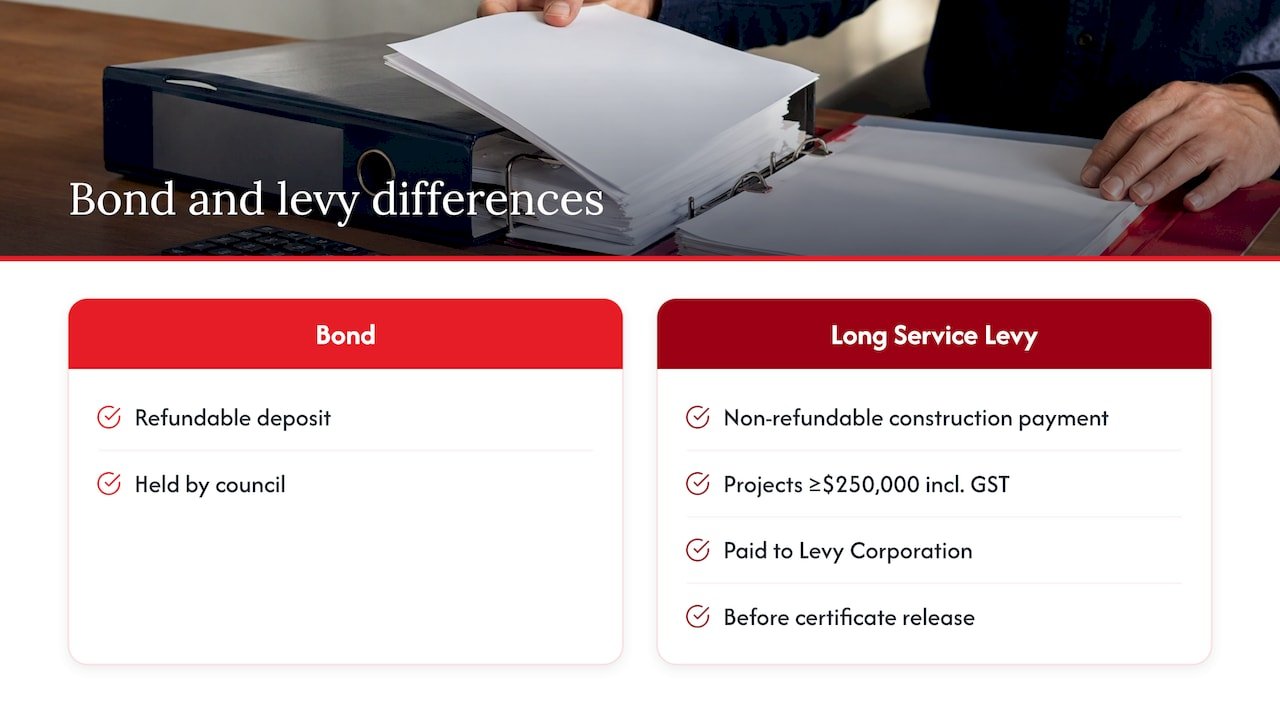
Owners rebuilding after demolition often confuse these two. The bond is a refundable deposit held by council. The Long Service Levy is a non-refundable payment for building and construction work. Georges River Council explains that the levy applies to projects of $250,000 or more including GST and is paid directly to the Long Service Levy Corporation before the construction certificate is released. Budget for both on a knockdown-and-rebuild, and expect only the bond to come back.
How to lodge a demolition bond
The process is simple, but the timing catches people out.
- Find your council’s amount. Search the fees and charges schedule for the security deposit or damage bond. For a DA, read the conditions of consent.
- Photograph existing conditions. Inner West Council recommends that CDC developers photograph all pre-existing damage to council infrastructure so they are not held responsible for it at refund. Do the kerb, footpath, driveway crossover, nature strip and any drainage pits, with date stamps.
- Choose a payment form. Section 157 allows a deposit with council or a guarantee satisfactory to council. Councils commonly accept cash, cheque or bank guarantee. City of Sydney’s code says a bank guarantee must not carry a termination or expiry date when lodged, and that cash is limited to $10,000, so check the rules for your council.
- Pay before work commences. For a CDC, the Regulation requires security before building work starts. For a DA with a bond condition, Inner West notes the bond is paid before a construction certificate is issued. Wollondilly requires the original bank guarantee before the road permit is released.
- Keep the receipt. The refund usually goes only to the person named on it.
A private certifier will ask for evidence of this payment. A CDC demolition checklist from one certifier lists proof of payment of council bonds and levies alongside a demolition work plan referencing SafeWork NSW guidance, a waste management plan that covers asbestos disposal, and contractor licences and public liability insurance. Having those documents together early shortens the approval timeline; see our NSW demolition approval timeline guide for how the stages fit together.
Getting the bond back
The law is clear on the principle. Under section 157, the balance remaining after council has met the costs of making good damage to council property, including inspection costs, must be refunded to the person who gave the security or at their direction.
The mechanics vary by council:
- Northern Beaches inspects once the certifier lodges the Final Occupation Certificate and refunds in full if no damage is found to kerb, footpaths, nature strip or drainage. Otherwise it returns the deposit less repair costs, and it may waive all or part of the deposit where site conditions lessen the need.
- Inner West will not process a refund request until all works are complete and the Final Occupation Certificate or equivalent has been issued. It releases bonds only to the person named on the original receipt unless a statutory declaration changes the recipient.
- MidCoast refunds after a satisfactory final inspection, less its administration and inspection fees, within 28 working days of the request. It pays interest if the bond is held more than 12 months, and an unclaimed bond may be treated as forfeited after 10 years if the applicant cannot be contacted.
- Georges River releases bonds only when the development is complete, no council assets were damaged and consent conditions are met.
That last point matters on a rebuild. Because many councils will not refund until the final occupation certificate, a demolition bond can be tied up for the whole construction period. Developers running several sites should treat it as working capital that is locked away for months, and homeowners should know the money is not due back when the house comes down.
To protect your refund:
- Keep trucks off nature strips and use protection where kerbs are exposed.
- Report any damage to council promptly rather than hoping it goes unnoticed.
- Use the same name on the bond receipt as on the refund request.
- Diarise the refund request as soon as the final inspection is possible.
What else holds up a demolition start
A bond is one gate among several. The NSW Planning Portal notes that after demolition the contractor provides certification that there are no contaminated materials on the land, so hazardous materials such as asbestos must be dealt with properly. Our guide to removing asbestos before demolition sets out the sequence. Neighbours also need to be informed in many cases; see neighbour notification for demolition in NSW.
Who handles the paperwork on your project
Mission Demolition offers full-service project management for residential, commercial and industrial demolition across Sydney and Australia. That covers approvals, utility disconnections, hazardous waste handling and final site cleaning. For a homeowner, that means one contractor coordinating the steps that sit around the bond, rather than several trades each waiting on the other. If you are planning a knockdown-and-rebuild, start with our residential demolition service. Builders and developers with larger sites can start from our demolition services.
Tell us the address and the approval pathway you expect (CDC or DA), and we can set out the approvals and site steps that will apply before the bond is due.
Our view on bonds
Most bond problems we see in the planning of a job come from timing, not from the amount. Owners find out about the deposit late, after they have already committed cash to the rebuild, or they discover that the refund will not arrive until the final occupation certificate.
Our advice is to treat the bond as part of the demolition budget from day one. Ask the council for its schedule early, photograph the street frontage before any machine arrives, and make sure whoever is managing the job knows that kerbs, crossovers and nature strips are the council’s, not yours.
This is why we offer demolition as a managed project rather than a single machine hire. Approvals, utility disconnections, hazardous waste handling and the final site clean all affect whether the site is handed over clean and whether council is satisfied. One accountable contractor across those steps is the simplest way to protect a bond and keep a start date.
Tarek
FAQ
Do I always need a demolition bond in NSW?
No. For a CDC, section 157 requires security only when the cost is $25,000 or more, the land is next to a public road and the council has published an amount. For a DA, it depends on the consent conditions. Your council can confirm which applies.
Is the demolition bond refundable?
Yes. Councils hold it against damage to their property and refund the balance after repairs and inspection costs are deducted. Most refund only after a final inspection, and some wait for the final occupation certificate. The refund usually goes to the person named on the original receipt.
Can I pay the bond by bank guarantee?
Often, yes. Section 157 allows a deposit or a guarantee satisfactory to council, and several councils list bank guarantee among accepted forms. Some set conditions: City of Sydney’s code says a guarantee must not have an expiry date. Confirm the form with your council before you lodge.
Is the bond the same as the Long Service Levy?
No. The bond is a refundable deposit held by council. The Long Service Levy is a payment on building and construction work of $250,000 or more including GST, paid to the Long Service Levy Corporation. You do not get it back.
How do I find my council’s bond amount?
Search your council’s website for its fees and charges schedule and look for the security deposit or damage bond. For a DA, the amount is in the conditions of consent. Amounts and thresholds change with each council’s schedule, so use the current one.
Sources
- Environmental Planning and Assessment Regulation 2021, section 157
- NSW Planning Portal: Demolish, MyHome Planner
- NSW Planning Portal: Knockdown and rebuild considerations
- NSW Planning: Demolition of buildings, rules for exempt and complying development
- MidCoast Council: Damage bonds
- Georges River Council: Bond release and long service levy
- Blacktown City: Approval you need
- Northern Beaches Council: Development and construction security deposit
- Woollahra Council development consent, October 2021
- Wollondilly Council: Road occupancy and development works application
- City of Sydney: Code of practice for temporary structures on roads
- Inner West Council: Development roadworks security deposit
- CDC demolition submission requirements checklist