
Bulk excavation and site clearing is the process of removing vegetation, topsoil, and large volumes of earth to bring a site to engineered formation levels ready for foundations, slabs, and services. Every project follows three high-level stages: assess and plan (survey, utility checks, permits), clear and strip (vegetation removal, topsoil stripping), then bulk cut and fill (shaping the site to design levels, compacting, and trimming). Get those three stages in the right order and the rest of the build flows. Skip one and you are paying for rework.
- Assess and plan: commission a survey, contact Dial Before You Dig to locate underground services, and confirm council approvals before any plant arrives on site.
- Clear and strip: remove trees, shrubs, and debris, then strip and stockpile topsoil separately. Topsoil is non-structural and valuable for final landscaping; mixing it with subsoil destroys that value.
- Bulk cut and fill: excavate high spots, place and compact fill in low areas, then trim to formation level for the next trade.
Pro Tip: Before any heavy plant moves, call Dial Before You Dig (1100) and get a utility plan. Striking a gas or water main costs far more than the call.
Table of Contents
- What bulk excavation is and how it differs from detailed excavation
- When does a project actually need bulk excavation and clearing?
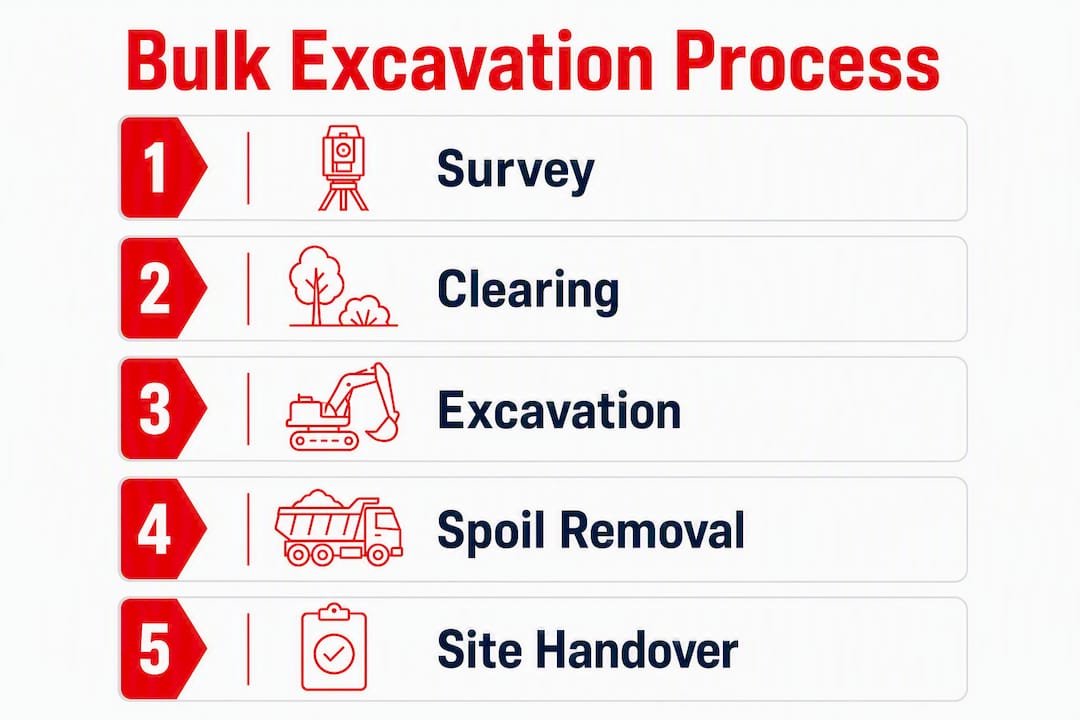
- The step-by-step bulk excavation process from assessment to handover
- What equipment and clearing methods are used on site?
- How to calculate bulk excavation volumes and estimate truck loads
- Permits, hazards, and environmental controls before you start digging
- Contractor best practices and the mistakes that cause costly rework
- What drives the cost and timeline of bulk excavation?
- Key takeaways
- Useful Australian references
What bulk excavation is and how it differs from detailed excavation
Bulk excavation means moving large volumes of soil or rock across an entire site to reach a design formation level. Think of it as rough shaping: the tolerances are measured in tens of millimetres, the machines are large, and the goal is to get the whole platform close to the right level quickly and economically.
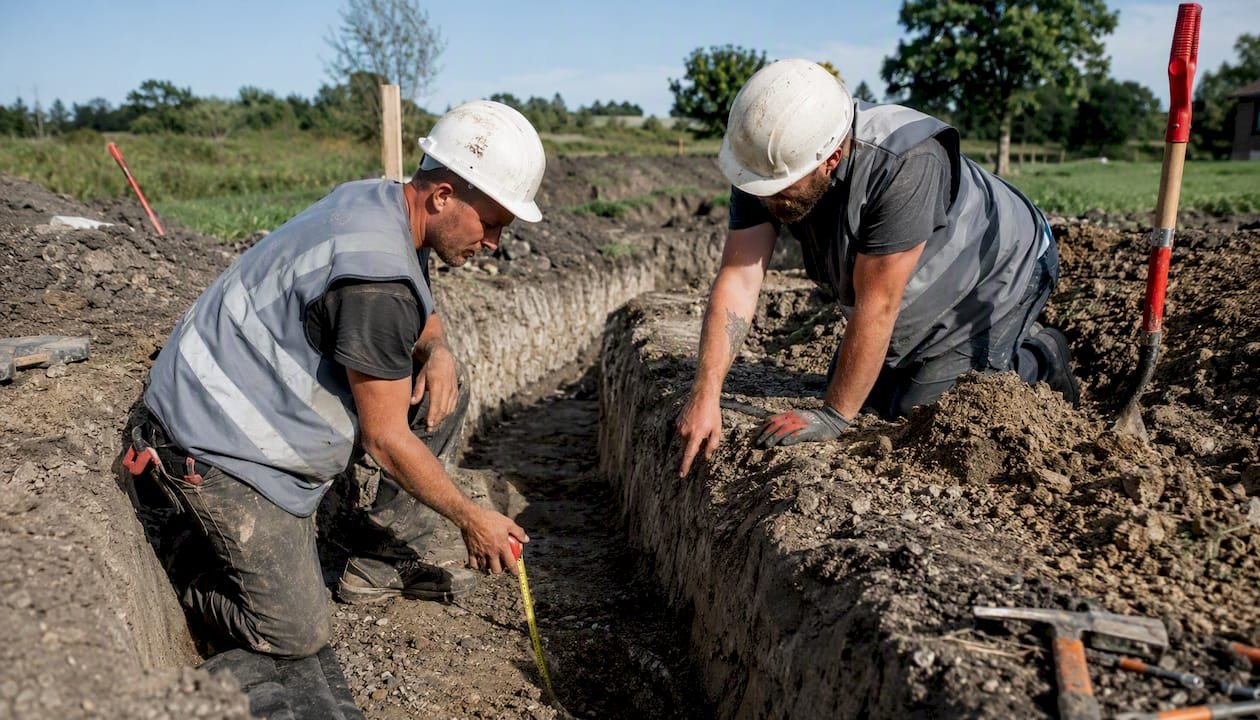
Detailed excavation is different in purpose and precision. It covers specific trenches for footings, service conduits, retaining wall bases, and pool shells, where tolerances can be as tight as 5–10 mm and the work often requires hand trimming or a small machine bucket. Detailed works usually follow bulk shaping, though on complex sites a basement cut or retaining wall excavation may need to happen in parallel with bulk shaping to preserve platform stability and keep follow-on trades moving.
| Dimension | Bulk excavation | Detailed excavation |
|---|---|---|
| Purpose | Shape whole site to formation level | Precise cuts for footings, trenches, pools |
| Tolerance | ±50 mm typical | ±5–20 mm typical |
| Timing | Early in programme | After bulk, or concurrent for basements |
| Typical machines | Large excavators, dozers, graders | Small to mid excavators, hand tools |
| Deliverable | Compacted platform at design RL | Formed trench or void to engineer’s detail |
When each applies in practice:
- Residential pad preparation: a sloped suburban block needs bulk cut and fill to create a level building platform before any footing detail begins.
- Retaining wall footings: the wall base trench is detailed excavation, but the bulk shaping behind the wall line happens first.
- Pool cut: the pool shell is detailed excavation; the surrounding yard grading is bulk work.
When does a project actually need bulk excavation and clearing?
The short answer: any time the existing ground level differs significantly from the design formation level, or when the site carries vegetation, structures, or contaminated material that must be removed before building begins. That covers more projects than most people expect.
Sloped blocks are the most obvious trigger. A 1.5-metre fall across a 15-metre building footprint means substantial cut at the high end and fill at the low end. New subdivisions, large residential extensions, commercial pads, and driveway construction all follow the same logic. Even a relatively flat site can require clearing if it carries trees, old concrete, or buried rubble.
| Project type | Typical scope | Primary challenge |
|---|---|---|
| Residential lot preparation | Cut/fill to slab level, topsoil strip | Tree removal, cut/fill balance |
| New subdivision | Multiple lots, roads, services corridor | Haulage volume, sediment control |
| Commercial building pad | Large flat platform, deep services | Rock, groundwater, traffic management |
| Driveway and access | Grading, compaction, drainage | Access constraints, utility crossings |
| Large residential extension | Partial site reshape, retaining walls | Tight access, proximity to existing structure |
The most important early decision is the cut-versus-fill balance. Bulk earthworks aim to achieve a balanced site where cut and fill volumes are matched, minimising the cost of carting material off or importing fill. Ask your contractor early:
- Does the design cut more than it fills, or vice versa?
- Is the excavated material suitable for reuse as structural fill, or is it clay, organic, or contaminated?
- What is the haul distance to the nearest licensed tip, and what are current tipping fees?
- Is there a neighbouring project that could take or supply material?
If the site generates excess spoil or unsuitable material, disposal costs including tipping fees and truck cycles can become a larger budget item than machine hours. Get that number before you sign a contract.
The step-by-step bulk excavation process from assessment to handover
A well-run bulk excavation job follows a clear sequence. Deviating from it, especially skipping the early steps, is where most cost blowouts originate.
-
Pre-start survey and set-out. A licensed surveyor pegs the site boundaries and establishes design levels (reduced levels, or RLs). Precise engineering plans and utility checks are non-negotiable at this stage. Without them, you are guessing at volumes and risking service strikes.
-
Dial Before You Dig and utility location. Call 1100 or submit online at least two business days before breaking ground. Obtain plans for water, sewer, gas, electricity, and telecommunications. Pothole (hand-dig) any service within the excavation zone to confirm depth before plant arrives.
-
Council approvals and permits. Depending on your state and the scale of works, you may need a development approval, a construction certificate, or a specific earthworks permit. Check with your local council before mobilising.
-
Temporary access and site drainage. Set up a stable entry point (crushed rock or hardstand) and install temporary drainage before heavy plant arrives. A practical bulk excavation programme sequences temporary access and site drainage first to prevent the site becoming inaccessible in wet weather.
-
Vegetation clearing. Remove trees, shrubs, and surface debris using the appropriate method for the vegetation type and site constraints (see the equipment section below). Dispose of green waste to a licensed facility or mulch on site where permitted.
-
Topsoil stripping and stockpiling. Strip the topsoil layer (typically 150–300 mm) and stockpile it separately from structural fill. This material is non-structural but valuable for final landscaping reinstatement.
-
Bulk cut. Excavate high areas to design formation level. Load trucks efficiently, matching truck fleet size to excavator output and round-trip cycle times rather than blunt volume estimates.
-
Bulk fill and compaction. Place imported or reused fill in compacted layers (lifts), typically 150–200 mm per lift depending on material and compaction plant. Rollers and compactors provide the proofing required for foundations and roads.
-
Grading and trimming. A grader or excavator bucket trims the platform to within tolerance of the design RL, ready for the engineer’s inspection.
-
Proofroll and sign-off. A loaded truck or roller traverses the finished platform while the geotechnical engineer observes for deflection. Any soft spots are excavated and re-compacted before the next trade moves in.
Typical time ranges:
- Small residential lot (under 500 m²): 1–3 days for clearing and bulk cut/fill.
- Medium residential (500–1,500 m²): 3–7 days depending on slope and material.
- Commercial pad or subdivision stage: several weeks, driven by volume, access, and weather.
Pro Tip: Install sediment fencing and a wheel-wash point on day one, before any loaded trucks leave the site. Councils and the EPA can issue stop-work orders for sediment runoff, and cleaning up a neighbour’s stormwater drain is expensive.
What equipment and clearing methods are used on site?
The right machine depends on site size, vegetation density, access width, and what happens to the cleared material. Here is the standard fleet and what each piece does.
Typical plant and equipment:
- Hydraulic excavators (20–35 t): the production backbone for bulk digging, loading trucks, and trimming. On constrained urban sites, mini-excavators (1.5–8 t) and Posi-track loaders handle access-limited areas while still achieving useful productivity.
- Bulldozers (D6–D8 class): push and spread large volumes of material across open sites; also used for initial clearing on larger blocks.
- Motor graders: trim the finished platform to design level and shape drainage falls.
- Smooth-drum and pad-foot rollers: compact fill lifts and proof the finished surface.
- Articulated dump trucks (ADTs) or rigid tippers: haul excavated material to stockpile or tip. Fleet size is matched to excavator output and haul cycle time.
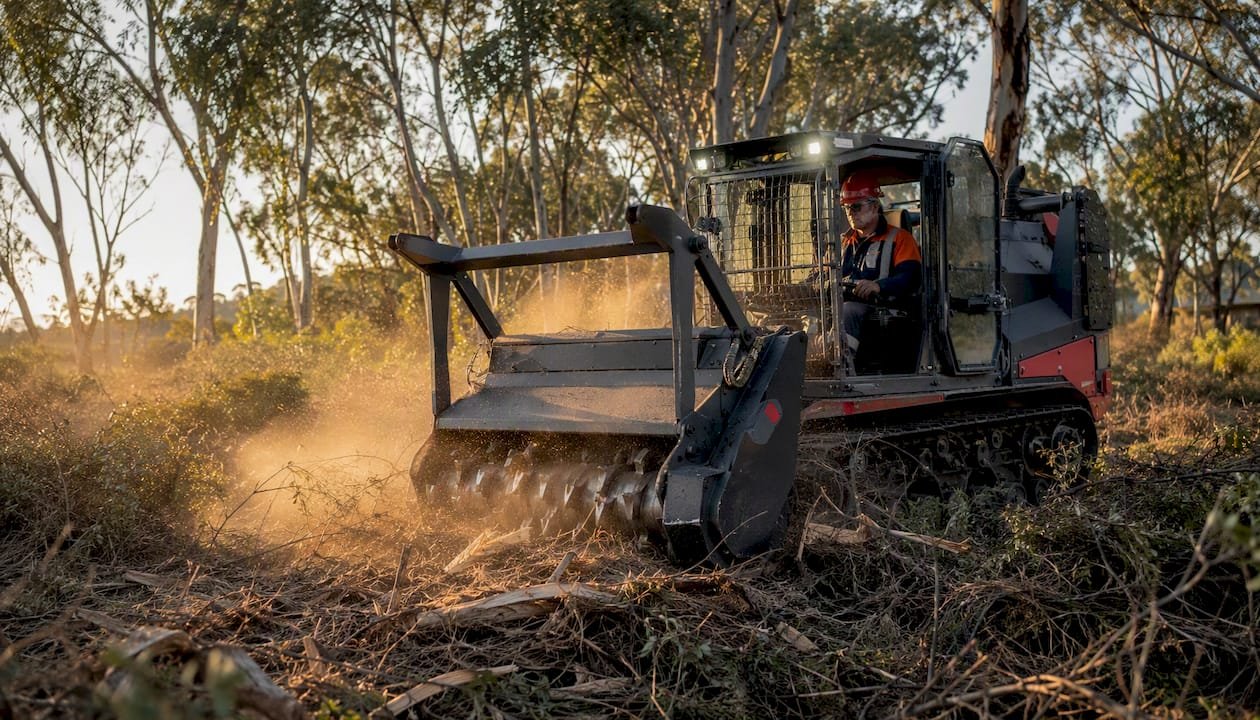
- Forestry mulchers: grind trees and brush in place, leaving a mulch layer. No debris to haul or burn.
- Stump grinders: remove individual stumps flush with or below ground after mechanical clearing.
- Water carts: dust suppression and compaction moisture control.
Clearing methods compared:
| Method | Best for | Speed | Cost | Environmental impact |
|---|---|---|---|---|
| Mechanical clearing (dozer/excavator) | Full building footprint, stumps must be removed | Fast on open sites | Moderate to high | Significant soil disturbance |
| Forestry mulching | Wooded or brushy sites, no debris to haul | ~1–3 acres/day for large dozers | Moderate | Lower; mulch layer protects soil |
| Stump grinding | Isolated stumps after selective clearing | Slow per stump | Low per unit | Minimal |
| Selective hand removal | Sensitive areas, near structures or services | Slow | High | Minimal |
Forestry mulching is the fastest single-pass option for wooded or brushy sites headed for construction, because it grinds everything to a mulch layer with no debris to haul. Choose mechanical clearing with an excavator or dozer when stumps and roots must be fully removed for a building footprint.
How to calculate bulk excavation volumes and estimate truck loads
Understanding the numbers behind a bulk excavation quote helps you check whether a contractor’s estimate is realistic, and it explains why the final truck count often surprises clients.
Bank volume versus loose volume
Soil in the ground is measured in bank cubic metres (BCM). Once disturbed, it expands. Excavated material increases in loose volume after disturbance, with a swell factor typically ranging from 10% to 50% depending on soil type. A contractor who budgets on bank measure alone will underestimate truck cycles and tipping fees.
Loose volume = Bank volume × (1 + swell factor)
Worked example
Assume a residential site requires a uniform cut of 0.8 m across a 20 m × 15 m footprint.
- Bank volume: 20 × 15 × 0.8 = 240 BCM
- Swell factor: assume clay soil at 30% → 240 × 1.30 = 312 loose m³
- Truck payload: a standard 10-wheel tipper carries approximately 10 m³ loose
- Truck loads required: 312 ÷ 10 = ~32 truck loads
Modern contractors use drone photogrammetry or GPS surveys to generate 3D terrain models for accurate cut and fill calculations, which reduces estimation risk compared with manual cross-section methods.
Key cost drivers to check in every quote:
- Total volume (BCM) and assumed swell factor
- Haul distance to tip and current tipping fees
- Presence of rock (requires rock-breaking or blasting, significantly higher cost)
- Groundwater depth (dewatering adds plant and time)
- Site access width (restricts machine and truck size)
- Traffic management requirements on public roads
- Imported fill cost if the site is net-fill
Permits, hazards, and environmental controls before you start digging
Australian states and territories each have their own planning and environmental frameworks, but the pre-start checklist is consistent across the country.
| Authority / requirement | What it covers | Where to start |
|---|---|---|
| Dial Before You Dig (1100) | Underground utility plans: gas, water, sewer, power, telecoms | 1100.com.au |
| Local council | Development approval, earthworks permit, sediment control plan | Your council’s DA portal |
| State EPA / Environment Protection Authority | Erosion and sediment controls, waste classification, contaminated land | Your state EPA website |
| Safe Work Australia | WHS obligations for excavation, plant operation, hazardous materials | safeworkaustralia.gov.au |
| Asbestos assessment | Mandatory screening on pre-1990 sites before any soil disturbance | Licensed asbestos assessor |
Erosion and sediment controls are not optional. Every state requires a sediment control plan for earthworks above a threshold area (typically 250 m² in NSW). Install silt fencing, sediment basins, and stabilised entry points before any earth is moved.
Asbestos warning: Any site with structures or fill dating from before 1990 carries a risk of asbestos-containing materials (ACM) in the soil, under slabs, or in buried rubble. Disturbing ACM without a licensed removalist on site is a serious WHS offence carrying significant penalties under state legislation. Commission an asbestos assessment before bulk excavation begins. If ACM is found, engage a licensed asbestos removal contractor to manage and dispose of it before earthworks proceed.
Pre-start compliance checklist:
- Survey set-out and design levels confirmed
- Dial Before You Dig response received and services potholed
- Council approvals in hand
- Asbestos assessment completed (pre-1990 sites)
- Sediment and erosion control plan prepared and installed
- Exclusion zones marked around services and site boundaries
- Traffic management plan in place if trucks use public roads
Contractor best practices and the mistakes that cause costly rework
Choosing the right contractor matters as much as the design. Here is what a professional bulk excavation contractor should provide, and the red flags that signal trouble ahead.
What a professional contractor provides:
- A detailed written scope covering volumes, formation levels, compaction standard, and disposal method
- Equipment list matched to site access and production requirements
- Programme showing sequencing of clearing, cut, fill, compaction, and handover
- Haulage plan: truck fleet size, cycle times, tip location, and tipping receipts
- Sediment and erosion control plan
- Proof of licences, public liability insurance, and workers’ compensation
Paperwork to request before works start:
- Survey set-out drawings and design RL schedule
- Compaction test requirements (engineer-specified standard, e.g. 95% standard Proctor)
- Waste carrier details and licensed tip receipts
- Asbestos clearance certificate if ACM was identified on site
- Topsoil stripping and stockpile plan
Red flags to watch for:
- No site visit before quoting — a contractor who quotes from a satellite image cannot accurately assess access, material type, or haul distance.
- No utility check — any contractor who proposes to start without Dial Before You Dig confirmation is a liability.
- No topsoil stripping plan — mixing topsoil with structural fill is a common shortcut that creates settlement problems and destroys landscaping value.
- Unrealistically low rates — bulk excavation has real costs in machine hours, fuel, and tipping fees; a price that seems too good usually means exclusions or underestimated volumes.
- No compaction evidence — without compaction test results, you have no proof the platform will support a slab or footing.
Pro Tip: Ask for the haulage plan before you sign. Accurate haul planning is often the controlling operation on site; poor fleet sizing rapidly increases both cost and programme duration.
Missiondemolition’s site preparation services include full documentation: scope, programme, haulage plan, and compaction records, so clients have the paperwork they need for council sign-off and geotechnical certification.
What drives the cost and timeline of bulk excavation?
A small residential clearing and cut/fill job can wrap up in one to five days. A complex residential site on a steep block with rock and restricted access can run two to three weeks. Commercial pads and subdivision stages are measured in weeks to months. The variables below are what separate a $15,000 job from a $150,000 one.
| Cost driver | Why it matters |
|---|---|
| Volume (BCM) | More material means more machine hours and more truck cycles |
| Material type | Rock requires breaking or blasting; clay has higher swell and is harder to compact |
| Haul distance | Longer haul increases cycle time and fuel cost per load |
| Tipping fees | Licensed disposal sites charge per tonne; fees vary by state and material classification |
| Groundwater | Dewatering adds pump hire, time, and disposal cost |
| Site access | Narrow access forces smaller, less productive plant |
| Traffic management | Public road works require a traffic control plan and qualified personnel |
| Cut/fill balance | A balanced site avoids import or export costs; an imbalanced one adds significantly |
Questions to ask when comparing quotes:
- What volume (BCM) is the quote based on, and what swell factor is assumed?
- What is the assumed tip location and current tipping fee per tonne?
- Is rock included, and if so, what is the assumed rock percentage?
- What compaction standard is specified, and how will it be tested?
- Are sediment controls, traffic management, and council fees included or excluded?
- What happens if the actual volume exceeds the estimate?
Getting answers to these questions in writing before signing means you can compare quotes on the same basis, not just on the bottom-line number.
Key takeaways
Bulk excavation and clearing follows a fixed sequence: survey and utility checks first, then clearing and topsoil stripping, then bulk cut and fill with compaction, and finally trim and proofroll before handing over to the next trade.
| Point | Details |
|---|---|
| Survey and utility checks first | Commission a survey and contact Dial Before You Dig before any plant arrives on site. |
| Strip topsoil separately | Topsoil is non-structural; stockpile it apart from fill to preserve landscaping value. |
| Account for swell in volumes | Loose volume exceeds bank volume by 10–50%; always apply a swell factor to truck load estimates. |
| Balanced cut/fill reduces cost | Matching cut and fill volumes on site minimises haulage and tipping fees. |
| Missiondemolition for site clearance | Missiondemolition handles site clearance, asbestos screening, excavation, and haulage across Australia with fully licensed and insured teams. |
What the bulk excavation process really comes down to
Most cost blowouts on bulk excavation jobs trace back to the same two mistakes: starting without accurate information (no survey, no utility plans, no asbestos assessment) and underestimating haulage. The earthmoving itself is straightforward once the planning is done properly. What catches people out is the assumption that a site is clean and balanced when it is neither.
The cut-versus-fill balance question deserves more attention than it typically gets at the design stage. A small change to a floor level or a retaining wall position can shift a site from net-cut to balanced, saving tens of thousands in cartage. That conversation is worth having with your engineer before the design is locked in, not after the excavator has already loaded thirty trucks.
Topsoil management is another area where corners get cut. Stripping and stockpiling topsoil properly adds half a day to the programme. Skipping it means buying topsoil back at the end of the job, which costs more than the time saved.
Missiondemolition: site clearance and excavation you can rely on
When a site needs clearing, asbestos screening, bulk excavation, and haulage managed under one contract, Missiondemolition delivers the full scope without the coordination headache of juggling multiple contractors. The team handles permits, utility disconnections, licensed asbestos removal, bulk earthworks, and waste disposal for residential and commercial projects across Sydney and Australia.
Every project comes with a detailed scope, programme, and compaction records so your council sign-off and geotechnical certification go smoothly. The team is available 24/7 and carries full public liability insurance and workers’ compensation cover. To get a site assessment and quote for your project, visit the professional demolition services page or call the team directly.
Useful Australian references
The sources below are the primary contacts for anyone planning bulk excavation and clearing in Australia.
| Resource | What it covers | Link |
|---|---|---|
| Dial Before You Dig | Underground utility plans before excavation | 1100.com.au |
| Safe Work Australia | WHS codes of practice for excavation and plant operation | safeworkaustralia.gov.au |
| Your state EPA | Erosion and sediment controls, waste classification, contaminated land | Search “[your state] EPA earthworks” |
| Your local council | Development approvals, earthworks permits, sediment control requirements | Your council’s DA portal |
| Missiondemolition | Site clearance, asbestos removal, excavation and haulage across Australia | missiondemolition.au/services |
Key contacts for compliance:
- NSW: NSW EPA (epa.nsw.gov.au) for waste classification and contaminated land; your local council for DA and construction certificates.
- VIC: EPA Victoria (epa.vic.gov.au) for works on potentially contaminated land.
- QLD: Department of Environment and Science for environmental authority requirements on larger earthworks.
- All states: Safe Work Australia’s Code of Practice: Excavation Work sets the national baseline for safe excavation, shoring, and plant operation.
For local support with site clearance, asbestos removal, or bulk excavation across Sydney and Australia, Missiondemolition is the starting point.
