Last Updated: October 25, 2026
Quick Summary
Industrial demolition in Sydney is the controlled removal of factories, warehouses, plant and heavy structures, including footings, services and waste. Every job is treated as three separate problems: what stands above ground, what sits below it, and what is inside the materials. The work runs from site assessment and approvals through strip-out, structural dismantling, excavation and site remediation.
- Asbestos removal in New South Wales must be done by a licensed removalist, with SafeWork NSW notified at least five days ahead for non-emergency work.
- Most industrial demolition needs development consent or a complying development certificate, and the two pathways are not interchangeable.
- Waste can be classified as hazardous by default in New South Wales until testing proves otherwise.
- Industrial demolition cost is driven by risk and access, not floor area, so we price from a site inspection rather than a phone estimate.
- A straightforward strip-out and demolition can run over a few weeks, while asbestos, contamination or complex structures can extend it to several months.
Table of Contents
- What Industrial Site Demolition Involves in Sydney
- Demolition Project Planning: From Site Assessment to Approval
- Permits, Approvals and Safety Rules for Sydney Demolition
- Demolition Methods and How the Work Is Executed
- Hazardous Materials and Contamination Management
- Industrial Site Clearance and Waste Management
- What Drives Industrial Demolition Cost in Sydney
- Commercial Strip Out Services for Live Workplaces
- Frequently Asked Questions
What Industrial Site Demolition Involves in Sydney
Industrial site demolition is the controlled removal of factories, warehouses, workshops, plant and heavy structures, including their footings, services and waste. It is not a bigger version of knocking down a house.
At Mission Demolition, we treat every industrial job as three separate problems: what stands above ground, what sits below it, and what is inside the materials. Miss any one and the project stalls.
Here is what a typical industrial site demolition in Sydney actually covers:
- Strip-out works inside buildings, from fitments to plant and services
- Structural dismantling of steel frames, silos, tanks and hardstands
- Controlled demolition where vibration, dust or neighbouring structures limit methods
- Excavation and civil works to remove slabs, footings and hardstand
- Site remediation so the land is ready for the next build
The order matters. Structural dismantling usually comes before excavation, and hazardous materials come before both. Below, we walk through each stage in the order a project actually runs.
Demolition Project Planning: From Site Assessment to Approval
Every industrial project starts with a site assessment, not a demolition plan. A site inspection records the structures, services, access points and neighbouring properties.
A demolition plan then sets out the sequence, methods, plant, safety controls and waste routes. Most delays we see come from one of three things:
- Services not isolated early enough
- Asbestos found late in the program
- Approval conditions misunderstood
The practical sequence that keeps an industrial job moving looks like this:
- Desktop review, title, zoning, previous use, any known contamination or asbestos registers, and service diagrams from the asset owner.
- Site inspection and survey, measured drawings, structural condition, access widths, overhead lines, neighbouring boundaries and any live services still connected.
- Hazardous materials assessment, asbestos register review and, where needed, sampling of suspected materials and soil.
- Planning pathway check, confirm whether the work needs development consent or can proceed under a complying development certificate, and read the conditions before pricing.
- Demolition plan and safe work method statements, sequence, plant, controls, waste routes and emergency arrangements.
- Notifications and approvals, council, SafeWork NSW where asbestos is involved, and any utility isolations.
- Mobilisation, site establishment, fencing, signage, sediment controls and service disconnection confirmed in writing.
Council approval is its own step.
Our guide to council approval requirements for site clearing sets out what planners need before work starts.
Build the approval conditions into the demolition plan before you price the job. Conditions on hours, dust suppression, truck routes and waste classification change the plant, the labour and the program, and therefore the cost.
Do not assume a previous approval covers a new scope. Industrial sites change use over time, and a consent issued for an earlier stage may not cover additional structures, deeper excavation or a different waste pathway.
::: Ensuring compliance with these evolving regulatory requirements often necessitates a rigorous approach to industrial site cleaning that maintains safety and hygiene standards throughout the transition from active facility to cleared land.
The practical sequence that keeps an industrial job moving runs in this order.
| Step | What happens |
|---|---|
| Desktop review | Title, zoning, previous use, contamination and asbestos registers, service diagrams |
| Site inspection and survey | Measured drawings, structural condition, access widths, overhead lines, live services |
| Hazardous materials assessment | Asbestos register review and sampling of suspected materials and soil |
| Planning pathway check | Confirm development consent or complying development certificate before pricing |
| Demolition plan and SWMS | Sequence, plant, controls, waste routes and emergency arrangements |
| Notifications and approvals | Council, SafeWork NSW where asbestos is involved, utility isolations |
| Mobilisation | Site establishment, fencing, signage, sediment controls, service disconnection confirmed in writing |
Permits, Approvals and Safety Rules for Sydney Demolition
Permits and safety duties run on separate tracks, and both must be closed out before demolition begins. Skipping one does not pause the other.
Development Consent and Demolition Permits
Most industrial demolition needs development consent or a complying development certificate before work starts. The consent sets conditions on hours, dust, noise, traffic and waste. Read those conditions before you price the job, because they drive method and program.
SafeWork NSW Notifications and Asbestos Requirements
Asbestos removal in New South Wales must be done by a licensed removalist, and notification to SafeWork NSW is required before work starts (Asbestos notifications). For non-emergency removal, that notice must be given at least five days ahead through the SWONS system.
Our guide to SafeWork asbestos notification covers the timing, the SWONS process and the project documents you need on site.
Demolition Methods and How the Work Is Executed
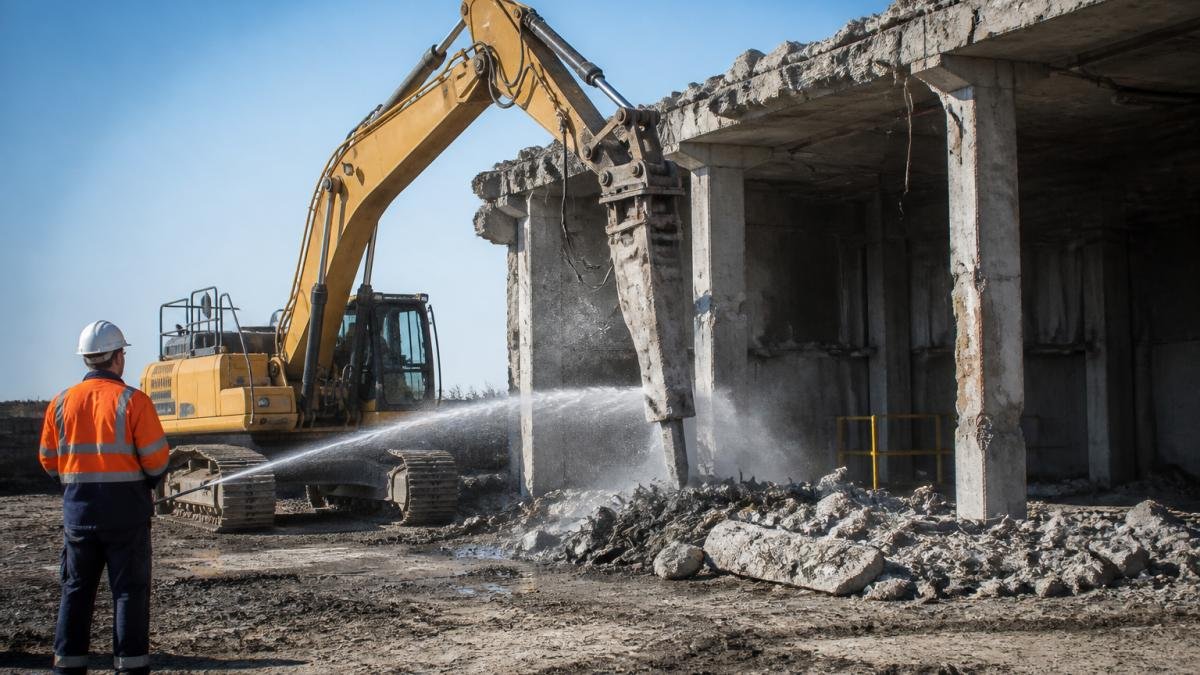
Method selection comes down to three inputs: structure type, proximity to neighbours, and what the site will become next. A steel-framed warehouse comes down differently from a reinforced silo base.
The main methods are:
- Selective demolition, taking the structure apart piece by piece so materials can be recovered
- Controlled demolition, using plant and sequence to keep vibration and dust within limits
- Strip-out works, removing internal fitments and services while the shell stays standing
- Structural dismantling, often by crane or excavator for steel and precast elements
Dust suppression, noise control and traffic management run alongside every method. On tight urban sites, the method is often chosen for the neighbours as much as for the structure.
Hazardous Materials and Contamination Management
Hazardous materials decide the program, not the other way around. Asbestos, lead paint, synthetic mineral fibre and contaminated soil all change the method, the cost and the timeline.
The rule that catches people out in New South Wales is that waste can be classified as hazardous by default until proven otherwise.
Get a Free Demolition And Asbestos Removal Quote →
- Asbestos must be removed by a licensed contractor before structural work
- Contaminated soil needs testing and disposal at an accredited facility
- Every load needs waste tracking documentation
Our breakdown of how to avoid the hazardous by default rule for waste disposal explains when free CleanOuts apply and how IWTS tracking works.
Industrial Site Clearance and Waste Management
Site clearance is where the project either closes cleanly or drags on. Clearance means removing structures, slabs, footings and waste until the site is level and ready for the next stage.
Waste management sits at the centre of it. A good program separates material recovery from disposal:
- Concrete and brick crushed and reused where permitted
- Steel separated and sent for recycling
- Green waste and general waste kept in separate streams
- All loads to accredited waste facilities, with dockets kept
Material recovery lowers disposal costs and supports the environmental conditions on your consent. Our compliance guide to commercial site handover after demolition lists the documents and site conditions you should expect at that point.
What Drives Industrial Demolition Cost in Sydney
Industrial demolition cost is driven by risk and access, not floor area.
The main cost drivers are:
- Hazardous materials, especially asbestos and contaminated soil
- Structural complexity, such as reinforced concrete, silos or basements
- Site access, including tight streets and limited laydown space
- Approval conditions, such as dust, noise and traffic controls
- Waste volumes and how far material travels to an accredited facility
What matters is how each one moves the number:
- Asbestos and contamination add testing, licensed removal, personal protective equipment, decontamination and tracked disposal. They also add time, because removal must be completed and cleared before structural work can start. A late asbestos find can push the whole program back by weeks.
- Structural complexity changes the plant and the method. Reinforced concrete, post-tensioned slabs, silos and basements may need different attachments, temporary support or engineered demolition sequences, all of which carry labour and supervision costs.
- Access affects how much can be done mechanically versus by hand, and whether material can be loaded directly or double-handled. Tight streets and limited laydown space slow the cycle and add traffic management.
- Approval conditions translate directly into controls: water carts, dust monitors, acoustic barriers, wheel washes, restricted hours and nominated truck routes. Each has a cost and a program effect.
- Waste volumes and distance determine transport and tipping charges. Separating concrete, steel and general waste at source usually lowers disposal cost and supports the environmental conditions on the consent.
We price from a site inspection, not a phone estimate. If a quote arrives without one, treat the number as provisional.
On program, a straightforward industrial strip-out and demolition can run over a few weeks, while a site with asbestos, contamination or complex structures can run for several months.
When comparing quotes, check that each one:
- Is based on a documented site inspection
- States the assumed asbestos and contamination status, and how variations will be priced
- Lists the plant and methods proposed, not just a lump sum
- Shows the waste routes and whether tracking documentation is included
- Sets out the approval conditions it has allowed for
- Identifies the program and the critical path
A low quote that excludes asbestos, contamination or waste tracking is not a cheaper quote, it is an incomplete one. Compare quotes on scope and assumptions, not on the headline number.
Commercial Strip Out Services for Live Workplaces
Strip-out is the one demolition service that often runs while the building stays in use.
That changes the plan.
A commercial strip out typically covers:
- Removing partitions, ceilings, floors and fitments
- Isolating and capping services safely
- Protecting retained structure and shared walls
- Coordinating with building management and other trades
- Clearing waste without blocking access or fire routes
For property managers, the test is simple: can the contractor work around tenants without shutting the building?
Mission Demolition is fully licensed and insured, with asbestos licence AD213684 and demolition licence AD213693.
Get started with Mission Demolition and prepare your site for its next stage with confidence.
Frequently Asked Questions
What does industrial site demolition involve?
It covers site assessment, utility disconnection, hazardous materials removal, structural dismantling and site clearance. Industrial demolition in Sydney usually starts with a site inspection and risk assessment, followed by disconnecting power, water and gas, removing asbestos and other hazardous materials, then dismantling the structure with excavators, breakers or controlled methods. Waste is sorted for recycling and taken to accredited facilities, and the site is left clean and ready for the next stage.
What affects industrial demolition cost?
Industrial demolition cost depends on the structure’s size and construction, how much asbestos or contaminated material is present, site access and traffic management needs, and how much waste can be recovered. Live-site constraints and tight urban boundaries add time and planning. Because every project differs, pricing is quoted per job. Ask for a written scope that lists inclusions and how unexpected finds are handled, then request a free quote for an accurate figure.
What permits and approvals may be needed for demolition work in NSW?
Most demolition work needs development consent or a complying development certificate from the local council, and some projects need a separate demolition permit. Work that disturbs asbestos requires notification to SafeWork NSW, and asbestos removal must be done by a licensed contractor. Before work starts, utilities must be isolated and site fencing, traffic management and sediment controls put in place. A licensed demolition contractor can confirm which approvals apply to your site.
How are hazardous materials and demolition waste managed?
Hazardous materials such as asbestos, lead paint and contaminated soil are identified during the site assessment, removed under controlled conditions and disposed of at licensed facilities with waste tracking documentation. Clean demolition waste like concrete, steel and timber is sorted for recycling wherever possible. Ask your contractor for disposal records so you can confirm the material left the site legally and that environmental obligations were met.