Asbestos removal in NSW is defined by a strict licensing and notification framework governed by SafeWork NSW under the Work Health and Safety Regulation 2025. Every homeowner, business owner, and contractor planning asbestos removal nsw regulations 2026 compliance must understand three non-negotiable pillars: the correct licence class, a mandatory five calendar day notification period, and real-time air monitoring controls. The WHS Regulation 2025 commenced on 22 august 2025 and is the operative law for all asbestos removal work in 2026. Getting any one of these pillars wrong exposes you to on-the-spot fines, project shutdowns, and serious health liability.
What licences are required for asbestos removal in NSW 2026?
Two licence classes govern all licensed asbestos removal work in NSW. The Class A and Class B licences are not interchangeable. Each covers a specific type and volume of asbestos, and using the wrong one is treated as unlicensed removal under the WHS Regulation 2025.
Class A Asbestos Removal Licence
A Class A licence covers the removal of friable asbestos and all high-risk asbestos work. Friable asbestos is material that can be crumbled by hand pressure, releasing fibres into the air. This category includes pipe lagging, sprayed insulation, and loose-fill asbestos found in ceiling cavities. Class A licence holders can also legally perform all Class B work, making it the broader of the two authorisations.
Class B Asbestos Removal Licence
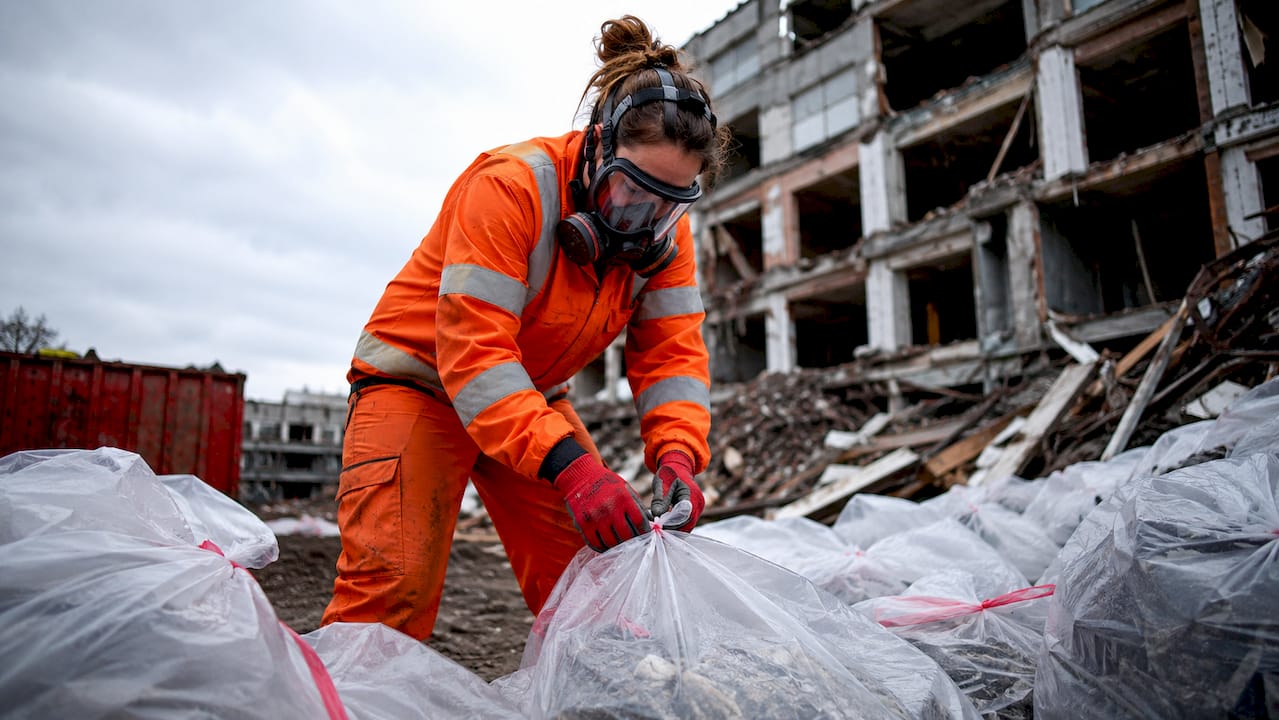
A Class B licence covers the removal of bonded (non-friable) asbestos in quantities greater than 10 square metres. Bonded asbestos includes fibro sheeting, asbestos cement roofing, and vinyl floor tiles. A Class B holder cannot legally touch friable asbestos under any circumstances.
Common scenarios where each licence applies:
- Removing a fibro fence or garage wall over 10m²: Class B licence required
- Demolishing a pre-1990 home with ceiling insulation containing loose-fill asbestos: Class A licence required
- Replacing asbestos cement guttering under 10m²: no licence required, but safe work practices still apply
- Any friable asbestos regardless of quantity: Class A licence required
For guidance on choosing a licensed contractor for your project, verify licence class before signing any contract. Service NSW provides a portal to check current licence status for any registered removalist operating in NSW.
Pro Tip: Always ask your contractor to show their SafeWork NSW licence card before work begins. A Class B contractor quoting on a friable asbestos job is a red flag, not a bargain.
Renewal of both licence classes requires submitting the correct renewal application form and payment to SafeWork NSW before expiry. Expired licences void your compliance status immediately.
How do you notify SafeWork NSW before asbestos removal?
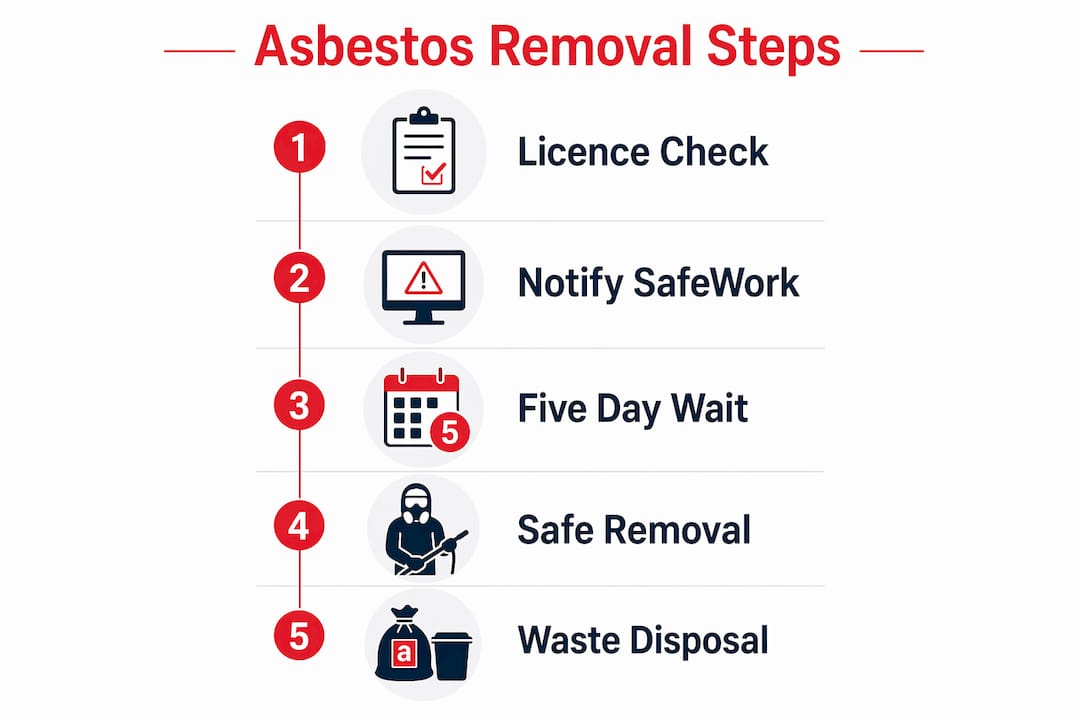
Notification to SafeWork NSW is legally required at least five calendar days before starting any licensed asbestos removal work. This applies to removal of more than 10m² of non-friable asbestos and to any quantity of friable asbestos removal. Interstate removalists working in NSW are also bound by this requirement.
The notification process follows these steps:
- Confirm the notification trigger. Determine whether your job involves more than 10m² of bonded asbestos or any friable asbestos. Both categories require advance notification to SafeWork NSW.
- Complete the notification form accurately. Submit the notification electronically through the SafeWork NSW portal. Incomplete or inaccurate forms are a compliance breach in themselves. Under the WHS Regulation 2025 privacy notice, notification is a legal duty and omissions can trigger enforcement action even when the physical removal work is done correctly.
- Wait the full five calendar days. SafeWork NSW does not issue an approval email. The system is designed around advance risk awareness for regulators, not a gate-keeping approval process. Work can only commence once the five calendar days have elapsed from the date of correct notification.
- Handle emergencies separately. Genuine emergency removals, such as storm damage exposing friable asbestos, allow for immediate notification rather than advance notice. Document the emergency circumstances thoroughly before starting work.
- Keep records on site. Retain a copy of the notification submission on site throughout the removal project. Inspectors can request this at any time.
Failure to notify SafeWork NSW or commencing work before the five day period expires can result in on-the-spot fines and penalties. This is one of the most common compliance failures on NSW asbestos jobs.
Pro Tip: Build the five calendar day wait into your project schedule from day one. Contractors who treat notification as an afterthought routinely delay clients and risk enforcement action.
The Service NSW portal lists the full regulatory steps including notification, licence application, and licence status checks in one place. Bookmark it before your next project.
What safety controls must be in place during asbestos removal?
Safety controls during licensed asbestos removal in NSW are operational requirements, not optional best practices. The WHS Regulation 2025 mandates specific measures that must be active throughout the removal process to protect staff during asbestos removal and the surrounding environment.
The core safety controls required on every licensed asbestos removal site include:
- Respirable fibre air monitoring. All Class A removal work requires continuous air monitoring throughout the job. The legal threshold is 0.02 fibres per millilitre of air. Exceeding this level triggers an immediate stop-work obligation.
- Immediate stop-work and notification. Licensed removalists must stop work and notify SafeWork NSW immediately if air fibre levels exceed 0.02 fibres/mL. This is a strict legal trigger, not a discretionary call.
- Personal protective equipment (PPE). Workers must wear appropriate respiratory protection, disposable coveralls, gloves, and eye protection rated for asbestos fibre exposure. Standard dust masks do not meet the legal standard.
- Containment and signage. The work area must be sealed and clearly signed to prevent unauthorised entry. Negative air pressure units are standard on Class A jobs to prevent fibre migration.
- Decontamination facilities. Workers must decontaminate before leaving the work area. This includes removing and bagging disposable PPE within the containment zone.
Air monitoring is an operational control, not a paperwork exercise. Class A jobs require continuous monitoring and immediate escalation workflows built into site procedures from the start, not just end-of-job reporting.
For a detailed breakdown of air monitoring requirements during licensed removal, understanding the measurement methods and compliance thresholds is worth the time before your project begins.
Asbestos waste must be double-bagged in labelled, heavy-duty polyethylene bags and transported to a licensed disposal facility. Mixing asbestos waste with general construction waste is a separate offence under NSW environmental law.
What are the legal penalties for non-compliance in 2026?
The legal framework governing asbestos removal in NSW is the Work Health and Safety Regulation 2025, which commenced on 22 august 2025 and replaced the previous model. This regulation is the operative law for all 2026 asbestos compliance obligations. It focuses on practical risk management rather than bureaucratic approvals, but enforcement is firm.
Key legal obligations under the WHS Regulation 2025 include:
- Holding the correct licence class for the type and volume of asbestos being removed. Unlicensed removal is a serious offence with significant financial penalties.
- Submitting complete and accurate notifications to SafeWork NSW before work starts. Errors or omissions in notification forms can lead to enforcement action independent of whether the physical removal work was safe.
- Complying with air monitoring thresholds and stop-work obligations. Ignoring a threshold breach is treated as a deliberate safety failure.
- Maintaining records of notifications, air monitoring results, waste disposal, and worker training on site and after project completion.
- Notifying SafeWork NSW of incidents including threshold breaches, worker exposures, or unexpected discovery of friable asbestos during bonded asbestos removal.
Penalties for breaches range from on-the-spot infringement notices through to prosecution under the Work Health and Safety Act 2011. Unlicensed removal of friable asbestos carries the most severe consequences. Beyond fines, non-compliance can void insurance coverage, expose directors to personal liability, and permanently damage a contractor’s licence standing with SafeWork NSW.
The notification quality requirement is worth emphasising. Submitting a notification with missing or incorrect details is treated as a failure to notify. SafeWork NSW’s privacy collection notice makes clear that providing accurate information is a legal duty, not a courtesy.
For commercial projects, the commercial asbestos removal guide covers how these obligations apply across multi-tenancy buildings, industrial sites, and staged demolition projects where multiple notifications may be required.
Key takeaways
Complying with NSW asbestos removal regulations in 2026 requires the correct licence class, a fully completed five calendar day notification to SafeWork NSW, and active air monitoring controls throughout the removal work.
| Point | Details |
|---|---|
| Licence class matters | Class A covers friable asbestos; Class B covers bonded asbestos over 10m². Using the wrong class is unlicensed removal. |
| Notify five days in advance | Submit a complete notification to SafeWork NSW at least five calendar days before starting licensed removal work. |
| Air monitoring is mandatory | Class A jobs require continuous monitoring; stop work immediately if levels exceed 0.02 fibres per millilitre. |
| Notification accuracy is a legal duty | Incomplete or incorrect notification forms breach the WHS Regulation 2025 regardless of how safely the work is done. |
| Penalties are real and immediate | On-the-spot fines apply for non-notification or early work commencement, with prosecution possible for serious breaches. |
What i’ve learned after years of asbestos compliance work
The five calendar day notification wait trips up more experienced contractors than it does first-timers. Experienced teams assume they know the process and submit notifications late or with errors because they are rushing to meet a client’s timeline. First-timers tend to read the rules carefully. The irony is consistent.
The notification form itself deserves more attention than most people give it. A form submitted with the wrong site address, an incorrect licence number, or a missing contractor detail is treated as no notification at all. I have seen projects shut down on day one because the form had a suburb listed incorrectly. That is not a technicality. That is the regulation working exactly as intended.
Air monitoring is the area where I see the biggest gap between what the regulation requires and what actually happens on site. The 0.02 fibres per millilitre threshold is not a target to stay near. It is a hard stop. Class A jobs need monitoring workflows built into the daily site plan, with a clear chain of responsibility for who calls the stop-work and who contacts SafeWork NSW. Treating monitoring as something the lab handles after the job is finished is a compliance failure waiting to happen.
My practical advice: plan your project backwards from the notification submission date. If your client wants work to start on a Monday, your notification needs to be submitted and confirmed the previous Monday at the latest. Build in a buffer for form corrections. And always work with a contractor whose licence class matches the asbestos type on your site, not the one who gives you the lowest quote.
— Tarek
How Missiondemolition handles licensed asbestos removal in NSW
Missiondemolition holds both Class A and Class B asbestos removal licences and manages the full compliance process on behalf of clients across NSW. That includes preparing and submitting SafeWork NSW notifications, coordinating the five day wait period into your project schedule, and running continuous air monitoring on all Class A jobs. You do not need to track the regulatory steps yourself.
For homeowners dealing with fibro sheeting or ceiling insulation, and for businesses managing staged commercial demolitions, Missiondemolition’s licensed asbestos removal services cover every stage from pre-removal inspection through to waste disposal and clearance certification. The team is available 24/7 and provides transparent, fixed pricing with no compliance surprises. Contact Missiondemolition directly to get a quote and confirm your project’s regulatory requirements before work begins.
FAQ
What licences are needed for asbestos removal in NSW?
A Class A licence is required for friable asbestos removal and high-risk work. A Class B licence covers bonded asbestos removal exceeding 10 square metres.
How far in advance must you notify SafeWork NSW?
Licensed asbestos removal work must be notified to SafeWork NSW at least five calendar days before starting. No approval email is issued; work begins after the waiting period expires.
What happens if air monitoring exceeds the legal limit?
Removalists must stop work immediately and notify SafeWork NSW if respirable asbestos fibre levels exceed 0.02 fibres per millilitre. This obligation applies to all Class A removal work.
Which regulation governs asbestos removal in NSW in 2026?
The Work Health and Safety Regulation 2025, which commenced on 22 august 2025, is the current operative regulation for all asbestos removal compliance in 2026.
Can a homeowner remove asbestos themselves in NSW?
Homeowners can remove bonded asbestos up to 10 square metres without a licence, but must still follow safe work practices. Any quantity of friable asbestos requires a licensed Class A contractor.

3 Responses