In this article, “infrastructure demolition” means the demolition of buildings, garages, sheds, and commercial or industrial structures, plus the site clearance and licensed asbestos remediation that goes with it. It does not cover bridges, highways, rail lines, or other public civil works. That is a separate field with a different audience. Under Australian Work Health and Safety (WHS) law, demolition is classified as high-risk construction work. That classification matters immediately: a Safe Work Method Statement (SWMS) is required before work starts, asbestos must be removed so far as is reasonably practicable before any structure comes down, and the contractor must hold the right licences — Class A or Class B asbestos removal, plus any state-specific demolition approvals. Owners should expect to receive an asbestos clearance certificate and waste disposal documentation at handover.
Key takeaways
Licensed asbestos removal before demolition, a written SWMS, and a clearance certificate at handover are the three non-negotiable requirements for any compliant building demolition in Australia.
| Point | Details |
|---|---|
| Demolition is high-risk work | WHS law classifies it as high-risk construction; a SWMS is mandatory before work starts. |
| Asbestos must be removed first | All ACM likely to be disturbed must be removed so far as is reasonably practicable before structural demolition begins. |
| Verify licences before signing | Confirm Class A or Class B asbestos removal licences and any state demolition licence against your regulator’s register. |
| Clearance certificate is the handover trigger | No re-entry or follow-on works until an independent licensed assessor issues the clearance certificate. |
| Missiondemolition covers the full scope | Licensed, insured teams handle demolition, asbestos removal, waste disposal, and compliance documentation across Sydney. |
Table of Contents
- What does building demolition actually cover?
- What are the legal and WHS requirements for demolition?
- How is asbestos identified and removed before demolition?
- What does the demolition project process look like?
- What demolition methods and equipment are used?
- How do you choose the right demolition contractor?
- What drives demolition costs and timelines?
- What should you do before the contractor arrives?
- What do you receive at handover, and what must you keep?
- Why licensed professionals are worth every dollar
- Missiondemolition: licensed demolition and asbestos removal in Sydney
- Sources
What does building demolition actually cover?
The term gets used loosely, so here is what is actually in scope for most homeowners, property managers, and builders.
Included projects:
- Residential house demolition (full or partial)
- Garage and carport removal, including asbestos garage removal where fibro sheeting is present
- Shed and outbuilding removal
- Commercial strip-outs and fit-out demolition
- Industrial site clearance and building removal
- Concrete cutting and slab removal
- Site clearance ahead of new construction
Explicitly excluded: demolition of bridges, highways, ports, airports, rail infrastructure, and major utility networks. Those projects involve different regulators, different procurement models, and different engineering disciplines. Nothing in this article applies to them.
Pro Tip: A fibro garage counts as asbestos-containing material in most states. Even a small shed demolition and removal job can trigger Class B asbestos removal requirements — check before you assume it is a simple skip-bin job.
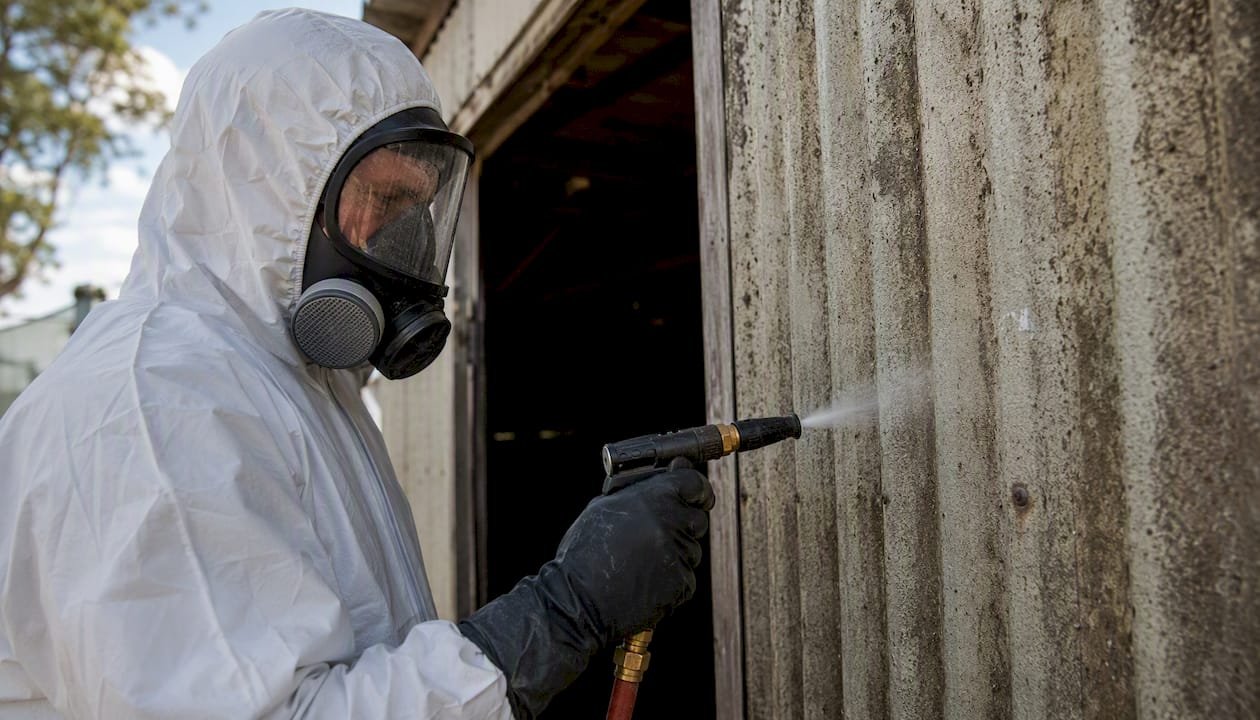
A typical small job is a single fibro garage removed in one to two days. A medium job is a weatherboard house with some asbestos sheeting, taking one to two weeks including remediation. A large job is a multi-storey commercial building requiring weeks of sequenced strip-out, environmental controls, and staged waste removal.
What are the legal and WHS requirements for demolition?
Safe Work Australia’s Model Code of Practice for demolition work classifies demolition as construction work and sets out when a SWMS is mandatory. Any demolition involving a risk of a person falling more than two metres, or involving asbestos removal, is high-risk construction work — a SWMS must be prepared and followed.
PCBU duties (person conducting a business or undertaking — that is the property owner or developer commissioning the work) include identifying whether asbestos is present, maintaining or obtaining an asbestos register, and ensuring a licensed removalist carries out any required removal. SafeWork NSW confirms that if no asbestos register exists, a competent person must inspect the site before demolition starts.
Licences and notifications you need to confirm:
| Requirement | Who holds it | When triggered |
|---|---|---|
| Class A asbestos removal licence | Licensed removalist | Friable (loose) asbestos of any quantity |
| Class B asbestos removal licence | Licensed removalist | Non-friable asbestos removal over a threshold area |
| Demolition licence (state-specific) | Demolition contractor | Varies by state and structure type |
| Local council demolition approval | Owner / contractor | Most structural demolitions |
| WorkSafe / SafeWork notification | Contractor | Notifiable demolition work |
Penalties for non-compliance are serious. Unlicensed asbestos removal and failure to notify regulators can attract significant fines under state WHS legislation. Safe Work Australia’s demolition safety guidance notes that demolition requires specific skills, training, and licences. It is not a category where improvisation is tolerated.
Documents to request from your contractor: SWMS, asbestos clearance certificate, air monitoring reports (mandatory for Class A work), EPA-licensed disposal receipts, waste manifests, and current public liability insurance certificate.
How is asbestos identified and removed before demolition?
Asbestos was used extensively in Australian construction until the late 1980s. Any building built or renovated before 1990 should be treated as potentially containing asbestos-containing materials (ACM) until proven otherwise.
The identification and removal sequence:
- Check whether an asbestos register exists for the property.
- If no register exists, engage a competent person to inspect and sample suspect materials.
- Confirm which materials are ACM and whether they are friable (Class A) or non-friable (Class B).
- Commission licensed removal before demolition starts — the Asbestos Safety and Eradication Agency is clear that household DIY removal is tightly restricted and licensed removalists should carry out the work in almost all cases.
Class A vs Class B at a glance:
| Licence class | Material type | Air monitoring required | Clearance certificate |
|---|---|---|---|
| Class A | Friable (loose, crumbly) asbestos | Yes — mandatory | Yes — independent licensed assessor |
| Class B | Non-friable (bonded) asbestos | Recommended | Yes |
The WorkSafe Queensland Code of Practice for asbestos removal requires wet-spray suppression methods, decontamination facilities on site, and independent clearance inspections for Class A work. The clearance certificate is issued by a licensed asbestos assessor who is independent of the removalist — not by the removalist themselves.
Where demolition debris contaminates surface soil, WorkSafe Queensland’s asbestos and demolition guidance requires scraping the top a thin layer of soil in the affected zone, wetting it, double-bagging it in 200 µm polythene, and disposing of it at an approved landfill. That soil remediation step is a common cost that gets missed in early quotes.
Pro Tip: Ask your contractor specifically whether their quote includes soil remediation and disposal. If the answer is vague, request a provisional sum for unexpected asbestos finds — it protects both parties.
Queensland Government’s asbestos removal work guidance confirms that licensed providers manage asbestos removal control plans, decontamination facilities, independent clearance inspections, and disposal at approved facilities as part of a compliant project.
What does the demolition project process look like?
A well-run demolition project follows a clear sequence. Surprises happen, but they should not happen because the planning was skipped.
- Site inspection and asbestos survey. The contractor inspects the structure, checks the asbestos register, and commissions sampling if needed. An asbestos inspection before demolition is not optional — it sets the scope for everything that follows.
- Permits and notifications. Local council demolition approval, utility disconnection requests (electricity, gas, water, telecommunications), and WorkSafe or SafeWork notification where required.
- Site preparation. Exclusion zones established, hoarding or fencing erected, traffic management plan activated, and neighbours notified with reasonable notice.
- Licensed asbestos removal. Completed before structural demolition starts, with air monitoring and clearance certificate obtained before the site is handed back for demolition.
- Structural demolition. Sequenced in reverse building order — fit-out first, then non-load-bearing elements, then structural elements. Mechanical plant (excavators, hydraulic shears, concrete breakers) used where access allows.
- Waste segregation and removal. Asbestos waste, general demolition waste, and recyclable materials separated and removed to appropriate facilities. Demolition waste removal documentation is part of the handover package.
- Final clearance and handover. Site cleaned, clearance certificates and waste manifests provided, and the site handed over ready for the next phase of works.
Pro Tip: Utility disconnections often take longer than owners expect — electricity and gas disconnections can take several weeks to arrange through the network operator. Start those requests as soon as the demolition contract is signed.
What demolition methods and equipment are used?
Method choice depends on the structure type, site access, asbestos presence, and proximity to neighbouring properties.
Sequential (reverse-order) demolition is the standard approach for most residential and commercial buildings. Work proceeds from the top down and from fit-out to structure, which keeps the building stable and allows waste to be managed floor by floor. The Safe Work Australia Model Code recommends sequential demolition as the preferred method.
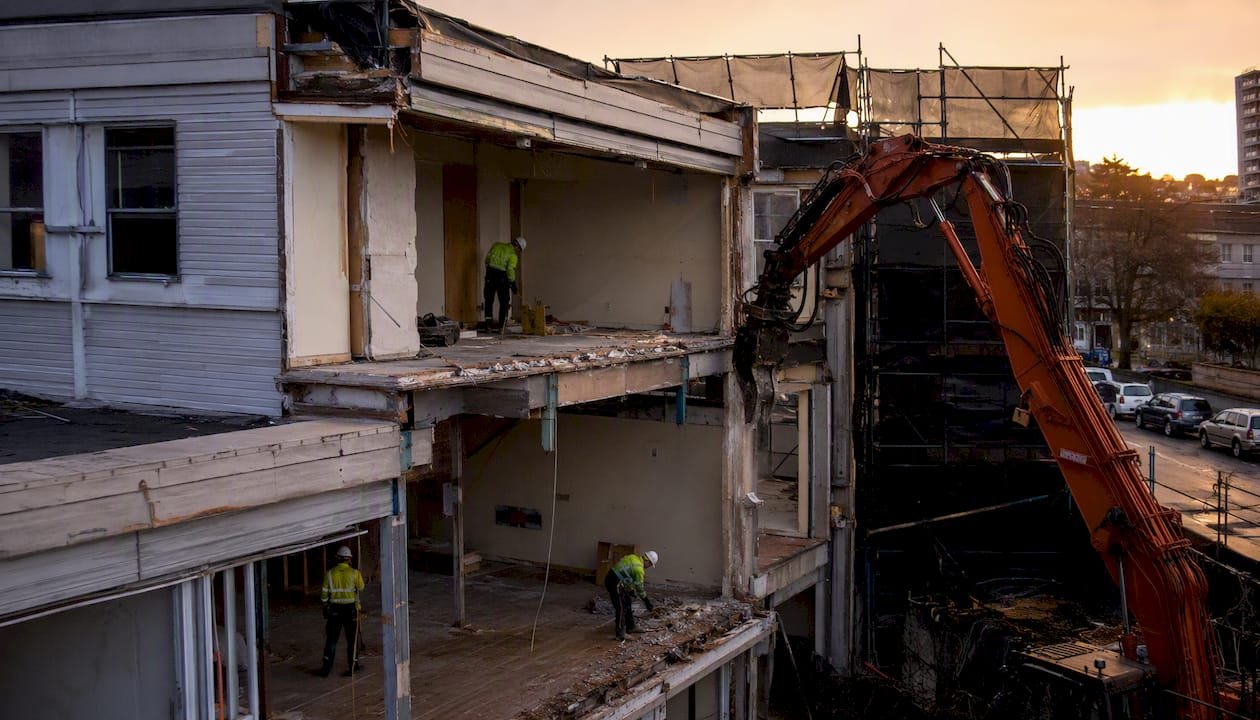
Mechanical demolition uses excavators fitted with hydraulic shears, grapples, or concrete breakers. Faster than manual methods on open sites, but generates dust and vibration that must be controlled — particularly where asbestos is present.
Selective demolition targets specific elements (a wall, a ceiling, a section of roof) to gain access for asbestos removal before wider demolition proceeds. Common in commercial strip-outs where ACM is localised.
Airborne asbestos fibres are the primary health risk in demolition work. A single disturbance of friable asbestos without proper containment, wet suppression, and respiratory protection can expose workers and neighbours to fibres that cause mesothelioma and asbestosis decades later. Method selection is not just about efficiency — it is about controlling that exposure from the first cut.
Dust suppression rigs, decontamination units, and negative-pressure enclosures are standard equipment for asbestos work. Structural collapse, noise, vibration, and utility strikes are the other primary risks that influence method selection on any site.
How do you choose the right demolition contractor?
The cheapest quote is rarely the right one. Here is what to verify before signing anything.
Credentials to request:
- Class A and/or Class B asbestos removal licence (check the licence number against your state regulator’s register)
- State demolition licence where required
- Unit competencies CPCCDE4002, CPCCDE3028, and CPCCDE3029 for supervisors and asbestos removal personnel
- Current SWMS for the specific project
- Examples of previous asbestos clearance certificates
- Public liability insurance (minimum $20 million is standard) and professional indemnity insurance
Questions worth asking:
- How will you sequence asbestos removal relative to structural demolition?
- What happens if you find unexpected asbestos during works?
- Who arranges soil remediation if debris contaminates the ground?
- Which EPA-licensed facility will receive the asbestos waste, and will you provide the disposal receipt?
Red flags: a quote that mentions asbestos only in passing, no written SWMS offered, no clearance certificate included in scope, or a price that does not itemise asbestos removal and disposal separately. Vague disposal plans are a compliance risk that lands on the property owner, not just the contractor.
Pro Tip: Search your state regulator’s licence register online before the contractor arrives on site. A licence number that does not appear — or that belongs to a different entity — is a serious warning sign.
What drives demolition costs and timelines?
Two projects that look identical from the street can have very different costs once asbestos is factored in.
Primary cost drivers:
| Factor | Impact on cost and timeline |
|---|---|
| Asbestos presence and class | Class A work adds air monitoring, decontamination, and independent clearance costs |
| Site access | Tight urban sites require smaller plant, hand work, and longer schedules |
| Waste volume and EPA disposal | Licensed disposal fees apply per tonne; asbestos waste is priced separately |
| Soil remediation | 30–50 mm scraping and disposal is a common unquoted item |
| Traffic and environmental controls | Required on busy streets or near waterways; adds time and cost |
| Permits and notifications | Council fees and utility disconnection charges vary by location |
A simple garage removal on an accessible suburban block typically takes one to two days. A house with asbestos sheeting requiring Class B removal and soil remediation runs one to three weeks. A larger commercial project with friable asbestos, Class A removal, air monitoring, and staged structural demolition can run several weeks to months.
Ask for a detailed quote with line items for asbestos removal, air monitoring, soil remediation, clearance testing, and waste disposal. Request a provisional sum for unexpected asbestos finds — it is standard practice on any pre-1990 structure.
What should you do before the contractor arrives?
Owners can reduce delays and cost surprises with a few straightforward steps.
- Remove valuables and personal items from the structure and any adjacent storage areas.
- Secure and relocate pets well before work starts — demolition sites are dangerous and noisy.
- Clear vehicles from driveways and any area the contractor needs for plant access or waste bins.
- Locate and mark services — gas meters, electricity switchboards, water mains, and any underground services you are aware of. Provide these to the contractor in writing.
- Gather existing records: title documents, any previous asbestos register or inspection report, and any council approvals already obtained.
- Notify neighbours in writing at least five to seven days before works start. Include the expected start date, duration, and the contractor’s contact number. Some councils require this as a condition of the demolition permit.
- Confirm access arrangements — gate codes, key handover, and any restrictions on working hours imposed by council or strata.
What do you receive at handover, and what must you keep?
Handover documentation is not a formality. It is the legal record that the work was done correctly, and follow-on builders, insurers, and future buyers may ask for it.
Documents to obtain and retain:
| Document | Purpose | Who issues it |
|---|---|---|
| Asbestos clearance certificate | Confirms site is safe for re-occupation or further works | Independent licensed asbestos assessor |
| Air monitoring results (Class A) | Demonstrates fibre levels were within safe limits during removal | Accredited hygienist |
| EPA-licensed disposal receipts | Proves asbestos waste went to an approved facility | Licensed waste transporter / facility |
| Waste manifests | Tracks hazardous waste from site to disposal | Contractor / waste transporter |
| SWMS sign-off | Confirms high-risk work was carried out per the approved method | Contractor / supervisor |
| Final site handover documentation | Records condition of site at completion | Contractor |
No re-entry or follow-on construction should occur until the asbestos clearance certificate is in hand. That certificate is the legal trigger for the site being safe. If you receive paperwork that is incomplete or unsigned, do not accept handover — contact your state regulator (SafeWork NSW, WorkSafe Victoria, WorkSafe Queensland, or equivalent) if a contractor refuses to provide compliant documentation.
Retain all documents for the life of the property. Future renovations, sales, and insurance claims can all require evidence of compliant asbestos removal.
Why licensed professionals are worth every dollar
The assumption that a small demolition job is a DIY weekend project is one of the most common and costly mistakes property owners make. Partial removal of a load-bearing wall, disturbing a fibro ceiling, or cutting into a concrete slab without checking for embedded services — each of these triggers WHS obligations that most owners do not know apply to them. Safe Work Australia is explicit that demolition requires specific skills, training, and licences, and that the risks extend well beyond the obvious ones.
Licensed teams bring equipment that owners cannot replicate: decontamination units, negative-pressure enclosures, calibrated air monitoring instruments, and relationships with EPA-licensed disposal facilities. They also carry the insurance that protects the property owner if something goes wrong. A contractor without public liability cover leaves the owner exposed.
The benefits of licensed asbestos contractors go beyond compliance. Experienced teams identify unexpected asbestos finds early, adjust the scope before costs blow out, and produce the clearance documentation that lets the next trade start without delay. That sequencing is where unlicensed operators consistently fail — and where the property owner pays twice.
Missiondemolition: licensed demolition and asbestos removal in Sydney
Missiondemolition handles the full scope — residential demolition, commercial strip-outs, Class A and Class B asbestos removal in Sydney, site clearance, and complete project management including permits, utility disconnections, and EPA-licensed waste disposal. Every project is carried out by fully licensed and insured teams operating under a written SWMS, with clearance certificates and disposal receipts provided at handover.
The concrete difference for property owners: one point of contact manages approvals, asbestos removal, structural demolition, and final site cleanup — no coordinating between separate trades, no gaps in the compliance paper trail. For a site inspection and written quote, contact Missiondemolition through the professional demolition services page.
Sources
- Asbestos Safety and Eradication Agency – Practical guidance for householders and home renovators
- Queensland Government – Asbestos removal work guidance
- SafeWork NSW – Demolition
- Safe Work Australia – Model Code of Practice: Demolition work (v2)
- WorkSafe QLD – How to safely remove asbestos Code of Practice 2021
- Training
This article is general information, not a substitute for advice from a qualified doctor. Consult a qualified healthcare professional about your own circumstances before acting on anything here.

One Response