
In NSW, permanent electrical service disconnection for demolition must be carried out by a Level 2 Accredited Service Provider and evidenced by the ASP or distributor network lodgement and where relevant, a Certificate of Compliance for electrical work. There is no single generic “disconnection certificate”: the paperwork that proves a site is safe for demolition is the ASP’s job sheet, the network lodgement reference and the CCEW where electrical work occurred. Whoever runs the demolition, principal contractor or property owner, needs to collect and keep this evidence before any works begin.
TL;DR:
- Only a Level 2 Accredited Service Provider can legally disconnect electricity at the network connection point in NSW, and their work must be documented with a job sheet and lodgement reference.
- Property owners or contractors must obtain at least three itemized quotes from ASPs, verify accreditation, and keep all disconnection records before demolition begins to ensure legal compliance.
- Disconnection costs vary depending on overhead versus underground services, pole work, site access, and whether approvals are required, often influencing the overall timeline significantly.
- Reconnection after enforced disconnection or defect notices requires rectification verified by a Level 2 ASP and typically takes longer with higher costs due to additional inspections and paperwork.
- Proper recordkeeping of disconnection documentation is essential to demonstrate site safety and compliance, preventing penalties and delays during inspections or disputes.
Table of Contents
- What NSW regulators require: ASP Scheme, SafeWork and planning portal rules
- Who can do the work: Level 2 ASPs, qualified supervisors and licensing boundaries
- Step by step: securing lawful proof of electrical disconnection before demolition
- Costs and timeframes: what usually affects price and schedule
- Reconnection after enforced disconnection and defect notice rectification
- Compliance, penalties and responsibilities for owners and contractors
- Our practical checklist for pre-demolition disconnection
- Author perspective: common mistakes and quick remedies
- How we help with disconnection coordination and paperwork
- FAQ
- Sources
What NSW regulators require: ASP Scheme, SafeWork and planning portal rules
Three separate frameworks govern a NSW demolition site, and they rarely get explained together, which is why owners often assume one approval covers everything.
The first is the energy framework. The Accredited Service Provider (ASP) Scheme sets out who is legally permitted to carry out contestable network work, which includes disconnecting a service line at the point of connection. Only a provider accredited under this scheme, at the correct level, can do that work, and the scheme defines three accreditation levels with different scopes.
The second is work health and safety. SafeWork NSW’s demolition guidance requires that a demolition site is free from active essential services before work starts, and sets licensing expectations for the demolition work itself. A demolisher who begins work on a site with a live electricity supply is creating a hazard that SafeWork inspectors are specifically trained to look for.
The third is planning. A development approval or complying development certificate authorises the demolition in a planning sense, but it says nothing about who disconnects the power, gas or water, or how that disconnection is proven. The Planning Portal’s demolition guidance treats utility disconnection as a separate step, recommending a Before You Dig Australia enquiry before anything gets disconnected or dug up. Our guide to demolition permits in Sydney covers how DA and CDC approvals work in more detail, and why they sit alongside, not instead of, your utility obligations.
These three frameworks interact in practice like this:
- A DA or CDC approval lets you demolish the structure, but it does not authorise or confirm disconnection of services.
- SafeWork NSW expects live services to be disconnected and documented before demolition starts, not during it.
- The ASP Scheme is the only legal pathway for permanently disconnecting the electricity service line.
Treating these as one approval is the single most common planning mistake we see on residential and small commercial sites.
Who can do the work: Level 2 ASPs, qualified supervisors and licensing boundaries
A Level 2 ASP accreditation is specifically scoped to service line work: connecting, disconnecting and in some cases working on network devices up to the point of supply. This is contestable work, meaning it sits outside the distributor’s own crews and is performed by private accredited businesses, but it still has to meet the same network standards the distributor enforces.
Not every disconnection needs a Level 2 ASP. If the job is isolating or removing fixed wiring and equipment inside the property boundary, rather than the network service line itself, a qualified supervisor’s electrical licence may cover the work, with the result recorded on a Certificate of Compliance. The distinction matters: service line disconnection at the point of connection is ASP territory, while internal wiring removal is standard licensed electrical work.
Before engaging anyone, verify their accreditation directly rather than relying on a business card or a website claim.
- Search the ASP Platform referenced by NSW’s ASP Scheme by location and service level to confirm Level 2 status.
- Ask for the provider’s accreditation number and cross-check it against the platform listing, not just a certificate they email you.
- Confirm the specific distributor area is covered, since accreditation can be regional rather than state-wide.
Pro Tip: Ask the ASP for their accreditation number before you book the job, not after the invoice arrives. It takes two minutes to check on the ASP Platform and it is the single easiest way to avoid paying for work that a distributor later refuses to recognise.
Step by step: securing lawful proof of electrical disconnection before demolition
The sequence below is the order that actually avoids delays on site, based on how distributors and ASPs process this work in practice.
- Lodge a Before You Dig Australia enquiry. This identifies underground electricity, gas, water and telecommunications infrastructure before any physical work happens, as recommended in the Planning Portal’s demolition phase guidance.
- Confirm who manages ASP engagement. On a managed demolition project this is usually the principal contractor; on an owner-managed project it falls to you. Get this in writing before quotes go out, so nobody assumes someone else booked the disconnection.
- Request written, itemised quotes from at least three ASPs. Each quote should separately list the disconnection work, any distributor approval or inspection fees and the lodgement step, so there are no surprise add-ons later.
- Confirm distributor approval requirements with the ASP. Some disconnection and reconnection work needs distributor sign-off or inspection, as noted in NSW’s guidance on altering electricity supply. The ASP should tell you upfront which steps apply to your site.
- Let the ASP carry out the disconnection and lodge it. The ASP disconnects the service, arranges any required distributor inspection, and lodges the disconnection with the network. This lodgement reference is what distributors and councils treat as proof the service is dead.
- Collect the job sheet and lodgement reference. Do not let the ASP leave site without handing over a written job sheet and the network lodgement reference number.
- Obtain a Certificate of Compliance if electrical work occurred. Where wiring was removed or altered, the CCEW fact sheet from SafeWork NSW confirms this certificate must be issued and, where relevant, sent to the network owner. Keep a copy for council and SafeWork records.
| Step | Who is responsible | Document you should hold afterwards |
|---|---|---|
| BYDA enquiry | Owner or principal contractor | BYDA referral number |
| ASP engagement and quote | Owner or principal contractor | Written itemised quote |
| Disconnection and distributor approval | Level 2 ASP | ASP job sheet |
| Network lodgement | Level 2 ASP | DNSP lodgement reference |
| Electrical work certification | Licensed electrician or ASP | Certificate of Compliance (CCEW) |
Skipping the job sheet or lodgement reference is the most common gap we see. Verbal confirmation that “it’s been disconnected” is not evidence a council or SafeWork inspector will accept.
Costs and timeframes: what usually affects price and schedule
Disconnection pricing varies more than most owners expect, largely because the physical conditions of the connection drive most of the cost.
- Overhead versus underground service. Underground services generally take longer to isolate safely and cost more than an overhead drop.
- Pole work. If the service runs via a pole that also needs to be removed or altered, expect an additional site visit and fee.
- Site access. Tight urban blocks, shared driveways or services buried under existing structures slow down the physical work.
- After-hours or urgent requests. Emergency or weekend disconnections attract a premium from most ASPs.
- Distributor approval and inspection fees. Some distributor sign-off steps carry their own fee separate from the ASP’s labour charge.
One of the most overlooked cost risks is scope creep in the quote itself. Property owners should request itemised quotes from at least three ASPs and confirm the quote explicitly includes distributor approvals and lodgement and not just the physical disconnection, so there are no hidden costs or delays once the job is underway.
Timeframes follow a similar pattern: a straightforward overhead disconnection with no distributor inspection can often be booked and completed within a short window, while underground services, pole work or distributor-mandated inspections stretch the schedule out. Build the disconnection into your demolition programme as its own task with its own lead time, rather than assuming it happens the same day the demolisher arrives.
Reconnection after enforced disconnection and defect notice rectification
Reconnection gets more complicated when the original disconnection was not routine, but enforced by the distributor, for example following a safety defect notice or non-payment action. In these cases you cannot simply ask for the power back on. Rectification of the underlying issue has to be completed and verified by a Level 2 ASP before a formal reconnection application can even be lodged.
This path takes longer and usually costs more than a planned disconnection and reconnection cycle, for a few recurring reasons:
- Pole or top-of-pole work often requires a dedicated distributor crew booking, which adds its own lead time on top of the ASP’s rectification work.
- Distributor inspections after enforced disconnection tend to be more thorough, since the fault that triggered the disconnection needs to be formally cleared.
- Any outstanding compliance paperwork, including a CCEW for rectified wiring, has to be lodged before the reconnection request is accepted.
The Energy & Water Ombudsman NSW’s disconnection guidance explains that reconnection fees are regulated and that timeframes can extend when pole work or after-hours attendance is involved. The fastest route back to a connected supply is to complete rectification fully in one pass, lodge every required document in the same submission, and confirm directly with the distributor what else they need before you expect a reconnection date.
Compliance, penalties and responsibilities for owners and contractors
Responsibility for utility disconnection does not disappear just because you have hired a demolition contractor. Under NSW planning and work health and safety obligations, the principal contractor manages site safety day to day, but the property owner retains underlying responsibility for ensuring the site is lawfully prepared for demolition.
The practical risks of getting this wrong are significant:
- Unlicensed electrical work, including disconnections performed by someone without the correct ASP accreditation, exposes both the worker and the commissioning party to penalties under electrical safety law.
- Starting demolition with a live electricity service on site is exactly the kind of hazard SafeWork NSW’s demolition guidance is designed to prevent, and it is a common trigger for a stop-work direction.
- Councils and SafeWork inspectors expect to see documented evidence, not a verbal assurance, that services were disconnected by an authorised provider before work began.
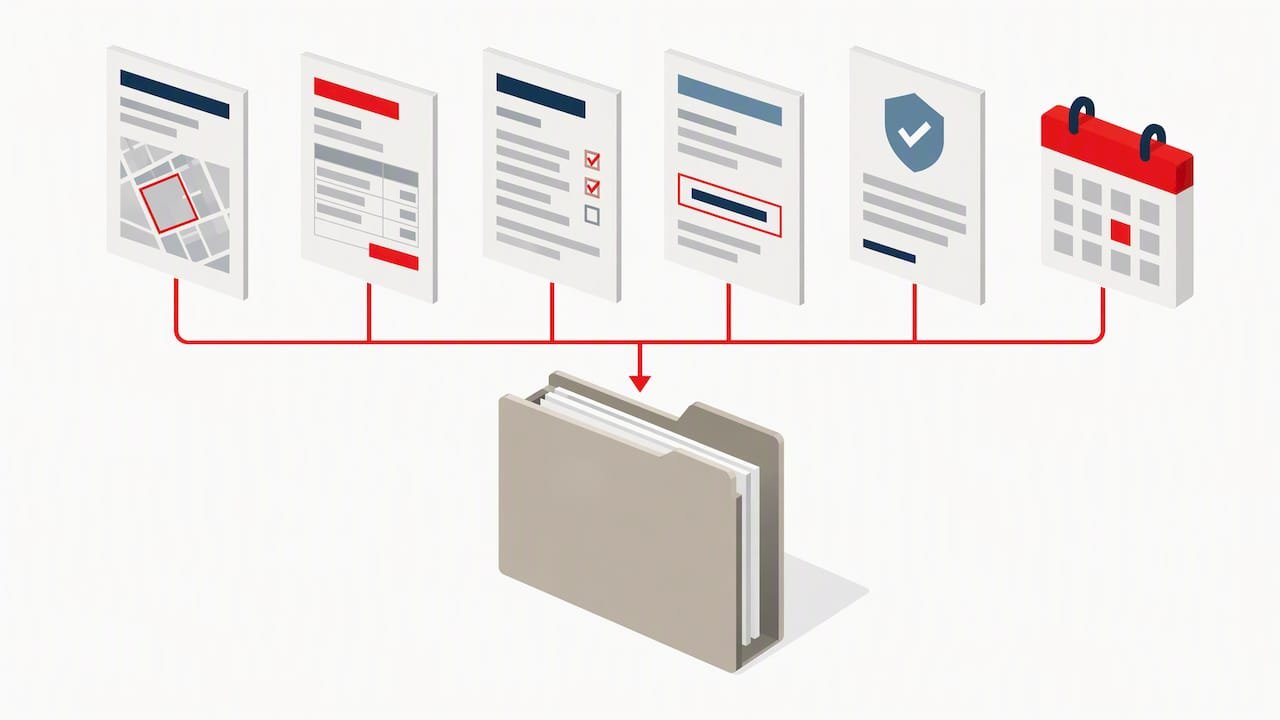
Pro Tip: Keep every disconnection document in one folder, physical or digital, from the BYDA reference through to the CCEW. If an inspector asks for proof on site, a single folder you can hand over on the spot says more about your compliance than any amount of explaining.
Good recordkeeping is simple in practice: a dated folder with the BYDA referral, the ASP’s written quote, the job sheet, the network lodgement reference and any CCEW. This is the exact set a council or SafeWork officer will ask to see, and it is far cheaper to assemble before demolition than to try to reconstruct after the fact.
Our practical checklist for pre-demolition disconnection
We built this checklist from the documents distributors and SafeWork NSW actually ask for on site, so it maps directly to the regulatory steps above rather than to generic project management theory.
- Lodge a BYDA enquiry before engaging any contractor, to confirm what is actually buried on site.
- Confirm who engages the ASP in writing, so the task does not fall between the owner and the principal contractor.
- Collect three itemised ASP quotes that each separately list disconnection, distributor fees and lodgement.
- Request the ASP’s accreditation number and verify it before booking.
- Hold the job sheet and DNSP lodgement reference the day the disconnection happens, not weeks later.
- File any CCEW alongside the lodgement reference before demolition starts.
Our project management approach coordinates these steps alongside site clearance and asbestos handling, so the paperwork and the physical works move on the same timeline rather than one waiting on the other.
Pro Tip: Ask your demolition contractor to hand over the ASP job sheet and lodgement reference as a condition of final payment, not as an afterthought.
Author perspective: common mistakes and quick remedies
In most delayed demolition projects I have looked at, the root cause is not the demolition itself. It is an infrastructure check done too late or a scope left unclear between the owner and the contractor over who actually books the ASP.
The fix is almost always the same: ask for the ASP’s DNSP lodgement reference and a copy of any Certificate of Compliance before a single wall comes down, not after. These two documents are what a council or SafeWork inspector will ask for, and they are what protects you if a dispute arises later about whether the site was genuinely safe. Our guide to choosing a licensed demolition company covers the questions worth asking a contractor upfront, and it is worth reading before you sign anything.
Clear scope, early checks, documents in hand before day one. That is the whole trick.
— Tarek
How we help with disconnection coordination and paperwork
We manage the coordination side of demolition projects, which is exactly where disconnection paperwork tends to go missing. Alongside demolition and asbestos removal, our project management covers liaising with ASPs and distributors, tracking BYDA enquiries, and handing over the job sheets, lodgement references and compliance certificates you need on file.
What this looks like on a typical project:
- We confirm who is engaging the ASP and get written quotes before works are scheduled.
- We track distributor approvals and lodgement so disconnection evidence is ready before demolition starts.
- We hand over the full document set, job sheet, lodgement reference and CCEW where relevant, at project close.
If you are planning a demolition and want the disconnection and approvals side handled alongside the physical works, get in touch through our demolition services page for a project quote.
FAQ
How much does a certificate of electrical safety cost?
The cost of a Certificate of Compliance for electrical work is set by the electrician or ASP carrying out the work and is not published as a fixed statewide fee, so it is best requested as part of your itemised quote. Ask your provider to include it as a line item alongside the disconnection cost rather than as a separate surprise charge.
How much does it cost to connect electricity in NSW?
Connection costs depend on factors like whether the service is overhead or underground, whether pole work is needed, and whether a distributor inspection applies, so there is no single published figure. The most reliable way to get an accurate number is to request written, itemised quotes from multiple accredited providers for your specific site.
Do I need a Level 2 ASP for every type of disconnection?
You need a Level 2 ASP specifically for disconnecting the service line at the network connection point. Internal wiring removal within the property boundary is typically handled by a licensed electrician under a standard Certificate of Compliance rather than requiring ASP accreditation.
What happens if I demolish without disconnecting services properly?
Demolishing with live services still connected creates a serious safety hazard that SafeWork NSW’s demolition guidance is designed to prevent, and it can trigger a stop-work direction or penalties. It can also leave you without the documentation a council or distributor expects to see if a dispute or insurance claim arises later.
Can I verify an ASP’s accreditation myself before hiring them?
Yes, the ASP Platform referenced by NSW’s ASP Scheme lets you search accredited providers by location and accreditation level. Checking this before booking is the simplest way to confirm the provider is actually authorised for service line disconnection.
Sources
A few pages are worth bookmarking before you start: the ASP Scheme page to search accredited providers, SafeWork NSW’s demolition and electrical fact sheets for site safety obligations, the Planning Portal’s demolition guidance for BYDA and approval steps, and the Energy & Water Ombudsman NSW for disconnection and reconnection consumer guidance.
- Accredited Service Provider (ASP) Scheme | NSW Climate and Energy Action
- Installing or altering electricity supply to your property | NSW Climate and Energy Action
- Demolition | SafeWork NSW
- Electrical practices for construction and demolition sites (fact sheet) | SafeWork NSW
- Demolish – MyHome Planner | Planning Portal – Department of Planning and Environment
