Sustainable demolition means planning what leaves your site before the first wall comes down. You audit the building, remove hazardous materials such as asbestos first, take out reusable components, sort the rest into clean streams and send each stream to a facility that can actually recycle it. Done well, it cuts landfill, lowers disposal bills and keeps you on the right side of the regulators. This guide explains how that works on Australian projects, where deconstruction fits, what it costs and what to ask your contractor.
TL;DR
- Start with a pre-demolition audit. It finds asbestos and other hazards and lists which materials can be reused or recycled.
- In Australia, asbestos that is likely to be disturbed must be identified and removed by a licensed professional before demolition begins, unless the structure is too unstable.
- Deconstruction (careful dismantling) usually costs more upfront than mechanical demolition, but salvage value and lower disposal costs can narrow the gap.
- Sorting at the source matters more than the tonnage figure: clean, separated material is what gets recycled. Mixed loads contaminated with asbestos are what get people prosecuted.
- Write a site-specific waste management plan with diversion targets before you sign a contract, not after.
Table of Contents
- What sustainable demolition actually involves
- Why it matters in Australia right now
- Step one: the pre-demolition audit
- Asbestos comes first, and it is not optional
- Deconstruction versus mechanical demolition
- Use the waste hierarchy as your decision tool
- Design for deconstruction: why old buildings are hard
- What sustainable demolition costs
- How we approach it at Mission Demolition
- Checklist: questions to ask any demolition contractor
- Planning your project with us
- FAQ
- Sources
What sustainable demolition actually involves
The phrase gets used loosely, so it helps to be precise. A sustainable job does four things:
- Questions the demolition. The most sustainable building is often the one you keep. Best-practice guidance from the US EPA puts refurbishment and adaptable design first, and deconstruction ahead of mechanical demolition when a building must come down.
- Identifies what is in the building. That means a hazardous materials survey and a materials inventory before any machine arrives.
- Separates materials as the building is taken apart. Concrete, brick, metals, timber, glass, plasterboard and hazardous waste each go to their own stream.
- Tracks where everything goes. Dockets, weighbridge tickets and a waste plan show the diversion rate you actually achieved, not the one you hoped for.
None of this needs exotic technology. It needs planning time, a contractor who sorts as they work and a client who asks for the numbers.
Why it matters in Australia right now
Building and demolition material is the largest waste category in the country. According to the National waste and resource recovery report 2026, Australia generated 27.4 million tonnes of building and demolition materials in 2024-25, and 23.2 million tonnes of it was recycled. That is a strong recovery rate by weight, largely because heavy inert material such as concrete and brick is easy to crush and reuse.
The weakness sits in quality. A tonne of clean, source-separated concrete becomes road base or aggregate with little fuss. A tonne of mixed rubble with timber, plastics and fibro fragments in it becomes a problem. The CityLoops guide to selective demolition describes source-sorting at the demolition site as the core of selective demolition, and it notes that choosing this approach does not reduce the total volume of waste. What it changes is how clean and recyclable the material is.
So when someone promises an eco friendly demolition, ask two questions: how much was diverted from landfill, and what was the diverted material turned into?
Step one: the pre-demolition audit
A pre-demolition audit is the cornerstone of the whole approach. It does two jobs at once. It finds hazardous materials so they can be dealt with safely, and it creates an inventory of what can be salvaged, reused or recycled to a high standard. The European Commission describes this logic on its construction and demolition waste page, where selective demolition is prioritised so that hazardous substances come out and material fractions are recovered at higher quality than from mixed demolition.
On a typical Australian house or commercial building, the audit should cover:
- Hazardous materials: asbestos in eaves, fibro sheeting, roofing, vinyl backing, flues and lagging; lead paint; synthetic mineral fibre; PCBs in old light fittings; underground tanks.
- Services: gas, electricity, water and sewer disconnections that must be arranged ahead of the work.
- Reusable items: structural timber, hardwood flooring, bricks, roof tiles, steel beams, fixtures, windows, doors and kitchens.
- Recyclable bulk streams: concrete, masonry, metals, clean timber, plasterboard and glass.
- Likely contamination risks: areas where a hazardous material is mixed with something recyclable, such as asbestos cement fragments in soil.
If you are a homeowner, our guide to why an asbestos inspection before demolition matters explains what the inspection finds and what happens with the results.
Asbestos comes first, and it is not optional
No discussion of sustainable demolition in Australia is honest without asbestos. Under Safe Work Australia’s Model Code of Practice for demolition work, asbestos or asbestos-containing material that is likely to be disturbed must be identified and removed by a licensed professional, as far as reasonably practicable, before demolition or refurbishment starts, unless the structure is inherently unstable. The code also sets out two licence classes: Class A for friable asbestos and Class B for non-friable asbestos. State and territory laws apply the model code, so confirm the rules for your jurisdiction. For New South Wales, see our NSW asbestos removal regulations guide.
Why does this belong in a sustainability article? Because asbestos is the single biggest reason recycling streams fail. The NSW EPA’s prosecutions over asbestos in mulch followed what the regulator described as its largest investigation of its kind, and they show how contamination in a recycled product creates liability far beyond the original demolition site. The EPA’s guide to managing asbestos in soil adds that fragments of bonded material such as fibro often remain on the ground after an incomplete clean-up of a demolished building.
The practical lesson is simple. A demolition that skips the asbestos step can contaminate every recycling stream it touches. If you want to see what a clean handover looks like, our checklist for stopping asbestos and illegal dumping before demolition walks through it, and our note on asbestos in soil and the Class A and B thresholds covers the ground itself.
Deconstruction versus mechanical demolition
Deconstruction is the systematic, careful dismantling of a building so that components can be salvaged. Mechanical demolition uses excavators and attachments to bring the building down quickly, with sorting done afterwards or during. Most real projects sit somewhere in between, which is why the better term is often selective demolition.
| Factor | Mechanical demolition | Selective demolition | Full deconstruction |
|---|---|---|---|
| Speed | Fastest | Moderate | Slowest |
| Labour | Lower | Moderate | Highest |
| Material quality | Mixed unless sorted well | Clean fractions | Highest reuse value |
| Salvage income | Minimal | Some (metals, bulk stock) | Highest (timber, bricks, fittings) |
| Best suited to | Tight programmes, low-value stock | Most commercial and residential jobs | Heritage, timber-rich or high-spec buildings |
The Maine Department of Environmental Protection estimates that more than 75% of construction and demolition debris from demolitions or renovations could be reused or recycled, and it notes that deconstruction is often dearer upfront because of the extra labour and time. It also points out that deconstruction can be cost-competitive across the life of a project through lower disposal costs, the sale of salvaged components and, in some places, incentives. That is a US state’s view, so treat the incentive point as indicative: availability of grants and tax treatment differs in Australia and should be checked with your accountant and council.
Selective demolition is also not a quick substitute. The CityLoops guide stresses that it is a specialised, time-intensive process that has to be planned at the procurement stage, supported by an audit that identifies pure material fractions. If you leave the decision until the week before the machines arrive, you have already chosen mechanical demolition.
Use the waste hierarchy as your decision tool
Project managers can apply the standard waste hierarchy to every material on the list. In order of preference: avoid or reduce, reuse, recycle, recover, treat, dispose. A Department of Defence environment and heritage manual lodged with the EPBC public portal recommends developing a site-specific waste management plan early, with landfill diversion targets, because it shapes the demolition method itself.
Here is how that looks on a typical single-storey brick house:
- Avoid: can the slab, footings or a retaining wall stay and be built on?
- Reuse: salvage hardwood, bricks, roof tiles, windows, fittings and any sound steel.
- Recycle: crush concrete and brick on a licensed facility’s equipment, send metals to scrap, and send clean timber to recovery.
- Dispose: only what remains, and for asbestos, only at a facility licensed to take it, with documentation.
A plan like this takes an hour to write and tends to save money, because every tonne you divert avoids a landfill charge and a levy.
Design for deconstruction: why old buildings are hard
What happens on demolition day is largely decided when the building was designed. UK Green Building Council guidance on sustainable deconstruction calls the linear model of extraction, construction, demolition and disposal unsustainable, and it points to features that make later dismantling easier: mechanical fasteners rather than glues, simpler material palettes and modular components.
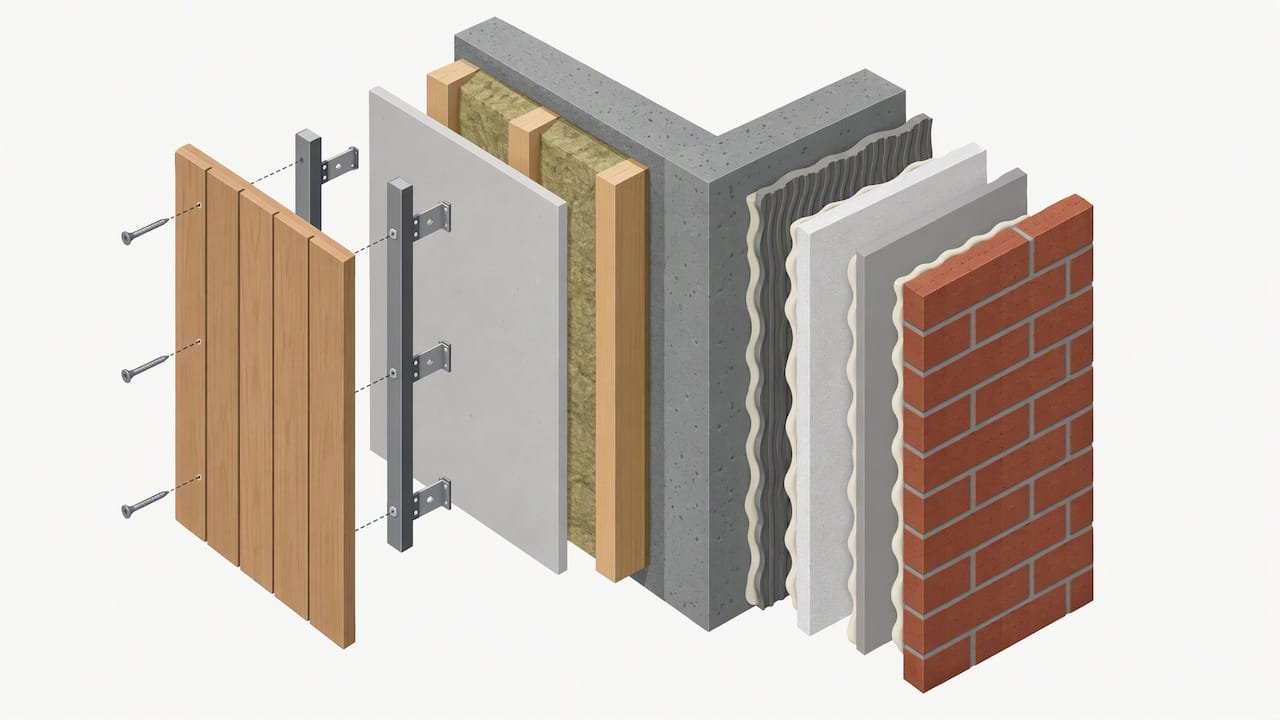
Most Australian buildings you will demolish were not designed that way. Glued flooring, painted-over cladding and bonded fibro all push you towards brute-force methods. That is not an excuse to give up on diversion. It means you should plan for the materials that can be separated (concrete, steel, brick, clean timber) and accept that some finishes will go to disposal. If you are building new, ask your designer to think about the next demolition now.
What sustainable demolition costs
Expect a higher upfront figure than a basic knock-down, mostly in labour and time. The offsets are real but vary job by job:
- lower disposal and levy costs on diverted tonnes;
- income or credit from salvaged timber, bricks, steel and fittings;
- less risk of a stop-work notice or contamination clean-up later;
- faster approvals where councils or clients require a waste plan.
We do not publish fixed prices because every site differs in access, material, hazards and programme. The honest way to compare quotes is to ask each contractor for a line-by-line breakdown that separates asbestos work, demolition, waste transport and disposal, and to check what diversion rate they are committing to.
For contractors and developers who own plant, running costs matter too. Guidance on reconditioning used equipment is a reasonable starting point when you are weighing whether to refit existing machines rather than buy new ones, which is another place where reuse beats replacement.
How we approach it at Mission Demolition
We are a licensed demolition and asbestos removal contractor working across Sydney and Australia, on residential, commercial and industrial sites. Our work covers the parts of sustainability that decide whether a job is clean or messy: asbestos inspection and removal, strip-outs, concrete cutting, utility disconnections, hazardous waste handling and final site cleaning, with environmentally responsible waste disposal built into how we run projects.
Our view on the topic
The loudest claims in this field are about recycling percentages. We think the quieter question matters more: was the building understood before it was touched? Most of the harm we see in this industry starts when asbestos is found halfway through, when it is mixed into rubble and when that rubble moves to a place it should never have gone. A clean site is a sorted site, and a sorted site starts with an inspection.
So our advice to owners is plain. Do not ask first for the cheapest demolition. Ask for the audit, the asbestos plan and the waste plan, then ask what you can salvage or keep. Where deconstruction makes sense, such as a timber-rich older home, it is worth pricing alongside mechanical demolition. Where the programme is tight or the stock is low value, a well-run selective demolition with strict sorting still delivers most of the environmental benefit.
— Tarek
Checklist: questions to ask any demolition contractor
- Will you carry out or accept a pre-demolition audit and asbestos survey, and who holds the licence for any removal?
- What is the written waste management plan, and what diversion target does it commit to?
- Which materials will be salvaged for reuse, and who keeps the value?
- Where will each stream go, and will I receive dockets or tickets for every load?
- How do you stop asbestos reaching soil, recycled products or general waste?
- How do you handle utility disconnections, approvals and notifications before work starts? For NSW asbestos jobs, see our summary of the five days’ notice for removalists.
- What does the final site clean-up include?
A contractor who answers all seven clearly is usually a contractor who runs a tidy, lawful site.
Planning your project with us
If you are planning a house, commercial or industrial demolition, or a strip-out, we can help you work through the audit, asbestos, waste and disposal steps in the right order. Start with our demolition services, look at our residential demolition service for houses, or see our interior strip out services if the building is staying and the fit-out is going. If you suspect asbestos, our asbestos inspection and testing is the right first step.
FAQ
Is deconstruction always more sustainable than demolition?
Not always. It gives the best reuse value because components come out intact, but it takes more time and labour. For many buildings, a carefully sorted selective demolition recovers most of the recyclable material at lower cost and shorter programme. The most sustainable option of all is often to refurbish and keep the structure.
Do I need an asbestos inspection before demolition in Australia?
Yes, in practice. Safe Work Australia’s model code requires asbestos likely to be disturbed to be identified and removed by a licensed professional before demolition starts, unless the structure is unstable. State rules apply the detail, so check yours or ask your contractor to confirm.
Does sustainable demolition reduce the amount of waste?
Not by itself. Selective demolition does not shrink the total volume of material from a building. It improves the quality of what is recovered, so far more of it can be reused or recycled rather than landfilled.
Can asbestos cement sheeting be recycled?
No. Asbestos must be removed by a licensed contractor and taken to a facility authorised to receive it. Mixing it with recyclable material is the way sites end up contaminated and the way companies end up facing the regulator, as the NSW EPA’s mulch prosecutions show.
When should I plan for sustainable demolition?
Before you go to tender. Selective methods affect the programme, the method and the price, so they need to be in the brief. Ask for a waste management plan with diversion targets alongside your quotes.
Sources
- National waste and resource recovery report 2026, DCCEEW
- Model Code of Practice: Demolition Work, Safe Work Australia
- NSW EPA: prosecutions over asbestos in mulch
- NSW EPA: Managing asbestos in soil guide
- CityLoops guide for selective demolition
- European Commission: construction and demolition waste
- Maine DEP: reducing, reusing and recycling building materials
- US EPA: best practices for construction and demolition materials
- UKGBC: Sustainable Deconstruction
- Defence Environment and Heritage Manual 2019, EPBC public portal