Quick Summary
Asbestos removal vs demolition is not an either-or choice. Removal takes out hazardous material, usually under licence, and suits renovations or small contained areas, while full demolition takes down the whole structure and is normally preceded by asbestos removal when a building is being replaced.
- A pre-demolition inspection or hazardous materials survey identifies asbestos before you choose a route.
- Removal before demolition is generally required when asbestos is present in a building being knocked down.
- Friable asbestos carries greater risk and needs Class A licensed removal, unlike bonded material.
- Bonded asbestos in good condition can sometimes be left in place under a documented management plan.
- Compare quotes using the same five line items, since headline per-square-metre rates are not comparable.
Table of Contents
- Why Asbestos Removal and Full Demolition Are Often Confused
- Identifying Asbestos-Containing Materials and Pre-Demolition Inspections
- Asbestos Removal Before Demolition: When It Is Required
- Decision Framework: Targeted Removal or Full Demolition
- Comparing Cost Per Square Metre and Cost Drivers
- Timeline, Disruption, Waste Disposal and Demolition Permits
- Booking a Site Assessment and Quote With Mission Demolition
- Frequently Asked Questions
Why Asbestos Removal and Full Demolition Are Often Confused
Property owners in Sydney often treat asbestos removal and full demolition as the same job. Asbestos removal vs demolition is not an either-or choice, though, and the two are not the same job. Asbestos removal takes out hazardous material, usually under licence. Full demolition takes down the whole structure.
The confusion is understandable. Both jobs involve a crew, a skip bin and a site that looks torn apart. Both can delay a project. But the legal duties, costs and timelines differ, and choosing the wrong one can add weeks and thousands of dollars to a job.
Asbestos was widely used in Australian homes built before the late 1980s, so older properties need a closer look before any work starts. This guide sets out when removal alone is enough, when full demolition is the better route, and what to ask before you book.
Identifying Asbestos-Containing Materials and Pre-Demolition Inspections
Before you settle on asbestos removal vs demolition, you need to know what is in the building. Asbestos-containing materials are common in older fibro sheeting, eaves, wet-area linings, vinyl floor tiles and backing, and loose-fill insulation. Friable asbestos crumbles under light pressure and releases fibres far more easily than bonded material, so it carries the greater risk.
A pre-demolition inspection or hazardous materials survey is the standard way to find these materials. You can read what a hazardous materials survey covers and who can carry it out. A competent assessor samples suspect material and reports where it is, what type it is and how it is bonded. Do not guess from appearance.
Treat any survey result as the basis for your plan, not a formality. If the survey finds asbestos in several areas, the removal scope may cover the whole site, and that changes the comparison with full demolition.
Asbestos Removal Before Demolition: When It Is Required
Removal before demolition is generally required when asbestos is present in a building that will be knocked down. Demolition breaks up materials and can throw fibres into the air, so the asbestos must come out first under controlled conditions.
Removal is also the better choice in a narrower set of cases. If you plan to keep part of the house, or the asbestos is confined to one area such as a bathroom or a roof, targeted removal can avoid the cost and disruption of tearing down the whole structure. Many owners find this saves time when the rest of the building is sound.
Some projects need both. A common sequence is to remove the asbestos by licensed removalists, obtain a clearance certificate, then carry out the demolition or strip-out. Check the order of work with your builder, because demolition should not begin until the clearance is in hand.
Licensed removal, Class A and Class B work
Asbestos removal work is generally divided into licence classes, with friable asbestos treated as the higher-risk category. Check current requirements with the relevant Australian work health and safety regulator, as licence classes are set by that regulator and can change. Both classes require a licensed contractor, and the licence class must match the material.
Ask any contractor to show their licence for the class of work you need. You can also compare Class A and Class B licence requirements before you choose a removalist. Confirm the licence is current and that it covers the specific material on your site. Using an unlicensed operator for asbestos work can expose you to serious legal and health risks.
When asbestos can safely remain in place
In some cases asbestos does not need to be removed at all. Bonded material in good condition, which is not damaged, weathering or likely to be disturbed, can often be left alone and managed in place. This is common with intact fibro cladding on a building you plan to keep.
Leaving asbestos in place still requires a documented management plan, and you must not disturb it during renovations. If your project will cut, drill, sand or demolish the material, it has to come out. Get a written assessment before deciding to leave anything behind.
Decision Framework: Targeted Removal or Full Demolition
Choosing between targeted removal and full demolition comes down to four questions. Work through them in order.
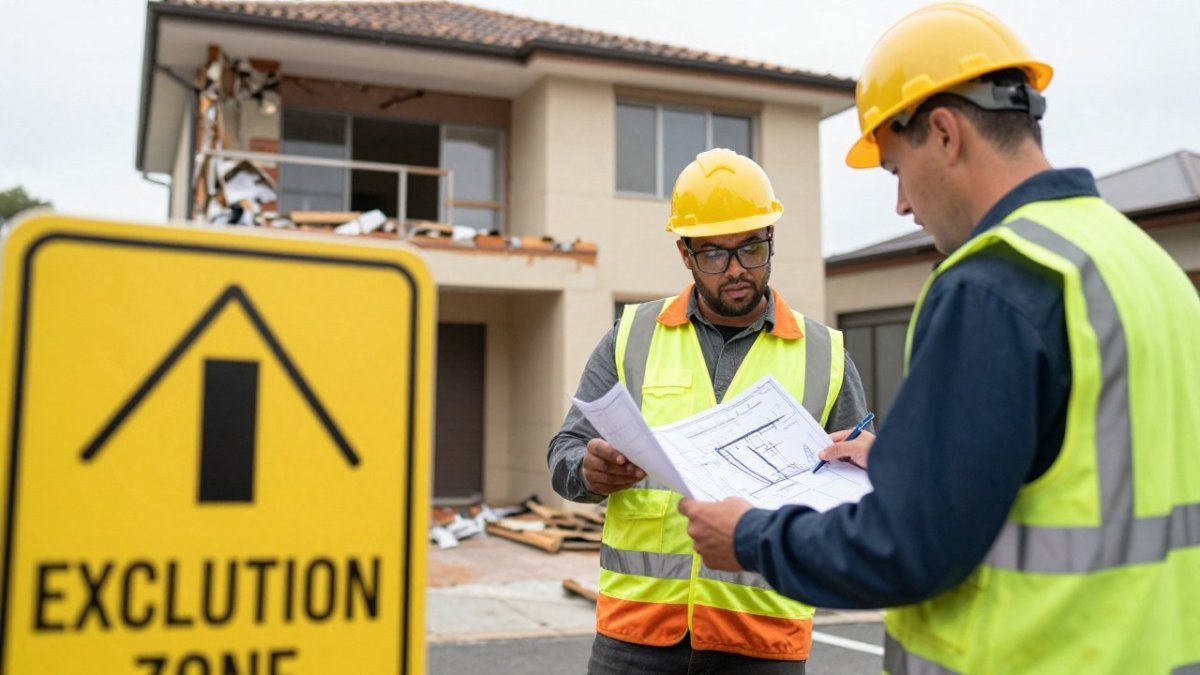
- Is the building staying or going? If you plan to keep the structure, targeted removal is usually the answer. If the building is being replaced, full demolition is normally the route, with asbestos removed first.
- How much asbestos is there, and where? A small, contained area suits targeted removal. Asbestos spread across the whole structure often makes full demolition, with removal beforehand, more practical.
- What condition is the material in? Friable, damaged or disturbed material needs prompt licensed removal. Intact bonded material may be manageable in place.
- What is the project timeline? Targeted removal can be quicker for a renovation. A rebuild that needs a clear site may move faster with full demolition planned from the start.
| Factor | Targeted asbestos removal | Full demolition (with asbestos removal first) |
|---|---|---|
| Best for | Renovations, partial strip-outs, small contained areas | Rebuilds, clear-site projects, widespread asbestos |
| Licensing | Class A or Class B, as the material requires | Asbestos licence plus demolition licence |
| Main advantage | Keeps the existing structure and limits disruption | Clears the site for new construction |
| Main drawback | Can leave older materials elsewhere in the building | Higher cost and longer disruption |
Use the framework as a starting point, then confirm the decision against the survey results and a site visit.
Comparing Cost Per Square Metre and Cost Drivers
Cost is where most owners start comparing quotes, and it is also where the comparison misleads most often.
Asbestos removal is sometimes quoted per square metre of material, but pricing depends on several variables, including:
- Removal class. Friable material needs Class A licensed work, which carries higher labour, containment and supervision costs than Class B bonded sheeting. A survey that finds friable insulation or lagging will push the removal rate up sharply compared with fibro sheeting alone.
- Access and height. Material at ground level with clear vehicle access is cheaper to remove than material on a second storey, in a ceiling cavity, or behind fixed services that must be isolated first. Scaffolding, elevated work platforms and temporary power isolation all add cost.
- Containment scope. Small bonded jobs may need only localised wetting and wrapping. Friable removal typically requires a negative-pressure enclosure, decontamination units and air monitoring, each of which is a separate line item.
- Disposal. Asbestos waste must go to a facility licensed to receive it, wrapped and labelled, with tracking documentation. The distance from site to that facility and the volume of waste both affect the cartage and gate fees.
Full demolition is typically quoted as a whole-project figure.
The interaction between the two is what most quotes hide.
A practical way to compare quotes is to ask each contractor to break the price into the same five lines: survey and assessment, asbestos removal by class, containment and monitoring, demolition or strip-out, and waste disposal and documentation. When every quote uses that structure, the differences become visible, one quote may look cheaper only because it excludes air monitoring or assumes a shorter cartage distance.
Watch out: a per-square-metre removal rate quoted without a stated removal class and containment scope is not comparable to any other rate, and treating it as though it were is the most common cause of budget blowouts on older properties.
Pricing depends on your site and scope, so the useful comparison is between itemised quotes covering identical work, not between headline figures. Our price guide on the factors that drive asbestos removal costs explains each line item. For current pricing or a quote, visit the Mission Demolition website.
Timeline, Disruption, Waste Disposal and Demolition Permits
Timelines differ sharply between the two routes, and the difference is best understood as a sequence of stages rather than a single duration.
A targeted asbestos removal project typically runs through: survey and assessment, notification or approval where required, removal under the matching licence class, clearance inspection, and return to normal use.
The factors that most often cause delay are consistent across projects:
- Unexpected material. A survey samples suspect areas, but demolition can expose material the survey did not reach, such as backing behind tiles or insulation in a wall cavity. Work stops until it is assessed and the scope is varied.
- Clearance timing. Demolition should not begin until the asbestos clearance certificate is in hand. Booking the clearance inspection late is a common cause of idle days.
- Approvals. Council approval or a permit, where required, runs on its own timeline and is not something a contractor can compress.
- Access and weather. Restricted site access, neighbouring properties and wet weather all slow demolition and cartage more than they slow a contained removal job.
Disruption follows the same pattern. Targeted removal confines work to the affected area and often lets the rest of the building stay in use.
Waste disposal is strictly regulated and is part of the job, not an optional extra.
Clearance and verification deserve their own attention. After removal, a clearance inspection confirms that the area is free of visible asbestos residue and that the containment has been decontaminated.
Demolition may also need council approval or a permit depending on the structure and its location.
Booking a Site Assessment and Quote With Mission Demolition
If you are unsure which route fits your project, the next step is a site assessment. First, see what a fast house demolition timeline looks like. Mission Demolition can discuss your project, review any existing survey, and advise on which approach may suit your site.
Ask the questions that matter before you commit: which licence classes apply, what documentation you will receive for waste disposal, how the clearance inspection is handled, and what happens if unexpected material is found during the job. A clear answer to each one is a good sign.
Request a free quote from Mission Demolition to compare the options for your project. Share your survey results, your plans for the site and your timeline, and the team will set out which route suits your build.
Frequently Asked Questions
Is demolition the only solution for asbestos?
No. Asbestos can often be removed by a licensed removalist without demolishing the whole building, particularly when the material is confined to specific areas such as wall sheeting, eaves or roof sheeting. Whether this is practical depends on the condition of the material, how much of the building is affected and whether the rest of the structure is being kept. A licensed asbestos assessor can identify the materials and recommend whether targeted removal, encapsulation or full demolition is the better option for your project.
Does asbestos need to be removed before demolition?
In most cases, yes. Asbestos-containing materials should be identified through a pre-demolition inspection and, where required under Australian work health and safety rules, removed by a licensed removalist before demolition starts. Demolishing asbestos-containing materials without controls can release fibres into the air, which creates a serious exposure risk for workers and neighbours.
What factors affect the cost of asbestos removal compared with demolition?
Costs vary with the area and type of material involved, its condition, access to the site, the number of containment and decontamination steps required, and waste transport and disposal fees. Full demolition is priced differently, with cost driven by the size and construction of the building and site conditions. Pricing depends on the scope of your project, so please request a free quote from Mission Demolition for an accurate figure rather than relying on general estimates.
What happens to asbestos waste after removal or demolition?
Asbestos waste must be wrapped, labelled and transported in line with Australian requirements and taken to a facility licensed to accept it. Reputable contractors should provide documentation tracking the waste from your site to disposal, including the receiving facility’s details. Ask for these records before the job starts so you can confirm the waste was handled and disposed of properly.