DIY sampling is fine for small, intact, non-friable materials like a chip of vinyl floor tile or a corner of fibro sheeting, provided you wear a P2 or P100 respirator, disposable coveralls, and use the wet technique throughout. The single rule that matters most: never dry-cut, drill, or sand the material. If it’s crumbling, damaged, or you’re not confident, stop and call a licensed professional.
TL;DR:
- DIY sampling is only suitable for small, non-friable materials like vinyl tiles or intact fibro sheeting, with strict protection and wet techniques.
- Always confirm whether material is non-friable before sampling, use a properly fitted respirator, disposable protective gear, and avoid dry-cutting or drilling to prevent fibre release.
- Collect samples of about 3 to 5 square centimeters from damaged or deteriorating areas, and double-bag, label, photograph, and clean tools thoroughly afterward.
- Use an accredited laboratory with NATA or NVLAP approval, and specify testing methods like PLM or TEM for accurate, legally acceptable results.
- Proper disposal of asbestos waste involves double-bagging and using licensed hazardous waste services, and licensed professionals should be called for friable, heavily damaged, or extensive asbestos materials.
Table of Contents
- Getting ready: the asbestos sampling procedure starts before you touch anything
- How to collect an asbestos sample step by step
- Choosing a lab and understanding your asbestos analysis procedure
- Cleaning up after sampling without spreading fibres
- When to stop and call a licensed asbestos professional
- The health risks of getting asbestos sampling wrong
- Legal rules and safety standards for asbestos sampling
- Disposing of asbestos waste from sampling
- Why we still recommend licensed testing for anything beyond the basics
- Get licensed help when DIY sampling isn’t enough
- Sources
- FAQ
Getting ready: the asbestos sampling procedure starts before you touch anything
The asbestos sampling procedure lives or dies on preparation. Most people skip straight to cutting a chip out of the material, and that’s exactly how fibres end up airborne in a lounge room.
Start by working out whether the material is friable or non-friable. Non-friable materials, like compressed fibro sheeting or vinyl floor tiles, hold their fibres in a bonded matrix and won’t crumble under hand pressure. Friable materials, like old pipe lagging or loose ceiling insulation, crumble easily and release fibres far more readily. DIY sampling should be limited to the non-friable category. If you’re unsure which one you’re looking at, treat it as friable and stop there.
Once you’ve confirmed the material is a reasonable DIY candidate, kit up properly:
- A P2, N95, or P100 respirator, fit-checked against your face. Ordinary dust masks are ineffective against asbestos fibres, and facial hair or a poor seal defeats even a good respirator.
- Disposable coveralls with a hood, taped at the wrists and ankles.
- Nitrile gloves and safety goggles.
- Plastic sheeting to cover the floor beneath the sampling point.
Isolate the room, shut off ventilation and air conditioning, and if you’re working outdoors, pick a still day. Mix an amended water solution, or better still, a PVA binder at one part PVA to ten parts water, into a spray bottle. The PVA binds loose fibres more effectively than plain water alone.
Call your chosen laboratory before you sample. Ask what chain-of-custody form they need, how large a sample they expect, and how they want it shipped. Labs vary on this, and turning up with the wrong packaging means starting over.
Pro Tip: Keep the lab’s phone number saved before you start. If the material looks worse once exposed than it did from a distance, you want to be able to call and ask, “Should I still send this?” without hunting for a number with gloved hands.
How to collect an asbestos sample step by step
This is the part most guides rush, and it’s where fibre release actually happens. Slow down here.
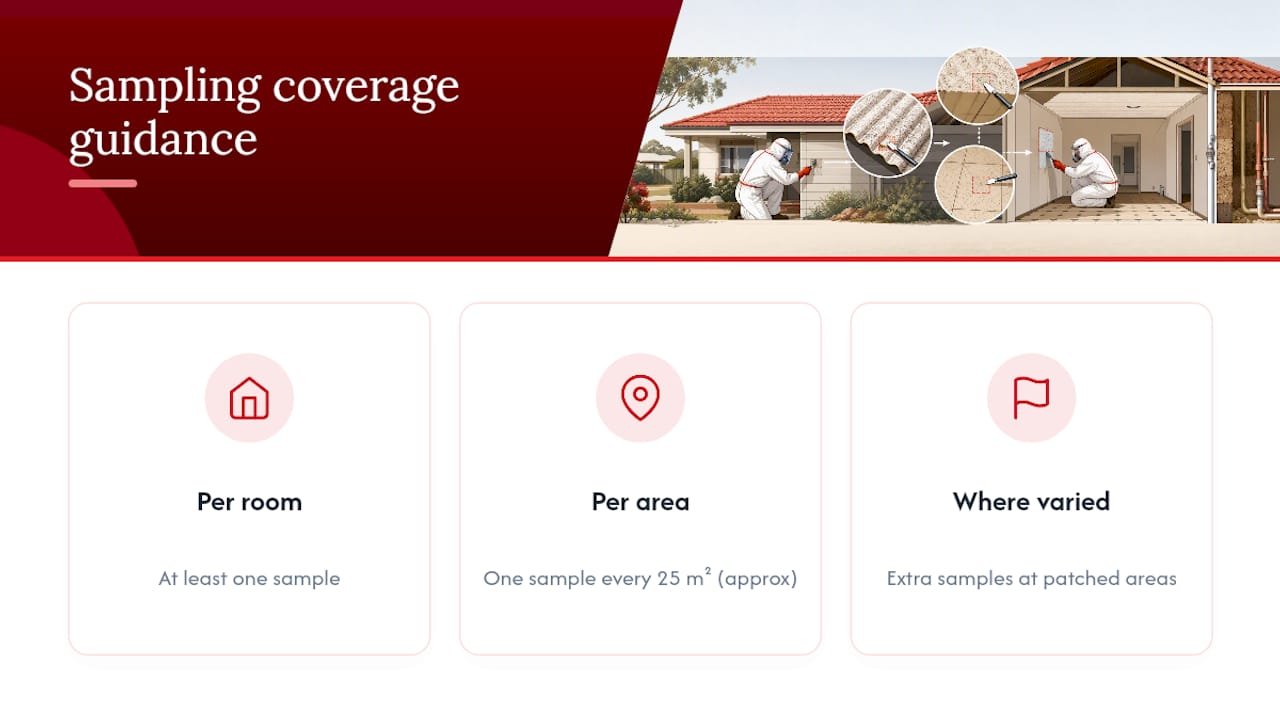
1. Choose your sampling points. Pick a damaged edge or a spot that’s already deteriorating slightly, rather than cutting into pristine material unnecessarily. If the material looks inconsistent across a room, for instance patched sections of an old ceiling, take more than one sample. Guidance from the UK’s HSG248 standard recommends a fresh sample roughly every 25 square metres, or one per room, to avoid a false negative from an unrepresentative patch.
2. Wet the surface thoroughly. Spray the amended water or PVA mix directly onto the sampling point and let it soak in for a minute before cutting. This is the step people skip when they’re in a hurry, and it’s the one that actually stops fibres going airborne.
3. Extract a small piece by hand. A sample of roughly 3 to 5 square centimetres is standard for most labs, taken with a sharp knife, chisel, or a small core tool. Never use a power drill, angle grinder, or saw. These aerosolise fibres in seconds.
4. Reseal and re-wet as you go. Mist the area again immediately after extraction to settle any disturbed dust before it has a chance to drift.
5. Bag it immediately. Place the sample in its own sealed container, then seal that container inside a second bag. Individual sealing before double-bagging matters because it stops one contaminated sample cross-contaminating the next.
6. Label, photograph, and log. Note the room, exact location, material type, and date on the bag itself, and take a photo of the sampling point before you patch it.
7. Clean your tools between samples. Wipe the blade with a damp cloth before moving to the next location. Skipping this step is the easiest way to return a false positive from a clean area.
If you’re taking samples from more than two or three spots, or the material starts crumbling as soon as you touch it, that’s your cue to stop and bring in a licensed sampler instead.
Choosing a lab and understanding your asbestos analysis procedure
Not every lab that says it “tests for asbestos” is accredited to do so properly. Confirm the lab holds NATA accreditation (or NVLAP if you’re dealing with an overseas lab), since this is what makes the report legally and practically usable if a dispute or renovation approval comes up later.
Fill in the chain-of-custody form with the same details you wrote on the bag, plus your contact information and the date collected. Attach your photos and location notes if the lab accepts digital submissions. Some labs won’t accept samples from materials suspected to be friable through the post at all, so this is worth confirming on that first phone call, not after you’ve packaged everything.
Ask specifically which test method the lab will use:
- PLM (polarised light microscopy) is the standard method for bulk material samples and covers most residential sampling needs.
- TEM (transmission electron microscopy) comes into play for low-content samples or when fibre type is genuinely uncertain, and it costs more.
| What to expect | Typical detail |
|---|---|
| Standard method | PLM for bulk samples |
| Higher-sensitivity method | TEM for low content or unclear fibres |
| Report content | Fibre type, percentage content, material classification |
| Turnaround | Usually a few business days for standard PLM |
A report showing any detectable percentage of asbestos, even a low one, generally means the material should be managed or removed by licensed contractors rather than disturbed further. You can read more on how each asbestos testing method is applied and interpreted before you commit to a lab.
Cleaning up after sampling without spreading fibres
The sampling itself is only half the job. What you do in the next ten minutes matters just as much.
- Wet-wipe every surface and tool you used, including the plastic sheeting, before folding it inward to trap any settled dust.
- Bag all disposable PPE, wipes, and sheeting into a labelled hazardous waste bag, sealed the same way as your samples.
- Seal the sampling point itself with tape, paint, or an encapsulant, whatever you and the lab agreed suited the material.
- Never run a household vacuum over the area. Standard vacuum filters can’t trap asbestos fibres and will pump them straight back into the air.
- Arrange collection through your local council’s hazardous waste service or a licensed waste contractor rather than putting the bag in general rubbish.
Pro Tip: If your council only runs hazardous waste drop-off days a few times a year, check the schedule before you sample, not after. A sealed bag sitting in a garage for six weeks is a needless risk you can avoid with one phone call.
When to stop and call a licensed asbestos professional
Some situations simply aren’t DIY territory, no matter how careful your technique.
- Friable materials. Anything that crumbles under light hand pressure, like old pipe lagging, sprayed insulation, or degraded ceiling material, releases fibres too readily for home sampling.
- Large or heavily damaged areas. If you’re looking at multiple rooms, a full roof, or material that’s already broken up across a floor, the risk profile changes completely.
- Proximity to HVAC systems. Fibres near ductwork can spread through an entire building in minutes once disturbed.
- Soil contamination, real estate transactions, or legal contexts. These need a documented, licensed assessment that will hold up under scrutiny.
- Work at height or in confined spaces. Roof cavities and awkward access points add fall and ventilation risks on top of the asbestos itself.
A licensed inspection typically covers a full risk assessment, professional sampling, removal where needed, air monitoring during the work, and a clearance certificate at the end. That paperwork trail is often the deciding factor in whether a property sale or renovation approval goes smoothly. If your situation ticks any of these boxes, an asbestos inspection before demolition is the safer starting point.
The health risks of getting asbestos sampling wrong
Asbestos fibres cause harm through inhalation, and the danger comes specifically from disturbing the material, not from an intact sheet sitting quietly in a wall. Sanding, drilling, dry-cutting, or aggressive scraping releases microscopic fibres that stay suspended in air for hours and are small enough to lodge deep in lung tissue.
The health consequences don’t show up immediately, which is precisely what makes improper sampling so dangerous. Diseases linked to asbestos exposure, including asbestosis, mesothelioma, and lung cancer, typically develop over decades. Someone who dry-cuts a fibro sheet without a respirator won’t feel anything wrong that day, and that false reassurance is what leads people to skip PPE next time.
Improper sampling compounds the risk in a few specific ways. Using a power tool instead of a hand tool multiplies the fibre count released into the air by an enormous margin compared with a slow, wet hand-cut sample. Skipping the wetting step means dry fibres become airborne the moment the material is disturbed. And failing to isolate the room means fibres settle into carpets, curtains, and HVAC systems, where they can be re-disturbed weeks or months later by something as simple as vacuuming or running the heater.
Household members, particularly children and anyone with existing respiratory conditions, face disproportionate risk from any fibres that escape into living areas. This is the real argument for wet technique and site isolation. It’s not procedural fussiness, it’s the difference between a contained sample and a contaminated house.
Legal rules and safety standards for asbestos sampling
Asbestos sampling in Australia sits under state and territory work health and safety regulations, which set out licensing requirements for anyone removing or disturbing asbestos beyond small, incidental amounts. These frameworks generally distinguish between minor DIY sampling of small, intact, non-friable pieces and licensed removal work, which covers anything beyond that threshold.
Respiratory protection standards matter here too. A P2 respirator is treated as the minimum acceptable filtration level for anyone handling suspected asbestos material, with P100 or N100 offering higher filtration where a proper fit test is feasible. Guidance from the Northern Territory Government is explicit that anything below this standard, including ordinary dust masks, provides no meaningful protection.
Laboratory accreditation is a separate but equally important compliance layer. A NATA-accredited lab (or NVLAP-equivalent overseas) follows documented, auditable testing protocols, which matters if a result is ever challenged in a property dispute, an insurance claim, or a renovation approval process. An unaccredited lab’s report may not carry the same weight.
Local councils and state environmental authorities also regulate how asbestos waste, including the offcuts and PPE generated during sampling, must be transported and disposed of. These rules vary by jurisdiction, so it’s worth checking your specific council’s hazardous waste guidelines rather than assuming a blanket national rule applies. If a property is being sold, rented, or renovated under permit, an asbestos report often becomes a required disclosure document, which is another reason to use an accredited lab from the outset.
Disposing of asbestos waste from sampling
Even a small sampling job generates genuine hazardous waste: the offcut itself if any excess remains, contaminated wipes, disposable coveralls, gloves, and the plastic sheeting used to protect the floor. None of this belongs in your household bin.
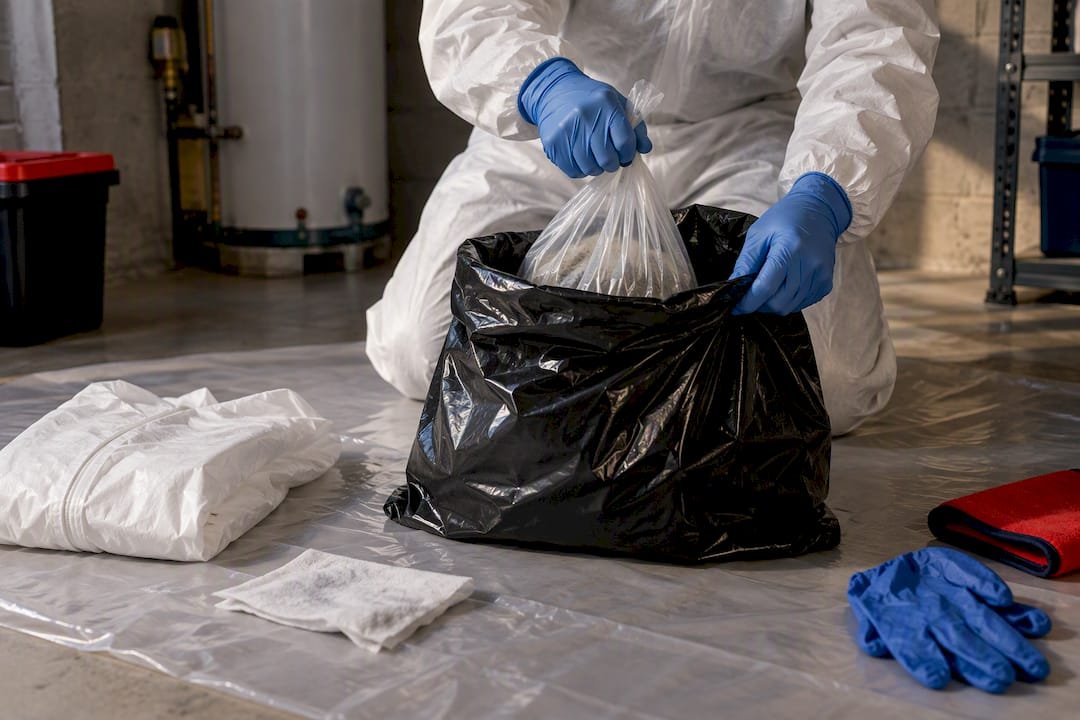
Double-bag all waste in heavy-duty plastic, the same way you’d bag the sample itself, and label each bag clearly as asbestos waste with the date and material type. Most councils run dedicated hazardous waste drop-off points or scheduled collection days specifically for small quantities of asbestos waste from homeowners, and this is almost always the cheapest legitimate disposal route for a sampling-scale job.
For anything beyond a small sampling exercise, such as waste generated during a larger removal, licensed waste contractors handle transport to an approved landfill cell licensed to accept asbestos-containing material. These facilities track and document disposal, which matters if you ever need to prove compliant handling.
Never leave asbestos waste bags in a garage or shed for an extended period waiting for a collection date that’s months away. Damage to the bag from heat, pests, or general wear increases the chance of fibres escaping into a space you use regularly. If your local collection schedule is infrequent, contact a licensed waste contractor directly rather than storing the material long-term.
Why we still recommend licensed testing for anything beyond the basics
Many contractors have handled numerous demolition and asbestos removal projects across various sites, and the pattern is consistent: the jobs that go wrong are the ones where someone assumed a material was “probably fine” without testing it properly. We’ve seen small bathroom renovations turn into six-figure remediation jobs because a single damaged sheet was disturbed without containment.
Conservative practice isn’t caution for its own sake. It’s what keeps a manageable job manageable. For anything beyond a small, intact sample, get a licensed second opinion before you proceed.
— Tarek
Get licensed help when DIY sampling isn’t enough
Licensed professional services are the option when a sample comes back positive, the material is friable, or you’d simply rather not gamble on a DIY result. Where a general handyman might tell you to “just seal it and forget it,” licensed teams handle the full arc: risk assessment, accredited sampling, removal, air monitoring during the work, and a clearance certificate you can actually use for a sale, renovation permit, or insurance record.
Our asbestos inspection and testing service covers everything from a single suspect material to a full pre-demolition survey across a property. If soil contamination is part of the picture, our team also manages asbestos in soil removal under the relevant risk-based thresholds. DIY sampling has its place for small, intact materials, but once the risk profile changes, licensed help is one phone call away. Reach out through Mission Demolition’s site for a quote or to book an inspection.
Sources
For jurisdiction-specific detail, start with the Northern Territory Government’s asbestos sampling guidance, the UK’s HSG248 standard on sample sizing, and the EPA’s bulk sampling procedure for packaging and chain-of-custody standards. Rules on licensing and waste disposal vary by state and territory, so confirm local requirements with your council or state work health and safety regulator.
This article is general information, not a substitute for advice from a qualified doctor. Consult a qualified healthcare professional about your own circumstances before acting on anything here.
- HSG248: A guide to managing and working with asbestos
- Wearing protective equipment – Northern Territory Government
FAQ
What is the 3-5-7 rule for asbestos sampling?
There’s no universally recognised “3-5-7 rule” in official Australian or UK asbestos guidance. What does exist is a consistent recommendation to take a sample of roughly 3 to 5 square centimetres per material type, with multiple samples taken where material varies across a room.
How do you sample for asbestos?
Wet the material with an amended water or PVA mix, cut a small piece by hand using a knife or core tool, then immediately double-bag, label, and photograph the sample. This applies only to intact, non-friable materials, never to crumbling or damaged asbestos-containing material.
Can you take asbestos samples yourself?
Yes, but only for small, intact, non-friable materials, and only wearing a P2 or P100 respirator, disposable coveralls, and gloves. Friable, damaged, or extensive materials should go to a licensed professional rather than a DIY attempt.
What are two types of sampling for asbestos?
Bulk material sampling collects a physical piece of the suspect material for laboratory analysis, typically tested using PLM. Air sampling instead measures fibre concentration in the air itself, generally used by professionals during or after removal work to confirm a space is safe, often paired with air monitoring before a clearance certificate is issued.
What does an asbestos lab report actually tell you?
A standard report identifies the fibre type present, the approximate percentage content, and how the material is classified, usually within a few business days for standard PLM testing. Any detectable asbestos content generally means the material should be managed or removed by a licensed contractor rather than disturbed again.
