Bonded asbestos is asbestos fibre locked inside a solid cement or resin matrix, dense enough that it won’t crumble under hand pressure. WorkSafe Victoria and Safe Work Australia both classify it as non-friable, meaning it’s lower risk while intact but still dangerous once cut, cracked, or weathered. If you’ve found something you suspect is bonded asbestos, treat it as hazardous until a licensed professional like Missiondemolition confirms otherwise.
TL;DR:
- Bonded asbestos is low risk while intact but can become hazardous if damaged or weathered, as fibers are released when the matrix breaks.
- Most Australian homes built before the mid-1980s contain bonded asbestos in materials like roofing sheets, cladding, or flooring, requiring testing before renovation.
- Damaging bonded asbestos through cutting, drilling, or pressure washing turns it into airborne fiber and demands licensed abatement procedures.
- Visual identification of bonded asbestos is unreliable; testing and sampling by licensed professionals are essential before any disturbance.
- Managing in place is acceptable for undamaged, stable bonded asbestos, but any damage, degradation, or planned project warrants licensed removal and proper disposal.
Table of Contents
- What does bonded asbestos mean in practice?
- Where bonded asbestos turns up around a property
- How bonded asbestos becomes a hazard
- Why you can’t identify bonded asbestos by eye alone
- What to do if you find bonded asbestos on your property
- Regulatory signals worth knowing
- What licensed teams actually do with bonded asbestos
- Bonded asbestos gets treated as low-risk. That’s the wrong lens.
- Getting bonded asbestos professionally assessed and removed
- Where to check the rules yourself
- Sources
What does bonded asbestos mean in practice?
The industry term is “non-friable asbestos,” and bonded is simply the common name people use for the same material. The technical test is straightforward: if you can crumble it to powder by hand pressure when dry, it’s friable. If you can’t, it’s non-friable, or bonded.
Bonded products typically contain asbestos fibres tightly bound into cement, vinyl, or resin. That binding is what keeps fibres locked away from the air you breathe.
- Firmly bound in a cement or resin matrix
- Doesn’t release measurable fibres when left undisturbed, according to Queensland’s asbestos regulator
- Passes the dry hand-pressure test without crumbling
- Still classified as a hazardous material under workplace health and safety law
“Non-friable” describes behaviour, not permanent safety. Safe Work Australia is explicit that bonded doesn’t mean safe — it means the risk of fibre release is lower right now, under current conditions. Change those conditions and the risk changes with them.
Where bonded asbestos turns up around a property
Most Australian homes built or renovated before the mid 1980s used bonded asbestos products somewhere, and plenty built into the early 1990s still contain them.
- Fibro sheeting on external walls and eaves
- Corrugated roof sheeting, often branded “Super Six”
- Flat or profiled asbestos cement cladding
- Guttering and downpipes
- Water and drainage pipes
- Vinyl floor tiles
These materials show up most often on roofs, under eaves, in garages, and inside older sheds, according to Victoria’s asbestos types register. If your home dates from the fibro boom era, roughly the 1940s through the 1980s, assume any of these materials could be present until testing says otherwise.
How bonded asbestos becomes a hazard
Non-friable doesn’t mean permanent. Cutting, drilling, or sanding bonded sheeting breaks the matrix apart and releases the fibres it was holding.
- Mechanical work: sanding, cutting, drilling, or routering for cable runs and fixtures
- High-pressure water blasting, which erodes the cement surface
- Long-term weathering, hail damage, and UV breakdown
- Fire exposure, which destroys the binding matrix outright
Once damaged this way, bonded material behaves like friable asbestos and needs licensed abatement, not a DIY patch job. Homeowners doing their own renovations are the most common exposure group, largely because cutting or drilling into fibro sheeting is exactly the kind of job people attempt without realising what they’re releasing.
Pro Tip: Never pressure wash old fibro sheeting to “clean it up.” That single act can convert decades of stable, bonded material into airborne fibre in minutes.
Why you can’t identify bonded asbestos by eye alone
Fibre cement sheeting can look identical to modern cement board or timber cladding. There’s no colour, texture, or age marker reliable enough to rule asbestos in or out from a visual check, which is why NSW’s asbestos guidance recommends assuming and testing rather than guessing.
If you suspect a material contains asbestos, take these steps:
- Stop whatever work you’re doing immediately.
- Avoid touching, cutting, or sweeping the material, and keep dust down.
- Restrict access to the area, including kids and pets.
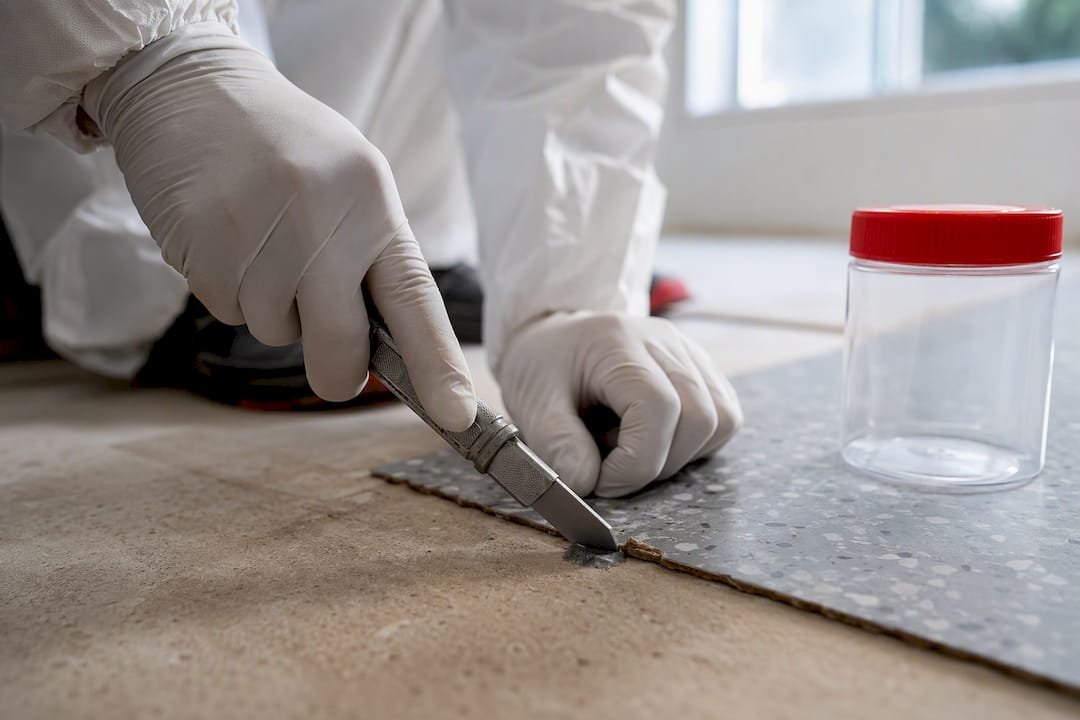
- Arrange a licensed asbestos assessor to collect a sample.
- Wait for NATA-accredited lab results before doing anything further.
Sampling usually takes a few days to return results, and a proper asbestos inspection targets suspicious or damaged spots rather than one convenient patch, since a single intact-looking sheet can hide prior repairs or hidden weak points. Until the lab confirms otherwise, WHS regulators expect you to manage the material as if it’s asbestos, full stop.
What to do if you find bonded asbestos on your property
Finding it doesn’t mean immediate removal is compulsory. Intact, undamaged bonded material can often stay exactly where it is.
- Stop any disturbance and isolate the area straight away
- Tell occupants, tenants, and any trades booked to work nearby
- Log the material in an asbestos register or management plan if you’re keeping it in place
- Schedule periodic condition checks rather than ignoring it
Managing in place works when the material is intact, unlikely to be disturbed, and formally recorded so future renovators know it’s there. Safe Work Australia’s guidance on handling asbestos-containing board leans heavily on this exact approach for low-risk situations.
Licensed removal becomes the right call once the material is damaged, degraded, or sitting inside a planned demolition or renovation footprint. That work involves permits, containment and wet-cutting controls to stop fibres becoming airborne, proper transport to a licenced disposal facility, and a final clearance inspection before anyone’s allowed back into the space.
Pro Tip: If you’re planning a renovation that touches roofing, cladding, or old flooring, get testing done before you book trades. It’s far cheaper than stopping a job halfway through because someone’s drill just found asbestos.
Regulatory signals worth knowing
Three names carry real weight in this space, and they’re worth bookmarking rather than trusting a random forum post.
- Safe Work Australia sets national model WHS laws and asbestos codes of practice
- State WorkSafe or asbestos authorities (Victoria, NSW, Queensland, and others) publish jurisdiction-specific rules on removal, transport, and disposal
- NATA-accredited laboratories provide the only sampling results regulators and insurers will accept as valid
Renovation, demolition, and disposal rules vary by state, so check your own regulator’s site for exact licensing thresholds and notification requirements before starting any work.
What licensed teams actually do with bonded asbestos
A competent removal job follows a set sequence: inspection, sampling, a documented risk assessment, controlled removal, then a clearance report confirming the site is safe to reoccupy. That clearance typically combines a visual check with airborne testing where required, referenced against the applicable state standard, according to the Asbestos Safety and Eradication Agency.
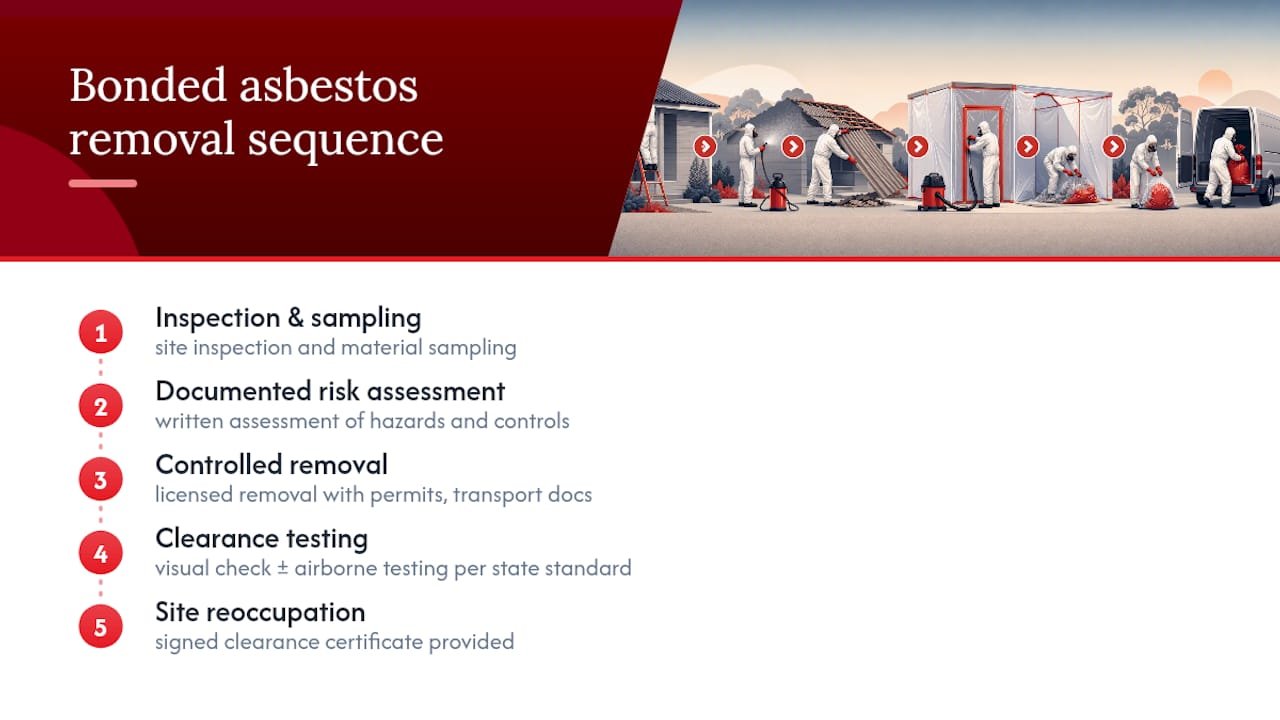
A reputable contractor hands over permits, transport documentation, and a signed clearance certificate, not just a verbal “all good.” If a quote skips any of those, that’s your signal to ask more questions before signing anything.
Bonded asbestos gets treated as low-risk. That’s the wrong lens.
The conventional advice on bonded asbestos tends to stop at “it’s fine if you leave it alone,” and that’s technically true but practically useless. Most exposure doesn’t happen because someone ignored a stable fibro wall. It happens because someone drilled into it, pressure washed it, or pulled it down themselves to save on a removalist’s quote.
Where the standard advice falls short is urgency calibration. People hear “non-friable” and mentally file the whole topic under “not urgent,” then go ahead and cut into it for a shelf bracket or a downpipe repair. The material’s classification is about its current state, not a lifetime guarantee, and that distinction gets lost in translation from regulator language to backyard decision making.
If you take one thing from this, prioritise testing before touching, not after you’ve started a job. A sample and a lab result cost far less than decontamination, and they remove the guesswork entirely. Everything else, including whether to remove or manage in place, follows from that one decision.
— Tarek
Getting bonded asbestos professionally assessed and removed
If testing confirms asbestos, or you’d rather not gamble on a DIY hand-pressure test, Licensed inspections, sampling coordination, and full removal services are available across residential, commercial, and industrial sites. Unlike a general handyman quote, a licensed removalist brings the permits, containment gear, and disposal pathway that keep the job compliant from start to finish.
A licensed team inspects the material, arranges accredited testing where needed, and manages the removal and clearance process to help manage compliance risks on your property. For roofing, cladding, sheds, or old flooring you suspect might be bonded asbestos, book an asbestos removal assessment and get a clear answer, and a clear quote, before any work starts.
Where to check the rules yourself
- Safe Work Australia for national WHS codes of practice
- Your state’s WorkSafe or asbestos regulator page for local licensing and disposal rules
- Asbestos Safety and Eradication Agency for accredited testing and clearance standards
This article is general information, not a substitute for advice from a qualified doctor. Consult a qualified healthcare professional about your own circumstances before acting on anything here.
Sources
- Types of asbestos-containing material | Asbestos
- What is asbestos? | Asbestos (Qld)
- What is friable and non-friable asbestos? | WorkSafe Victoria
- Asbestos – Overview | Safe Work Australia
