
An insurance demolition claim in Australia usually means one of three things: damage or injury caused by demolition work (a liability claim), a damaged home that must be demolished after an insured event (a building claim), or a policy on a house you are about to knock down on purpose. Each runs on a different policy and a different insurer. Mixing them up is the most common reason claims stall.
This guide explains which policy responds to which situation, what to check before a single wall comes down, how to lodge and document a claim, and what your rights are if the insurer drags its feet.
TL;DR
- Demolition liability insurance is aimed at accidental damage to neighbouring property and injuries to bystanders or site visitors. It is not home insurance.
- Standard home policies can be unsuitable for a house awaiting demolition: at least one major insurer’s target-market document says so. Ask yours before you start.
- If an insured event (storm, fire, flood) forces a demolition, many building policies pay a capped extra amount for demolition and debris removal. Check the cap in your own policy.
- Report early, photograph everything and speak to the insurer before authorising any building work. Delay can reduce what you are paid.
- Insurers owe you good faith and fair, efficient claims handling. If a claim is delayed or denied, you have recourse.
Table of Contents
- Three kinds of demolition claim, and which policy responds
- What demolition liability insurance covers
- Does home insurance cover a house that is about to be demolished?
- When an insured event forces the demolition
- How to make the claim step by step
- Exclusions and conditions that sink demolition claims
- What to check before demolition starts
- If a claim is delayed or denied
- Perspective: what we see on site
- Getting the demolition done properly
- FAQ
- Sources
Three kinds of demolition claim, and which policy responds
People search “insurance demolition claim” with very different problems in mind. Sorting yours into one of these groups tells you who to call first.
1. Something went wrong during demolition work. A wall falls the wrong way, a neighbour’s fence or roof is damaged, or a passer-by is hurt. This is a third-party matter. Demolition liability insurance is designed to cover accidental damage to neighbouring property and injuries to bystanders or site visitors. The policy belongs to the demolition contractor, and the claim is made on the contractor’s insurer.
2. Your insured building was damaged and now has to come down. After a fire, severe storm or flood, an assessor may decide the structure is beyond repair or unsafe. The demolition cost then becomes part of a building insurance claim, subject to your policy’s terms.
3. You are demolishing a sound house on purpose. You are clearing a block for a new build. Here the question is not usually a claim at all, but what happens to your existing home policy while the house is being demolished, and whether the contractor’s cover protects you.
If your situation crosses two of these, for example a storm-damaged house that is then demolished by a contractor who damages the neighbour’s shed, expect two insurers to be involved.

What demolition liability insurance covers
Liability cover sits with the contractor, but as the owner you should still understand it, because a gap in it can land on you.
In general terms it responds when demolition work accidentally harms someone else: damage to adjoining buildings, fences, vehicles or services, and injuries to people who are not employees. The research behind this guide describes the core protection as accidental damage to neighbouring property and injuries to bystanders or site visitors.
What this does not do is repair your own house, fix poor workmanship on your own project, or replace workers compensation. Those are separate covers.
Workers compensation is a separate layer
Injuries to the people doing the demolition fall under workers compensation, not liability cover. WorkSafe Queensland states that employers must insure workers against workplace accidents through workers compensation insurance, with a statutory exception for licensed self-insurers. Its guidance says that cover can include reasonable and medically necessary lost-wage, medical and rehabilitation costs, including for asbestos-related illness. Rules differ by state and territory, so confirm the position with your own state’s regulator.
One trap catches owners who hire informally. WorkSafe Queensland warns that a person called a contractor or holding an ABN may still be a worker if the arrangement is legally a contract of service. If you engage individual labourers directly rather than a licensed company with its own cover, you may be taking on obligations you did not expect. A licensed, insured contractor removes that risk.
Does home insurance cover a house that is about to be demolished?
Usually you should not assume so. Home policies are priced and written for homes people live in or maintain. QBE’s home-insurance target-market determination states that its cover is not suitable for homes awaiting demolition or in the course of being demolished. That is one insurer’s document, and other insurers word things differently, but it shows how the industry thinks about the risk.
What this means in practice:
- Ask your insurer in writing what happens to your policy once demolition is booked or begins.
- Do not cancel cover until the house is genuinely gone and the contractor’s insurance is in place. A gap between the two leaves the block exposed to fire, theft or storm damage on a partly demolished structure.
- Ask whether you need vacant land or construction cover for the new build before you cancel anything.
Owner-builders rebuilding on the cleared block should also think about project cover for the new works. Our guide to insured demolition services in Australia sets out how contractor cover and owner cover fit together.
When an insured event forces the demolition
This is where building insurance does help. Some policies pay an extra allowance for demolition and debris removal when an insured event has made a rebuild necessary. RACQ, for example, says it will pay, on top of the home sum insured, up to 20% of that sum insured to demolish the home and remove debris caused by an insured event. That is one Queensland insurer’s wording. Your policy may offer a different percentage, a dollar cap or none, so read the product disclosure statement and your policy schedule rather than relying on a general figure.
Key points when demolition follows an insured loss:
- The event must be an insured one. Storm, fire and similar named events are typically covered; gradual deterioration, poor maintenance and some water damage typically are not.
- The demolition must be necessary because of that event. An assessor’s report usually carries the weight here.
- Get approval before work starts. Demolishing before the insurer has inspected can destroy the evidence it needs and give it grounds to dispute the claim.
- Asbestos changes the job. Many pre-1990 homes contain asbestos materials. Testing and licensed removal come before demolition, and the cost and timeline need to be raised with the insurer early. See our explanation of asbestos testing methods for Australian properties and our pre-demolition checklist.
If you intend to rebuild something different from what stood before, for example a duplex instead of a single dwelling, approvals become part of the timeline. Early town planning advice helps you understand what can be built before you commit to a settlement option. In New South Wales, our demolition permits guide for Sydney covers the approval side.
How to make the claim step by step
The process is similar whichever policy you are claiming on.
- Make the site safe. Keep people away from unstable structures. Only do emergency measures that are needed to prevent further harm, and keep receipts.
- Contact your insurer straight away. The Insurance Council of Australia’s fact sheet advises you to contact your insurer as soon as possible, even if you do not yet know the full extent of the damage. The insurer will review whether the policy covers the event and tell you what information it needs.
- Do not wait. The same fact sheet notes that the insurer may not pay for loss or damage caused by a delay in reporting the claim.
- Document before you touch anything. The Insurance Council’s claims guidance advises photos and video, a list of damaged items, and speaking to the insurer before attempting or authorising building work.
- Meet the assessor. When a home has been damaged or destroyed, the insurer will assign a loss assessor or adjuster and, according to the fact sheet, tell you within 5 business days of the appointment what that person’s role is.
- Get the demolition scope agreed. Ask the insurer to confirm in writing that demolition is approved, what it will pay, and whether it will pay the contractor directly or reimburse you.
- Keep every document. Quotes, invoices, correspondence and call notes make a dispute far easier to resolve.
Evidence insurers commonly ask for
Insurers set their own requirements, so treat this as a working checklist rather than a rulebook. It is general practice, not a requirement from any one policy:
- Dated photos and video of the damage from several angles, before any clearing
- A written scope from the contractor describing what will be demolished and why
- An engineer’s or building assessor’s report where structural safety is in question
- Asbestos test results where relevant
- Itemised quotes, ideally from licensed and insured contractors
- Copies of the contractor’s licence and certificates of currency for insurance
- Council or certifier approvals where required
We provide written scopes and can supply insurance documentation for projects through our residential demolition service, which saves you chasing paperwork during an already stressful claim.
Exclusions and conditions that sink demolition claims
We have not found a single authoritative list of demolition-specific exclusions, because they vary by insurer and product. The patterns below are the ones property owners most often run into. Check each against your own policy wording.
- Gradual damage and maintenance issues. Wear, rot and long-term leaks are generally not insured events.
- Late notification. As noted above, delay can reduce what the insurer pays.
- Unapproved work. Starting demolition or repairs before the insurer agrees can put the claim at risk.
- Vacant or unoccupied property clauses. A house that sits empty before demolition may fall under conditions that restrict cover.
- Sum insured and sub-limits. Demolition and debris removal allowances are often capped separately.
- Unlicensed or uninsured contractors. Liability cover is only as good as the contractor’s own policy. Ask for a current certificate and confirm what it covers.
- Asbestos. Some policies treat removal costs differently or exclude them unless the asbestos was disturbed by an insured event.
A fair test: if your policy document uses the words “demolition”, “debris removal” or “vacant”, read those clauses twice before work begins.
What to check before demolition starts
The cheapest insurance claim is the one you avoid by getting the paperwork right first. Before any contractor starts, ask for:
- A current certificate of currency for public liability and workers compensation
- The licence details for demolition and, if asbestos is present, for asbestos removal
- A written scope and timeline
- A Safe Work Method Statement
That last item is not optional on many jobs. Queensland’s Demolition Work Code of Practice 2021 says that demolition of a load-bearing or structurally integral element is high-risk construction work and needs a Safe Work Method Statement before work starts. The same code says the person conducting a business or undertaking must eliminate demolition risks or minimise them so far as reasonably practicable, and must consult, cooperate and coordinate with other duty holders. That is a Queensland code; other states have their own regulations, so confirm what applies where your site is.
A documented method statement also helps your insurer. It shows the work was planned and controlled. Our demolition method statement template shows what a regulator-ready one contains.
If a claim is delayed or denied
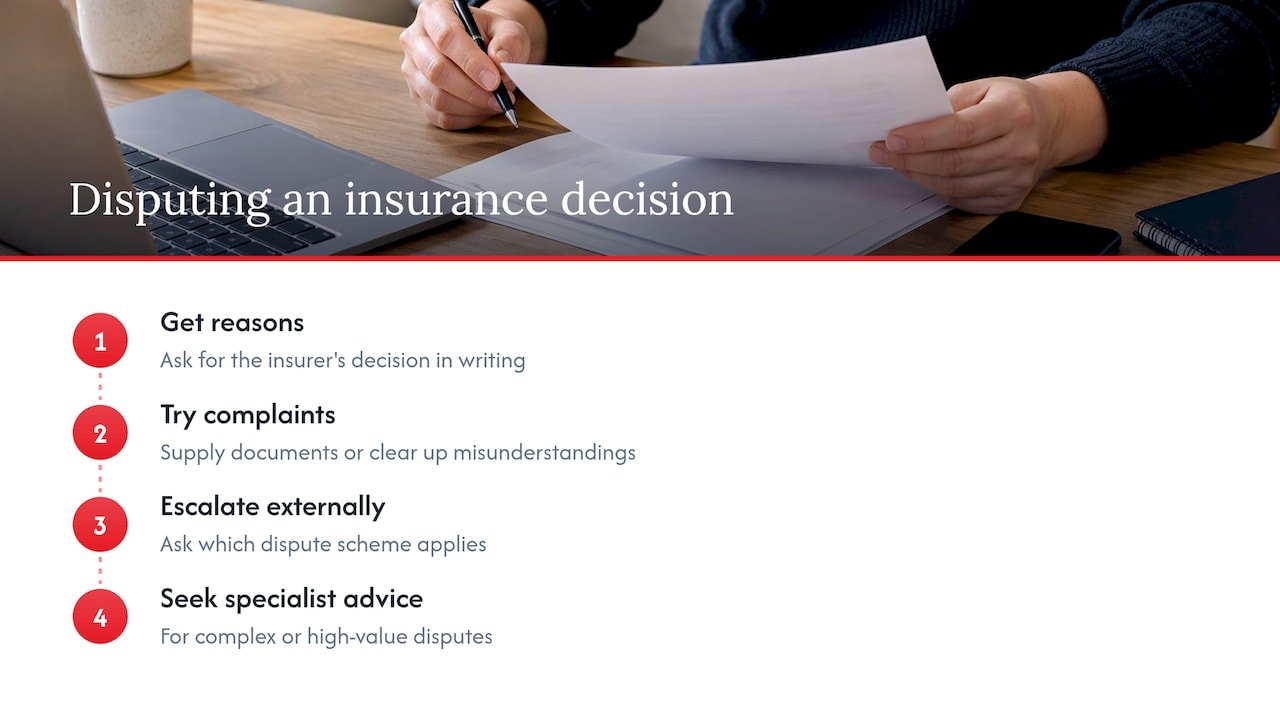
Start by asking the insurer for its decision and reasons in writing. Many disputes are resolved when the right document is supplied or a misunderstanding is cleared up.
If that does not work, know that insurers have obligations beyond the policy. ASIC’s 2025 announcement about its case against Hollard notes that, since 1 January 2022, insurers have been required under their financial services licences to handle and settle claims efficiently, honestly and fairly, on top of the duty of utmost good faith. In that case, ASIC alleged that excessive delay, poor communication and failure to carry out make-safe works breached the duty of utmost good faith under section 13 of the Insurance Contracts Act 1984 (Cth). Those are allegations in one proceeding, not findings, but they show what the regulator expects of insurers.
If your insurer’s own complaints process does not resolve things, the usual next step is an external dispute resolution scheme. Ask the insurer to tell you which one applies. For complex or high-value disputes, a solicitor or a licensed insurance adviser who specialises in claims is the right professional to see.
Perspective: what we see on site
Most of the demolition insurance problems we see are not about the claim itself. They come from sequence. An owner demolishes before the assessor has inspected, a contractor starts without a current certificate of insurance, or asbestos is found halfway through and nobody has told the insurer.
Our advice is simple. Treat the insurer as part of the project team from day one. Get the scope agreed in writing before work starts. Ask every contractor for current insurance and licence documents, including for asbestos removal, and keep copies. Use a contractor who manages the whole sequence, from approvals and utility disconnections through hazardous waste handling to final site cleaning, so nothing is left for you to coordinate between trades.
When things go wrong on a neighbouring property, the quickest resolution comes from a contractor who is properly insured, documented the site beforehand and reports straight away. That is how we run our jobs.
— Tarek
Getting the demolition done properly
If your property needs demolishing after an insured event, or you are clearing a block for a new build, we handle residential, commercial and industrial demolition, licensed asbestos removal, strip-outs and site clearance, including the approvals, utility disconnections, waste handling and final clean. We provide quotes tailored to each site, and we can work with your insurer’s assessor on scope.
See our residential demolition service or asbestos removal in Sydney, or read about fully insured demolition in Sydney. For urgent situations after a fire or storm, our emergency demolition page explains how to reach us.
FAQ
Does home insurance pay to demolish my house?
Only in some situations. If an insured event such as a fire or storm has made a rebuild necessary, some policies pay an additional allowance for demolition and debris removal. One Queensland insurer, for example, states it will pay up to 20% of the sum insured on top for this. Demolishing a sound house voluntarily is generally not a claim, so check your policy wording.
Who is liable if demolition damages my neighbour’s property?
The contractor is normally the first party responsible, and their public liability or demolition liability cover is meant to respond to accidental damage to neighbouring property. Ask for a current certificate of insurance before work starts. Tell your own insurer too, in case the claim touches your policy.
How soon should I report a claim?
As soon as possible, even if you do not yet know the full extent of the damage. The Insurance Council of Australia’s fact sheet says an insurer may not pay for loss or damage caused by a delay in reporting. Photograph everything first and speak to the insurer before authorising building work.
Should I cancel my home insurance before demolition?
Not until you have checked with your insurer and have the contractor’s insurance in place. Some insurers state that standard home cover is not suitable for a home being demolished, so ask what applies and consider vacant land or construction cover for the interim. Cancelling too early can leave the site exposed.
What can I do if my claim is denied?
Ask for the reasons in writing, check them against your policy, and supply any missing evidence. Insurers must handle claims efficiently, honestly and fairly and act in utmost good faith. If the issue stays unresolved, use the insurer’s internal complaints process and then the external dispute resolution scheme it names.
Sources
- A State-by-State Guide to Compulsory Demolition Insurance
- WorkSafe Queensland: Starting a business
- WorkSafe Queensland: Who should I cover?
- QBE home insurance target market determination
- RACQ building insurance
- Insurance Council of Australia: Claiming home insurance fact sheet
- Insurance Council of Australia: claims guidance
- WorkSafe Queensland: Demolition work Code of Practice 2021
- ASIC media release 25-057MR
- Urbanza Town Planners