
Removing a pool in Sydney typically costs between $300 and $5,000 for an above-ground pool, $5,000 to $10,000 for a partial in-ground fill-in, and $8,000 to $15,000 or more for a full in-ground removal, according to industry cost data. The biggest swing factors are site access, pool material (concrete versus fibreglass or vinyl), whether asbestos turns up in the surrounds, council permit requirements, and how much waste needs trucking to tip.
Before you commit to a figure, get a licensed contractor onto the site. A proper quote needs eyes on your access points, your pool shell, and a check for asbestos in older coping or pool equipment sheds.
- Above-ground removal: generally low-cost option, ranging up to a few thousand dollars
- Partial fill-in (in-ground): typically several thousand dollars
- Full removal (in-ground): $8,000–$15,000+
- Next step: book a site visit with asbestos testing, then compare at least two written quotes
Key Takeaways
Sydney pool removal costs range from $300 for above-ground dismantling to $15,000 or more for full concrete pool removal, with access, material, and asbestos driving most of the variation.
| Point | Details |
|---|---|
| Above-ground is cheapest | Costs $300–$5,000 and usually finishes in a single day. |
| Full removal costs more but frees land | Expect $8,000–$15,000+, but the site becomes building-ready afterwards. |
| Access drives price swings | Narrow gates or two-storey surrounds push jobs into higher price bands. |
| Test for asbestos before quoting | Fibro surrounds in older pools can significantly change your final cost. |
| Missiondemolition manages the full job | Licensed demolition and asbestos removal, permits assistance, and waste handling in one quote. |
Table of Contents
- Pool removal cost Sydney: what quotes actually cover
- Which type of pool removal suits your plans?
- What pushes your pool removal quote up or down?
- Do you need council approval to remove a pool in NSW?
- Why asbestos testing matters before you get a quote
- How long does pool removal take in Sydney?
- Getting quotes: what to prepare and what to ask
- Does removing a pool increase your property’s value?
- The bottom line on choosing a removal method
- Notes from the field on Sydney pool removal jobs
- Get a site quote from Missiondemolition
- Sources
Pool removal cost Sydney: what quotes actually cover
Sydney contractors don’t price pool removal off a single number. They price it off three things: how much material has to come out, how it gets out, and where it ends up. Understanding those price bands helps you spot a quote that’s missing something.
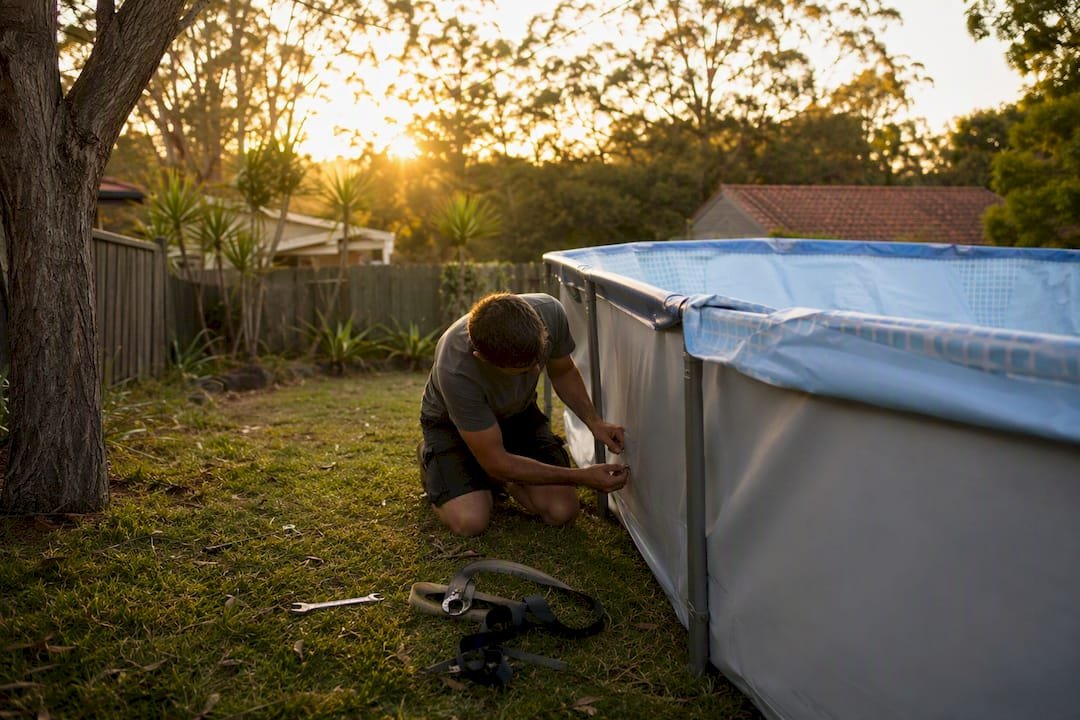
Above-ground pools sit at the lower cost end, generally involving dismantling the frame and liner, followed by some ground levelling. There’s rarely concrete, rebar, or engineered backfill involved, which is why these jobs wrap up fast and cheap.
Partial fill-in for in-ground pools is a mid-range cost option in Sydney, involving drainage holes, filling with rubble and soil, and compaction. It’s cheaper because you’re not hauling the entire shell away, but you inherit long-term limits, which the next section covers.
Full removal of an in-ground pool climbs to $8,000 to $15,000 or higher, and concrete pools sit at the top of that range because of the weight and rebar involved in breaking up reinforced shells. Every tonne of concrete that leaves your property costs money at the tip, and a mid-size Sydney pool can produce 20 to 40 tonnes of material.
Here’s how that plays out on real jobs:
- Small above-ground pool, easy backyard access: around $800–$1,500, done in a day.
- Medium fibreglass in-ground pool, partial fill-in, side access: roughly $6,500–$9,000.
- Large concrete in-ground pool, full removal, tight laneway access: $13,000–$16,000, sometimes higher once you factor in engineered backfill for future building work.
Local specialists consistently quote Sydney-specific ranges of $3,500 to $15,000+ for concrete and full removals, which tracks with what property owners across the eastern suburbs and inner west report paying.
Which type of pool removal suits your plans?
The cheapest option today isn’t always the cheapest option over ten years. Each removal method comes with trade offs that matter more once you know what you want to do with the land afterwards.
- Partial fill-in: cheapest in-ground option, fastest to complete, but it leaves a buried shell that restricts what you can build on top. Deep foundations, pools, or extensions over that spot usually aren’t possible without extra engineering.
- Full removal: costs more upfront but leaves building-ready land. If you’re planning an extension, a granny flat, or want to sell to buyers who might redevelop, this is the option that doesn’t box you in later.
- Above-ground removal: the fastest and cheapest by a wide margin, since there’s no shell, no rebar, and minimal excavation.
Some industry advisers flag partial removal as a false economy for homeowners planning to sell or extend within a few years. It’s worth weighing the resale angle against the Sydney savings you’ll get on the pool demolition job itself.
What pushes your pool removal quote up or down?
Six factors decide where your quote lands within the ranges above, and most of them are visible before a contractor even sets foot on site.
- Access: narrow side gates, steep driveways, or two-storey surrounds mean smaller machinery, more manual labour, and longer job times. Site access is the single most common reason a Sydney job jumps from the mid to the high price band.
- Pool material: concrete shells with steel rebar cost more to break up and haul than fibreglass or vinyl liner pools, which come apart in fewer pieces.
- Extras around the pool: timber decking, stone coping, filtration pits, and buried plumbing all add demolition time and disposal volume.
- Waste weight: Sydney tip fees are charged by weight, and concrete is heavy. Some contractors recycle crushed concrete to cut disposal costs, which is worth asking about.
- Asbestos: fibro pool surrounds or old equipment sheds built before the 1990s can contain asbestos, and that discovery changes the whole job.
Pro Tip: Ask your contractor whether they recycle demolished concrete on site or through a local facility. It can shave hundreds off your final bill and it’s an easy question most homeowners never think to ask.
Do you need council approval to remove a pool in NSW?
Permit requirements vary by council, so what applies in Waverley might differ from what applies in Blacktown. As a general rule, full removals and any work that affects drainage or the building envelope are more likely to trigger notification or development consent requirements than a straightforward above-ground dismantle.
- Full in-ground removal often requires council notification, and some councils ask for an engineer’s report on backfill compaction.
- Partial fill-in may need council sign-off on drainage holes and fill material, since improperly filled pools can cause subsidence.
- Above-ground removal rarely needs council involvement beyond standard waste disposal rules.
Contact your local council before booking a date. Fees for inspections or engineering reports typically add a few hundred dollars to the project, and permit documentation requirements tend to follow similar patterns across Australian councils even where specific forms differ.
Why asbestos testing matters before you get a quote
Pools built or renovated before the mid 1980s often have fibro (asbestos cement) coping, pool surrounds, or equipment sheds nearby. You can’t tell by looking at it. A licensed asbestos assessor takes samples and sends them to a lab, and that result changes everything about how the job proceeds.
- Licensed removal requires specific containment, PPE, and disposal procedures under NSW work health and safety rules.
- A clearance certificate and waste transport manifest are required once asbestos material leaves the site.
- Asbestos discovery typically pushes a quote up, since it requires specialist handling separate from standard demolition waste.
Getting the asbestos test done before you collect quotes, not after, avoids the nasty surprise of a mid-project cost blowout. It’s the single most useful thing a Sydney homeowner can do to protect their budget.
Missiondemolition handles both the demolition and the licensed asbestos removal side of these jobs, which means one contractor manages the whole process instead of you coordinating two separate trades.
How long does pool removal take in Sydney?
Timing depends heavily on which removal method you choose and what turns up on site.
- Pre-work: site inspection, asbestos testing, and any council notification, typically a few days to a couple of weeks depending on council response times.
- Demolition day(s): draining the pool, breaking the shell, hauling debris, and compacting backfill.
- Above-ground: usually done in a single day.
- Partial fill-in: one to three days, depending on pool size and access.
- Full removal: several days, sometimes longer if engineering inspections are required before backfill sign-off.
Getting quotes: what to prepare and what to ask
A vague quote is how homeowners end up with a bigger invoice at the end of the job. Prepare properly and you’ll get accurate numbers from the start.
Take clear photos of the pool, the surrounding decking, and every access point a truck or excavator would need to use. Note the pool’s approximate age, since that helps contractors flag likely asbestos risk before they even visit.
When you’re comparing bids, ask each contractor:
- Are you licensed for asbestos removal, or do you subcontract it?
- What’s included in the quote: haulage, tip fees, backfill material, site clean up?
- How do you handle drainage requirements for partial fill-ins?
- What’s your public liability insurance cover?
- Is the quote fixed price or does it allow for “unforeseen conditions”?
Pro Tip: A written quote that doesn’t mention waste disposal or backfill material by name is a red flag. Those two line items are where hidden costs usually hide.
Does removing a pool increase your property’s value?
It depends on your suburb and your buyer pool. Removing a rundown or unused pool often improves saleability for families who see it as a liability rather than a feature, and it can free up yard space for an extension. In family-heavy suburbs with hot summers, a well-maintained pool can still be a drawcard, and removal might actually shrink your buyer pool.
- Full removal creates building-ready land, useful if you’re planning an extension or granny flat.
- Partial fill-in saves money now but limits what you can safely build over the old shell later.
- Check how pools affect home value in your specific market before deciding.
The bottom line on choosing a removal method
If your budget is tight and you have no building plans, partial fill-in works. If you’re planning to extend, subdivide, or sell to a broader buyer pool, pay for full removal instead.
- Get an asbestos test first
- Collect two written site quotes
- Confirm your council’s specific requirements before booking
Notes from the field on Sydney pool removal jobs
Every job throws up something unexpected, usually buried pipework, undocumented drainage, or fibro nobody knew was there. Book a proper site visit before you fix a budget in your head. We check access, structure, and hazardous materials before quoting, not after.
— Tarek
Get a site quote from Missiondemolition
Missiondemolition is the straightforward option for pool removal in Sydney: one licensed contractor handles demolition, asbestos testing, council paperwork, and waste disposal, so you’re not juggling three separate trades and three separate invoices.

When you book a quote, we visit your site, check access and pool construction, test for asbestos where the property’s age warrants it, and help you understand what council notification (if any) applies to your job. Every quote includes waste haulage and tip fees, not vague “extras” added later. We’re fully licensed and insured for both demolition and asbestos handling under NSW requirements, so pool removal is handled correctly from start to finish, including demolition waste removal and site clean up.
If you’re ready to see a real number for your property, request a site quote and we’ll get someone out to assess your pool, your access, and your budget properly.
Sources
- How Much Does Pool Removal Cost In Australia? 2026
- Demolition Cost Sydney 2026 | Residential & Commercial Pricing Guide
