
If the property you are buying was built or renovated before 1990, book a pre-purchase asbestos inspection before you exchange contracts. A qualified assessor combined with NATA-accredited laboratory testing gives you a clear picture of where asbestos sits, its condition, and what to do about it, and we handle licensed removal once that picture is clear.
TL;DR:
- A visual survey covers accessible areas only; sealed cavities remain presumed risks, while suspect materials need sampling because appearance cannot confirm asbestos.
- Laboratory analysis typically costs $40 to $140 per sample, and a typical home may need three to ten samples, depending on distinct materials.
- A home inspection takes one to three hours, but sample results usually need a few business days, so build the turnaround into contract deadlines.
- Stable asbestos can often remain in place with monitoring; damaged materials or planned renovation may call for removal quotes before finalizing an offer.
- Removal of more than 10 square meters of bonded asbestos, or any friable asbestos, generally requires a licensed removalist, with state rules varying.
Table of Contents
- What a pre-purchase asbestos inspection is and when you need one
- Typical inspection scope: where inspectors look and why
- Sampling and laboratory testing: NATA, certificates and reading results
- Licensing, standards and legal considerations in Australia
- Costs and timing: what to budget and how long inspections take
- How to use the inspection report: negotiation, management plan and next steps
- How to choose an assessor: questions to ask and red flags
- Why our experience matters for buyers after an inspection
- A buyer’s note on getting this right
- How we can help once asbestos is confirmed
- FAQ
- Sources
What a pre-purchase asbestos inspection is and when you need one
A pre-purchase asbestos inspection is a professional assessment that identifies the presence, location and condition of asbestos-containing materials in a property before you commit to buying it. Asbestos was used in over 3,000 building products in Australia before 1990, so a home from that era carries a real chance of hidden asbestos sheeting, pipe lagging or textured coatings. A thorough report gives you a location map, a condition rating for each material found, laboratory results where samples were taken, and plain advice on what to do next.
You should order one if:
- The home was built or substantially renovated before 1990.
- You plan renovations, extensions or demolition work that could disturb old sheeting or linings.
- You have noticed suspect materials such as corrugated roofing, old vinyl flooring or textured ceilings.
A visual (non-intrusive) survey covers accessible areas without cutting into walls or floors, while an intrusive survey involves taking physical samples from suspect materials for laboratory confirmation. Most pre-purchase assessments start as visual surveys and move to sampling where something looks suspect.
Typical inspection scope: where inspectors look and why
A competent assessor works through the property systematically rather than glancing at the obvious spots. The scope usually includes:
- Roof sheeting and guttering, where corrugated asbestos cement sheets were common until the late 1980s.
- Eaves and soffit linings, often flat asbestos cement boards painted over.
- Underfloor areas and subfloor ducting, where old pipe lagging or cement sheet can survive untouched for decades.
- Wall cladding, both external fibro sheeting and internal “super six” or compressed sheet linings.
- Garages, sheds and outbuildings, frequently built entirely from fibro in the mid-twentieth century.
- Textured ceilings and old vinyl or linoleum floor tiles, where asbestos was used as a binding or texturing agent.
Assessors look for the tell-tale signs: a dimpled or stippled texture on cement sheet, a slightly fibrous edge where a panel has been cut, or ageing paint cracking to reveal a different material underneath. Where an area cannot be safely accessed, such as a sealed wall cavity or a roof void with no manhole, the assessor will note it as a presumed risk rather than a confirmed one. That assumption matters: it means the report cannot rule the area out, and any future work in that space should be treated as asbestos-risk until tested.
Pro Tip: Ask the assessor to photograph every suspect material they find, even ones they consider low risk; it gives you a visual record to compare against the lab report later.
Sampling and laboratory testing: NATA, certificates and reading results
Visual inspection alone cannot confirm asbestos. Only a laboratory can, which is why samples must be taken by a competent person and tested at a NATA-accredited laboratory. The lab issues a Certificate of Analysis that states:
- The material type and the exact location it was taken from.
- Whether asbestos fibres were detected and, if so, which type.
- The analysis method used and the laboratory’s accreditation reference.
Lab testing for a single sample typically costs around $40 to $140, and a standard home with several suspect materials usually needs somewhere between three and ten samples, depending on how many different building products are present. Any intrusive sampling should be agreed with the assessor before it happens, since cutting into a wall or ceiling to take a sample briefly disturbs the material.
Licensing, standards and legal considerations in Australia
Asbestos work in Australia sits under state-based licensing, and the rules differ depending on what sort of work is being done.
- Removal of more than 10 square metres of bonded (non-friable) asbestos, and any friable asbestos work, generally requires a licensed removalist holding a Class A or Class B licence, with Class A covering friable material and higher-risk work.
- Licensed asbestos assessors, who are separate from removalists, are engaged to inspect, sample and clear sites, and some states require their involvement for specific high-risk removal jobs.
- Workplaces, including rental properties managed commercially, are expected to maintain an asbestos register and management plan under workplace health and safety codes.
The Australian Standard for pre-purchase building inspections, AS 4349.1, covers structural and safety-related defects broadly but does not replace a dedicated asbestos assessment; where a standard building inspector flags a suspect material, a separate asbestos-specific inspection is the appropriate next step.
Costs and timing: what to budget and how long inspections take
Budgeting for an inspection is straightforward once you know the moving parts. A standard visual inspection for a typical house, plus a handful of lab samples, usually lands in the low hundreds of dollars once you add the $40 to $140 per-sample lab fee on top of the assessor’s call-out charge. Costs rise with:
- Property size and the number of outbuildings on the block.
- Difficulty of access, such as low subfloor clearance or a sealed roof void.
- The number of samples required to cover every suspect material.
- Whether you need an intrusive survey for planned renovation work.
Booking to report usually takes a few days: the site visit itself runs one to three hours for an average home, and laboratory turnaround for samples is typically a few business days, faster if you pay for an expedited service. Build that timeline into your contract conditions so the report lands before your cooling-off period or finance deadline closes.
How to use the inspection report: negotiation, management plan and next steps
A useful report gives you more than a yes-or-no answer. It should include photos of each suspect material, a location map keyed to those photos, a condition rating (good, fair, poor) for each item, and the laboratory results tied to specific sample numbers.
- Read the condition ratings first: materials in good, stable condition can often be managed in place rather than removed immediately.
- Use confirmed findings as a negotiating point, either on price or as a contract condition requiring remediation before settlement.
- Where asbestos is damaged or in a location you plan to renovate, get removal quotes before you finalise your offer so the cost is factored in rather than discovered later.
- For materials in good condition, ask about a management plan that notes the location and sets a monitoring schedule rather than rushing to remove.
If the report confirms asbestos, your realistic options are to manage it in place with periodic checks, encapsulate it, or remove it entirely, and the right choice depends on condition and your renovation plans rather than a blanket rule.
How to choose an assessor: questions to ask and red flags
Picking the right assessor matters as much as getting the inspection done at all. Before booking, check:
- Evidence of training or licensing appropriate to the work, and membership of a recognised assessors’ body where relevant.
- Confirmation they use a NATA-accredited laboratory for every sample, with a documented chain of custody.
- Current insurance and a willingness to explain their scope, sample numbers and whether an intrusive survey is included.
- Independence from any removal contractor, so the person finding the problem is not the same one quoting to fix it.
Pro Tip: Ask directly which laboratory they use and whether it is NATA-accredited; a straight answer with a lab name is a good sign, hesitation is not.
Walk away from anyone who refuses to use an accredited lab, guarantees a clean result before inspecting, or pressures you to sign a removal contract on the spot.
Why our experience matters for buyers after an inspection
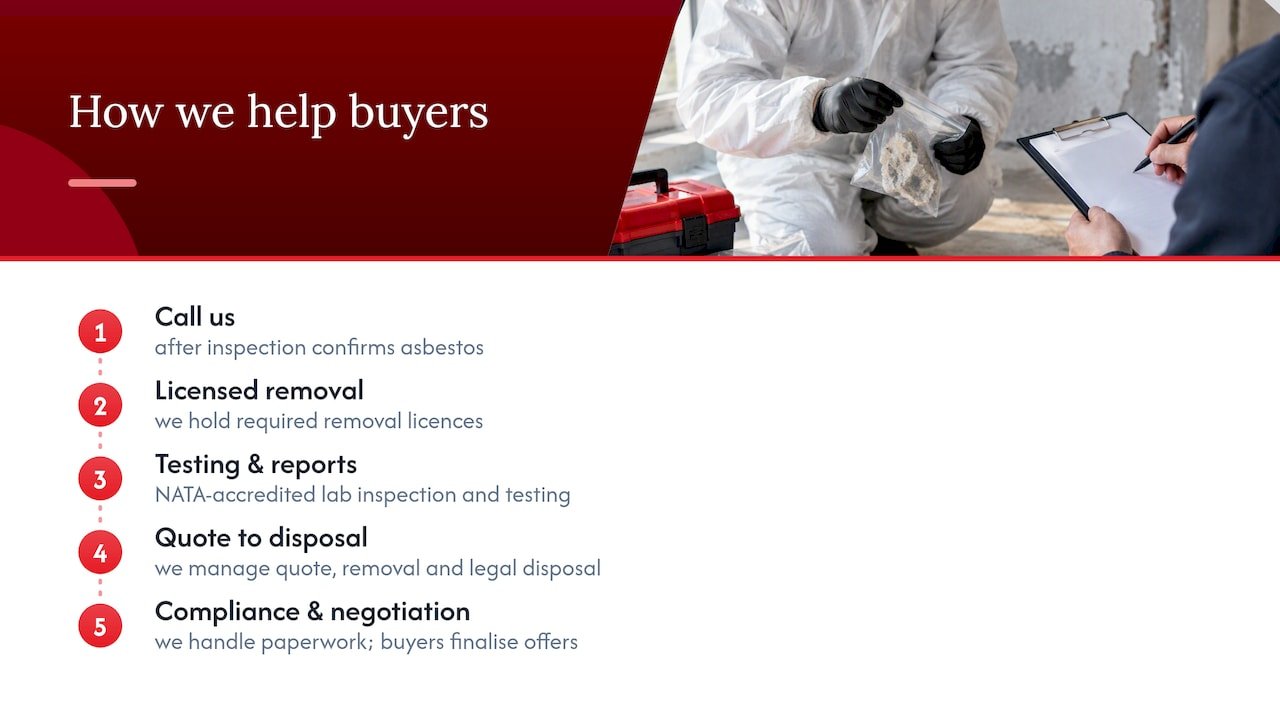
Once an inspection confirms asbestos, the next call is ours. We hold the licences needed for asbestos removal and disposal, run inspection and testing services backed by NATA-accredited labs, and manage the full process from quote to legal disposal. Buyers use our reports and removal quotes to finalise negotiations with confidence, and we handle the compliance paperwork so you do not have to chase it yourself.
A buyer’s note on getting this right
Testing beats guessing every time. If a property shows any sign of age-era materials, get it tested properly before you fall in love with the renovation plans.
— Tarek
How we can help once asbestos is confirmed
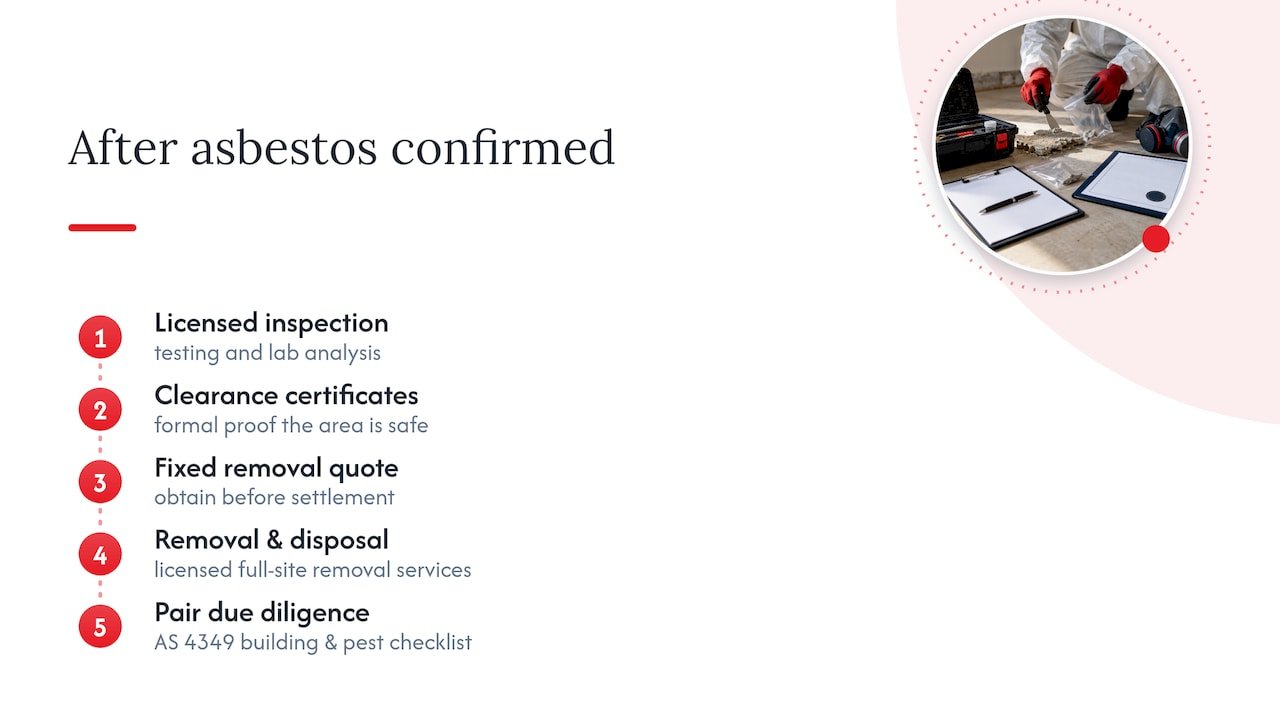
Finding asbestos in a pre-purchase report does not need to derail your purchase. We provide licensed asbestos inspection and testing, clearance certificates, and full removal and disposal for homes across Sydney, so you can move from “asbestos confirmed” to “problem solved” with one phone call instead of several contractors. Buyers also use our asbestos removal services to get fixed project quotes before settlement, which turns an unknown risk into a budgeted line item. If you are organising a wider due diligence check, a building and pest checklist aligned to AS 4349 pairs well with an asbestos assessment. Get in touch for a quote on inspection follow-up, removal or full site clearance before you settle.
This article is general information, not a substitute for advice from a qualified doctor. Consult a qualified healthcare professional about your own circumstances before acting on anything here.
FAQ
What are the rules on asbestos in Australia?
Laboratory testing for asbestos must be carried out by a NATA-accredited laboratory, and removal of larger or friable quantities requires a licensed removalist holding the appropriate state licence. Workplaces are also required to keep an asbestos register and management plan current.
What should a pre-purchase inspection include?
A solid pre-purchase inspection includes a visual survey of accessible areas, photos and a location map of suspect materials, condition ratings, and laboratory results for any samples taken. Where asbestos is confirmed, the report should set out whether it can be managed in place or needs removal.
Is asbestos banned in Australia?
Asbestos-containing materials installed before 1990 remain in many older homes, making properties built or renovated before that year the main concern, since that covers the period of heaviest use in Australian building products.
What are the health risks of asbestos exposure?
Disturbed or damaged asbestos materials can release microscopic fibres linked to serious diseases including asbestosis, lung cancer and mesothelioma. Materials in good, undisturbed condition pose far less risk than those that are cracked, crumbling or being renovated.
Who can remove asbestos in Australia?
Removal of larger quantities of bonded asbestos and any friable asbestos work requires a licensed removalist holding a Class A or Class B licence depending on the material type. Licensed removalists manage removal, decontamination and legal disposal for residential and commercial properties.
Sources
- Historical use of asbestos in Australian building products (PMC review)
- Arranging a residential asbestos assessment (Asbestos Safety and Eradication Agency fact sheet)
- Asbestos and your health (Better Health Victoria)
- Class A asbestos removal licence guidance (SafeWork NSW)
