
You may not always need a council permit to remove a small garden shed, but factors like size, height, heritage overlays and utility connections commonly tip the job into approval territory. Asbestos sheeting changes the picture further, often forcing a licensed removalist regardless of council rules. Before any demolition, check exempt development criteria, confirm Australian Standard AS 2601-2001 compliance, and rule out asbestos.
TL;DR:
- Check council records and confirm whether the shed qualifies for an exemption or needs approval; unauthorized structures do not become lawful after seven years.
- A homeowner may remove less than 10 m² of bonded asbestos without a license, but larger amounts require a licensed remover and SafeWork notification.
- Any friable asbestos requires a Class A licensed removalist, plus a removal control plan, notification to SafeWork, and clearance inspection before reoccupation.
- Asbestos waste must go to a landfill licensed to accept it; call ahead because facilities may require bookings, and keep receipts and clearance certificates.
Table of Contents
- When does removing a shed actually need council approval?
- Exempt development and the demolition standard you can’t skip
- Asbestos rules that decide whether you can do this yourself
- How to check with council and get the right approvals
- Doing the removal safely and disposing of waste lawfully
- What licensed contractors handle so you don’t have to chase it yourself
- Balancing cost, risk and legal compliance
- FAQ
- Sources
When does removing a shed actually need council approval?
Councils across Australia use a consistent set of tests to decide whether a shed can come down without formal sign-off. These tests sit inside the Codes SEPP (State Environmental Planning Policy) framework, and they look at more than just the shed’s footprint.
The main factors a council checks are:
- Size and height: larger or taller structures usually exceed exempt development thresholds and need assessment.
- Setbacks: how close the shed sits to boundaries, easements or other structures.
- Heritage status: a heritage-listed property or a heritage conservation area removes the exempt pathway entirely.
- Utility connections: a shed wired for power, plumbed for water, or connected to stormwater drainage is treated differently to a freestanding tin shed.
- Use as habitable space: a shed converted into a granny flat, studio or storage-plus-living area is assessed as a building, not a garden structure.
Depending on how a shed scores against these factors, it lands in one of three categories. Exempt development needs no planning or building approval at all, provided the works meet the technical standards set out by the relevant code. Complying development (CDC) is a faster, standardised approval pathway, usually handled by an accredited certifier rather than the council itself. A full development application (DA) is required when the shed, its history or its site doesn’t fit either of the simpler pathways, which typically happens with larger structures, heritage sites or anything with an uncertain approval history.
Getting this wrong carries real consequences. Shoalhaven City Council advises homeowners to assume some form of approval is required until they have explicit confirmation otherwise, because the fallback position if you’re wrong can include fines, stop-work orders, or a requirement to lodge a retrospective development application after the shed is already gone.
Exempt development and the demolition standard you can’t skip
Even when a shed removal qualifies as exempt development, the job still has to meet a fixed technical standard. Planning Portal NSW confirms that exempt works, including many garden sheds that meet size and siting criteria under the Codes SEPP, skip planning and building approval but must still comply with the relevant technical rules for that kind of work.
For demolition specifically, that technical rule is Australian Standard AS 2601-2001, The Demolition of Structures. Council guidance from Shoalhaven City Council states plainly that all demolition work, exempt or not, must be carried out in accordance with this standard.
Before assuming your shed qualifies as exempt, work through these checks:
- Confirm the shed’s floor area and height sit within the size limits set by the Codes SEPP for your zone.
- Check boundary setbacks against the minimum distances the code requires.
- Verify there’s no heritage listing or conservation overlay on the property.
- Rule out any electrical, plumbing or stormwater connections tied to the structure.
- Confirm the shed has never been approved or used as habitable space.
- Check for asbestos sheeting, cladding or lining before deciding on a demolition method.
Fact sheets published through Planning NSW reinforce that exempt and complying development pathways still link back to asbestos controls and AS 2601 compliance wherever they apply. Exempt status removes a paperwork step, not a safety standard.
Asbestos rules that decide whether you can do this yourself
Asbestos is the single biggest factor that turns a straightforward shed removal into a licensed job. Many older sheds, particularly those built before the mid-1980s, use fibro or corrugated asbestos cement sheeting, and the rules here are strict and specific.
A homeowner or tradesperson may remove a small amount of non-friable asbestos themselves without a licence, but removal above a certain area requires a licensed asbestos removalist, according to SafeWork NSW. That’s the key criterion to check before you touch a sheet of fibro.
- Non-friable (bonded) asbestos under 10 m²: a homeowner or tradesperson may remove it without a licence, following the correct safety procedure.
- Non-friable asbestos over 10 m²: requires a licensed asbestos removalist and notification to SafeWork.
- Any friable asbestos, regardless of area, requires a Class A licensed removalist because it crumbles and releases fibres more readily.
- Licensed removal jobs need an asbestos removal control plan, SafeWork notification, and a clearance inspection before the site can be reoccupied or reused.
The Safe Work Australia Model Code of Practice sets out these duties in detail, including the requirement for an independent clearance inspection and strict air monitoring thresholds, typically below 0.01 fibres per millilitre, before a site is considered safe again.
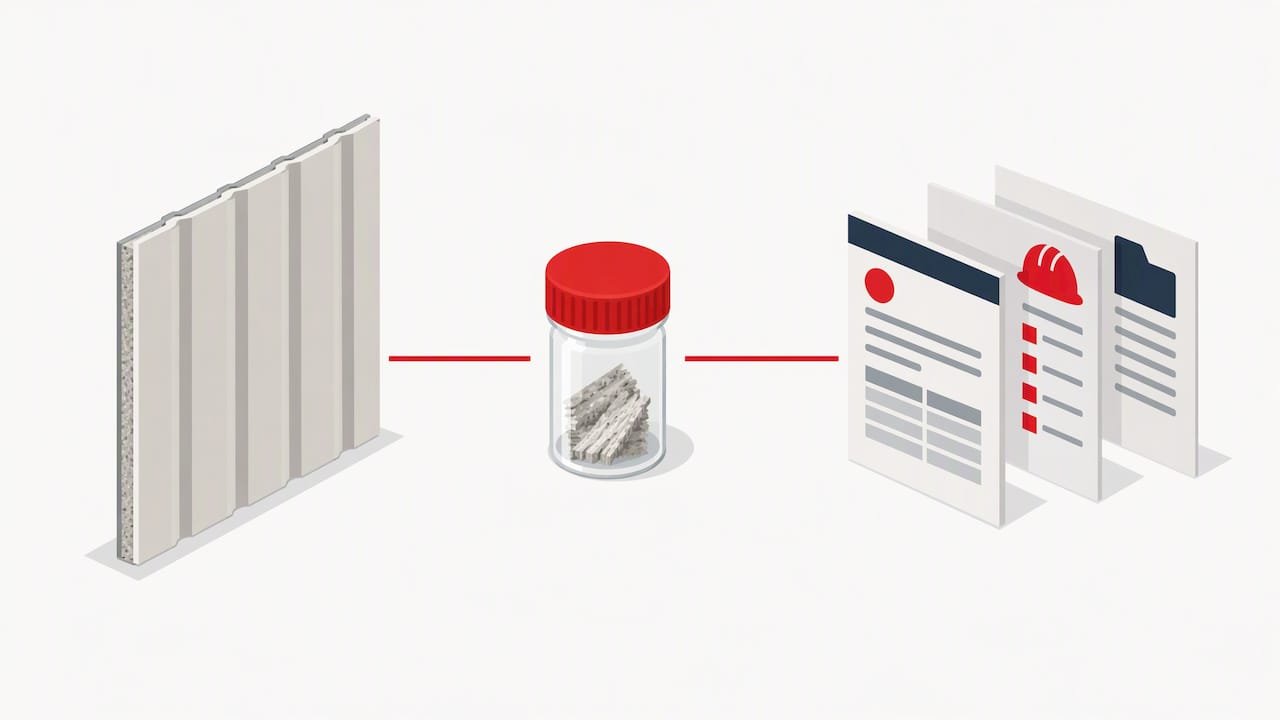
Before you plan removal, take these practical steps: photograph the shed’s cladding and lining, note its approximate age and construction type, and if there’s any doubt, arrange a sample test through a licensed asbestos assessor rather than guessing. Collect the test result, any removal control plan, and your SafeWork notification reference as documentation you’ll need later, whether for council records or for your own peace of mind.
How to check with council and get the right approvals
Working through council requirements in the right order saves time and avoids a stop-work order partway through the job.
- Request a property records check or lodge a Council Request for Information to confirm whether the existing shed has any recorded approval, which matters most if you bought the property without full disclosure.
- Gather your evidence pack: measurements, construction materials, dated photos, and anything showing utility connections or past use as habitable space.
- Contact council planning staff directly with specific questions: ask whether the shed qualifies as exempt development under the Codes SEPP, whether a CDC would be faster than a DA for your situation, and whether any heritage or flood overlay applies to your lot.
- Decide whether you need a private certifier: a CDC is usually processed by an accredited certifier rather than the council, and they’ll tell you exactly what documents they need, typically a demolition plan, asbestos assessment and site plan.
- Engage a licensed asbestos assessor or removalist if your evidence pack raises any doubt about asbestos content, before you lodge anything or start physical work.
Pro Tip: Call council before you call a contractor. A five-minute conversation with planning staff can tell you whether you’re looking at an exempt job or a six-week DA process.
Doing the removal safely and disposing of waste lawfully
Once approvals are sorted, the physical removal still has rules attached, particularly around site safety and waste handling.
Site preparation should follow AS 2601 principles: secure the site, consider temporary hoarding where the shed sits near a boundary or footpath, and let neighbours know before demolition starts, especially if there’s any noise, dust or access disruption. SafeWork NSW guidance applies directly here if asbestos is present.
- A homeowner may remove a small area of non-friable asbestos themselves, but only using wet suppression, correct PPE and sealed double-bagging.
- Anything above that threshold, or any friable material, goes to a licensed removalist, no exceptions.
- Asbestos waste can only go to a landfill licensed to accept it. NSW EPA guidance recommends phoning ahead, since many facilities require a booking before you turn up.
- Keep every disposal receipt, the asbestos clearance certificate if one was issued, and your written council correspondence in one file.
Non-asbestos shed waste, like timber framing, metal sheeting or general rubbish, still needs lawful disposal and can often be handled through standard skip bin or waste removal arrangements rather than a specialised asbestos landfill.
Pro Tip: Keep digital copies of every disposal receipt and clearance certificate. If a council ever queries the job later, that paperwork is your entire defence.
What licensed contractors handle so you don’t have to chase it yourself
A licensed demolition and asbestos contractor typically manages the whole compliance chain in one engagement rather than leaving a homeowner to coordinate assessors, certifiers and landfill bookings separately.
- Asbestos testing and licensing paperwork, including the removal control plan SafeWork requires for jobs over the 10 m² threshold.
- Demolition plans and site methods that meet AS 2601 requirements.
- Liaison with council planning staff or private certifiers on exempt, CDC or DA pathways.
- Booking licensed landfill disposal and supplying the receipts and clearance certificates councils ask for.
We offer shed demolition and removal services across Sydney built around exactly this kind of compliance handling, backed by full licensing for asbestos work and a focus on environmentally responsible disposal. For larger or more complex jobs, our asbestos inspection and testing service gives property owners a clear answer before any removal plan is drawn up.
Balancing cost, risk and legal compliance
Cutting corners on a shed removal rarely saves real money once a stop-work order or a retrospective DA enters the picture. Check council records early, assume asbestos until tested otherwise, and keep every receipt. When in doubt, treat the shed as an asbestos risk and bring in a licensed contractor rather than guessing.
— Tarek
FAQ
Do I need a building permit after 7 years?
There’s no general rule that approval requirements expire after seven years; an unauthorised structure can still require retrospective approval or removal whenever it’s discovered, including at the point of a property sale. If you’ve inherited an older shed with no paperwork, a council records check is the safest first step, as Shoalhaven City Council guidance notes for unauthorised structures.
What is the biggest size building you can build without a permit?
Exempt development size limits vary by council and zone under the Codes SEPP, so there’s no single number that applies everywhere in Australia. Planning Portal NSW sets the framework, but you need to check your specific council’s adopted standards for your zone.
What is the largest shed without council approval in NSW?
NSW exempt development thresholds for sheds depend on floor area, height and setback rules set under the Codes SEPP, and these figures differ by zone and council area. The safest approach is to confirm the exact figures for your property directly with your council’s planning department before assuming a shed is exempt.
Who is the authority to permit construction of buildings in Australia?
Local councils are the primary approval authority for most residential building and demolition work, operating under state planning frameworks like the Codes SEPP in NSW. Accredited private certifiers handle complying development approvals on council’s behalf, while state work health and safety regulators such as SafeWork oversee licensing for hazardous work like asbestos removal.
Sources
- SafeWork NSW – Asbestos
- Safe Work Australia – Model Code of Practice: How to safely remove asbestos
- Planning Portal NSW – Exempt development
- NSW EPA – Facilities accepting household asbestos
- Shoalhaven City Council – Demolition guidance
