
Table of Contents
- Asbestos Removal Cost Per Square Metre: What Actually Drives the Price
- Bonded Asbestos Removal Cost: Why Non-Friable Material Is Cheaper
- Friable vs Non-Friable Asbestos: The Cost Divide
- What’s Included in an Asbestos Removal Quote (and What Isn’t)
- Asbestos Testing Cost: Why You Need It Before Any Removal Quote
- Asbestos Disposal Cost: The Hidden Line Item in Every Quote
- How to Compare Asbestos Removal Quotes Like a Professional
- Conclusion
- Frequently Asked Questions
Last Updated: October 12, 2026
Asbestos Removal Cost Per Square Metre: What Actually Drives the Price
Asbestos removal cost per square metre is not a single number. It is a rate that moves with the material, its condition, how easy it is to reach, and how much of it there is.
That is the first thing most homeowners get wrong. They ring around for a “per square metre rate” and compare numbers that were never measuring the same job.
Why the per-square-metre rate is only half the story
A per-square-metre rate looks simple, but it sits on top of fixed costs that do not shrink when the job gets smaller. Understanding those fixed costs is the difference between a quote that holds and one that grows.
- Minimum call-out charges. Every job carries a base cost to mobilise: loading the truck, driving to site, setting up containment, suiting up, and paying for the disposal paperwork. Most removalists apply a minimum charge that covers roughly the first few square metres, so a 4 m² bathroom floor and a 40 m² fence can attract a similar starting figure. The rate per square metre only becomes meaningful once the job is large enough to absorb that base.
- Small-job premiums. Below a certain area, the rate per square metre climbs sharply because the fixed costs are spread over very little material. A small isolated patch of sheeting can cost more per square metre than a full roof, even though the total invoice is lower.
- Access loadings. Ground-level, open-air work is the cheapest configuration. Add a second storey, a tight side passage, a roof cavity, or a ceiling that must be worked overhead inside a contained room, and labour hours rise before any material is removed. Those hours are real cost, but they do not show up in a flat per-square-metre figure.
- Material and condition. Friable asbestos crumbles under hand pressure and needs full containment. Bonded asbestos is locked into cement and is far more predictable. Weathered, cracked or water-damaged sheeting breaks apart during removal, which slows the job and increases disposal volume.
- Quantity. Larger areas usually attract a lower rate per square metre because setup and disposal costs are spread further. The relationship is not linear, doubling the area rarely doubles the price, but it also rarely halves the rate.
- Clearance requirements. Some jobs need air monitoring and an independent clearance inspection before the area is safe to reoccupy. These are separate services with their own cost, and they are frequently excluded from a headline rate.
The rate is really a bundle of labour, containment, transport and disposal. Break it apart and the quote makes sense.
A worked example of how the rate moves
Consider two jobs using the same bonded asbestos cement sheeting.
| Job | Area | Typical pricing pattern |
|---|---|---|
| Ground-level fence, open access, material intact | 30 m² | Lower rate per square metre; setup and disposal spread across a larger area |
| Second-storey eave, tight access, weathered sheeting | 30 m² | Higher rate per square metre; access, containment and breakage add labour and disposal volume |
Same material, same area, different rate. This is why a per-square-metre figure quoted over the phone is close to meaningless until the removalist has seen the site.
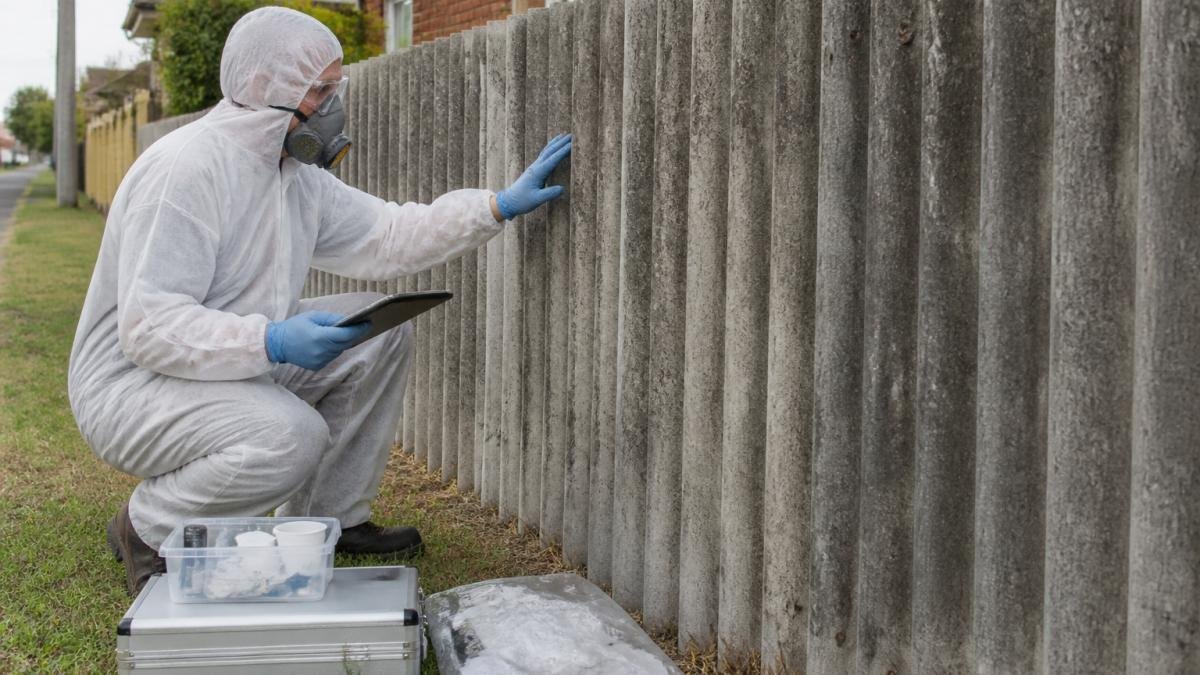
Never accept a per-square-metre rate quoted over the phone without an on-site inspection. A rate given without seeing the material, access and condition is a guess, and the “adjustment” usually lands on your final invoice.
When you compare quotes, ask each removalist to state the area, the material, the access conditions and whether a minimum call-out applies. A rate without those assumptions cannot be compared like for like.
Bonded Asbestos Removal Cost: Why Non-Friable Material Is Cheaper
Bonded asbestos removal cost is lower because the fibres are bound in a cement matrix.
Non-friable asbestos covers most of what a renovator will meet: asbestos cement sheeting, fibro fencing, vinyl floor tiles, guttering and roof sheeting.
The saving is real, but it is not unlimited.
A common mistake is assuming a fence and a ceiling are priced the same because both are bonded. They are not.
Friable vs Non-Friable Asbestos: The Cost Divide
Friable versus non-friable is the single biggest cost divider in any removal quote. Friable asbestos can be crumbled, pulverised or reduced to powder by hand pressure.
That distinction changes everything about how the job is run. Friable removal typically requires:
- A sealed, negative-pressure enclosure around the work area
- Decontamination units for workers entering and leaving
- Air monitoring during removal and a clearance inspection afterwards
- Full respirators, disposable coveralls and strict waste handling
Non-friable removal still demands licensed removalists and safe work methods, but the containment is lighter and the timeline is shorter.
If a removalist quotes you a friable rate for material that is actually bonded, ask why.
What’s Included in an Asbestos Removal Quote (and What Isn’t)
A transparent removal quote should itemise the work, not bundle it into one figure. When you compare quotes, check whether each one includes the following.
| Line item | Usually included | Often excluded |
|---|---|---|
| On-site inspection | Yes | Rarely itemised |
| Asbestos testing and sample analysis | Sometimes | Usually extra |
| Containment and protective equipment | Yes | Occasionally |
| Removal labour | Yes | No |
| Waste wrapping and transport | Yes | Sometimes |
| Disposal fees (gate fees) | Sometimes | Often extra |
| Air monitoring | For friable jobs | Usually extra |
| Independent clearance inspection | Sometimes | Usually extra |
| Make-good or site clean | No | Almost always extra |
The exclusion column is where budgets blow out. If a quote does not state disposal fees or clearance, ask for them in writing before you sign.
Ask every removalist to quote on the same scope document: same area, same material, same clearance requirement. Like-for-like quotes are the only ones worth comparing.
Asbestos Testing Cost: Why You Need It Before Any Removal Quote
Asbestos testing cost is small next to the cost of getting removal wrong. Testing confirms whether a material contains asbestos and, just as importantly, which type.
Testing usually involves a licensed assessor taking a small sample and sending it to a laboratory for analysis.
Get a Free Demolition And Asbestos Removal Quote →
For a renovator, testing is also a legal safeguard.
Testing is not a formality. It is the step that turns a vague estimate into a real quote.
Asbestos Disposal Cost: The Hidden Line Item in Every Quote
Asbestos disposal cost is the line item homeowners most often forget. Asbestos waste cannot go into a normal skip. It must be double-wrapped, labelled and taken to a facility licensed to accept it, and those facilities charge gate fees.
Disposal pricing depends on:
- Volume and weight. More material means higher gate fees.
- Wrapping and labelling. Waste must be sealed correctly or it will be rejected.
- Transport distance. Longer trips to a licensed facility add to the cost.
- Documentation. You should receive a waste tracking record showing where the material went.
That last point matters. Ask for the disposal documentation. A removalist who cannot show you where the waste went is a risk you do not want to carry.
How to Compare Asbestos Removal Quotes Like a Professional
Comparing asbestos removal quotes properly means ignoring the headline number and reading the scope. Two quotes can differ by thousands and still be for completely different jobs.
The like-for-like quote checklist
Work through this checklist for every quote you receive:
- Does it state the exact area and material to be removed?
- Does it confirm the asbestos type (friable or non-friable)?
- Is testing included, or quoted separately?
- Are disposal fees and transport included?
- Is air monitoring included for friable work?
- Is an independent clearance inspection included?
- Does it list the licence number of the removalist?
- Is there a clear process for unexpected finds?
- Does it state who is responsible for notification to the relevant work health and safety regulator?
That final point is the one that protects your budget. Unexpected finds happen on older homes, and a good quote explains upfront how variations are priced rather than springing them on you later.
Licensing, notification and clearance vary by state and territory
Asbestos removal is regulated at state and territory level, not by a single national scheme. That means the licence a removalist holds, the notification they must lodge, and the clearance process they follow depend on where the job is.
- Licensing. Most jurisdictions require a specific asbestos removal licence for friable work, and a lower-tier licence or competency for bonded work above a small threshold. A quote should state the licence number and the class of licence held. If it does not, ask.
- Notification. Many regulators require notification before certain removal work begins, sometimes with a set notice period. The removalist normally lodges this, but the quote should say so, because an un-notified job can be stopped and re-done.
- Clearance and independent verification. After removal, a clearance inspection is commonly required before the area can be reoccupied. For friable work, air monitoring may also be required. Some jurisdictions require the clearance to be carried out by an independent licensed assessor rather than the removalist who did the work. That independence is a cost line, and it is frequently excluded from a headline rate.
- Waste transport and disposal. Asbestos waste must be double-wrapped, labelled and taken to a facility licensed to accept it, with a waste tracking record issued. Transport and gate fees are separate from removal labour and are a common exclusion.
Because these rules differ, a quote that is compliant in one state may be incomplete in another. Ask the removalist to confirm which regulator the job will be notified to and which licence class covers the work.
Questions that separate a real quote from a guess
- Who lodges the notification, and has it been lodged?
- Is the clearance inspection independent of the removalist?
- What happens if unexpected friable material is found mid-job?
- Will I receive a waste tracking record showing where the material went?
- Is the quoted rate subject to a minimum call-out or small-job premium?
A removalist who can answer these without hesitation is quoting a real job. One who cannot is quoting a number.
The cheapest quote is rarely the cheapest job. A quote that excludes disposal, clearance, notification and testing will cost more once those items are added, and a non-compliant job can cost far more again.
Conclusion
Pricing asbestos removal is genuinely difficult because no two jobs are the same, and a per-square-metre rate only tells part of the story. What matters is a quote that itemises the work, reflects the real condition of the material, and includes disposal and clearance from the start. Mission Demolition provides fully licensed asbestos removal and demolition across residential and commercial sites, backed by transparent, itemised pricing, strict health and safety compliance, and environmentally responsible disposal with full documentation.
Frequently Asked Questions
How much does asbestos removal cost per square metre?
The asbestos removal cost per square metre varies based on material type, condition, accessibility and job size. Bonded (non-friable) asbestos in good condition typically costs less per square metre than friable material, which requires full containment. Small jobs often carry a higher per-square-metre rate because fixed costs like setup and disposal are spread across less area. Request a site-specific asbestos removal quote for accurate figures.
Does asbestos removal cost more for bonded or friable asbestos?
Friable asbestos costs significantly more to remove than bonded asbestos. Friable material crumbles easily under pressure and releases fibres readily, so it requires full containment, negative air pressure, air monitoring and decontamination facilities. Bonded asbestos, such as fibro sheeting or vinyl tiles, is more stable and can often be removed with wet methods and minimal containment, keeping the bonded asbestos removal cost lower per square metre.
Are asbestos testing and disposal included in a removal quote?
Not always. Some providers bundle asbestos testing cost and asbestos disposal cost into their removal quote, while others list them separately. Testing involves collecting samples and laboratory analysis, and disposal requires transport to a licensed facility with documentation. Ask each provider to itemise these costs so you can compare quotes on a like-for-like basis and avoid surprises later.
Can I remove asbestos myself to save money?
In most states, a licensed asbestos removalist is legally required for friable asbestos and for any amount over 10 square metres of bonded material. Smaller quantities of bonded asbestos may be removed by a homeowner in some jurisdictions, but you still need protective equipment, wet methods and approved disposal. DIY removal that breaches regulations can void insurance and expose you to serious health risks and fines.
