
Table of Contents
- The Builder’s Demolition Timeline: From Approval to Construction-Ready Site
- How Long Does House Demolition Take? Real Duration by Scope
- Day-by-Day Demolition Schedule: What Actually Happens on Site
- Pre-Demolition Checklist for Builders: 12 Steps Before the Excavator Arrives
- Demolition Approvals and Permits: What the Critical Path Depends On
- Residential Demolition Site Clearance: Handover Criteria and Fast-Track Tactics
- Delays, Buffers, and Builder Coordination: Protecting the Schedule
- Conclusion: Run Demolition on the Critical Path, Not Around It
- Frequently Asked Questions
Last Updated: October 14, 2026
The Builder’s Demolition Timeline: From Approval to Construction-Ready Site
A fast house demolition timeline for builders is the difference between a project that starts on schedule and one that stalls for weeks.
Most builders know a knockdown rebuild is common. What gets missed is that the demolition phase has its own dependencies, and each can delay the next trade.
Below, we break down the demolition timeline by scope, then give you a day-by-day schedule and a pre-demolition checklist.
The demolition timeline is a critical-path problem, not a construction problem. Approvals and hazardous-material clearance usually decide your start date, not the excavator.
The Critical Path Explained
The critical path in demolition is the sequence of tasks that cannot run in parallel without breaking a rule. It usually runs: planning approval, demolition permit, asbestos clearance, utility disconnection, demolition, waste removal, then site handover.
Two things sit on that path almost every time:
- Approvals. A demolition permit and, where required, planning approval must be in place first. Local regulations differ between councils, so confirm the exact requirements early.
- Hazardous materials. If asbestos or other hazardous materials are present, removal must happen before full demolition, and that step is regulated.
Everything else, like fencing, traffic plans, and salvage, can often be arranged in parallel. That is where fast-track planning earns its keep.
How Long Does House Demolition Take? Real Duration by Scope
How long does house demolition take? For a straightforward home, physical demolition usually runs a few days, with the full timeline from approval to a construction-ready site stretching across several weeks once approvals, hazardous-material removal, and waste removal are included.
The range is wide because scope is wide. A small dwelling with clear access and no asbestos moves fast. A large structure with hazardous materials, tight access, and heavy salvage moves slower.
Duration Guide by House Size and Type
Use this as a planning guide, not a quote. Actual duration depends on your site and council.
| Scope | Physical demolition | Full timeline to construction-ready |
|---|---|---|
| Small dwelling, clear access, no asbestos | Days | A few weeks |
| Medium home, some hazardous materials | Days to a week | Several weeks |
| Large structure, complex access or heavy asbestos | One to two weeks | Several weeks or more |
| Partial demolition or internal strip-out | Days | Shorter, approvals permitting |
What Changes the Estimate: Access, Asbestos, and Structure
Three factors move the number more than anything else:
- Access constraints. A narrow inner-city block with neighbours on both sides slows machinery and debris removal.
- Asbestos and hazardous materials. Removal is a separate, regulated step before full demolition.
- Structural complexity. Concrete, suspended slabs, and basements take longer than timber-framed homes.
Weather delays and unexpected finds, like unmarked services, add time too. Build in a buffer.
Day-by-Day Demolition Schedule: What Actually Happens on Site
Most demolition guides give you a duration range and stop. Builders need the sequence: what happens each day, which tasks run in parallel, and where the handoffs are.
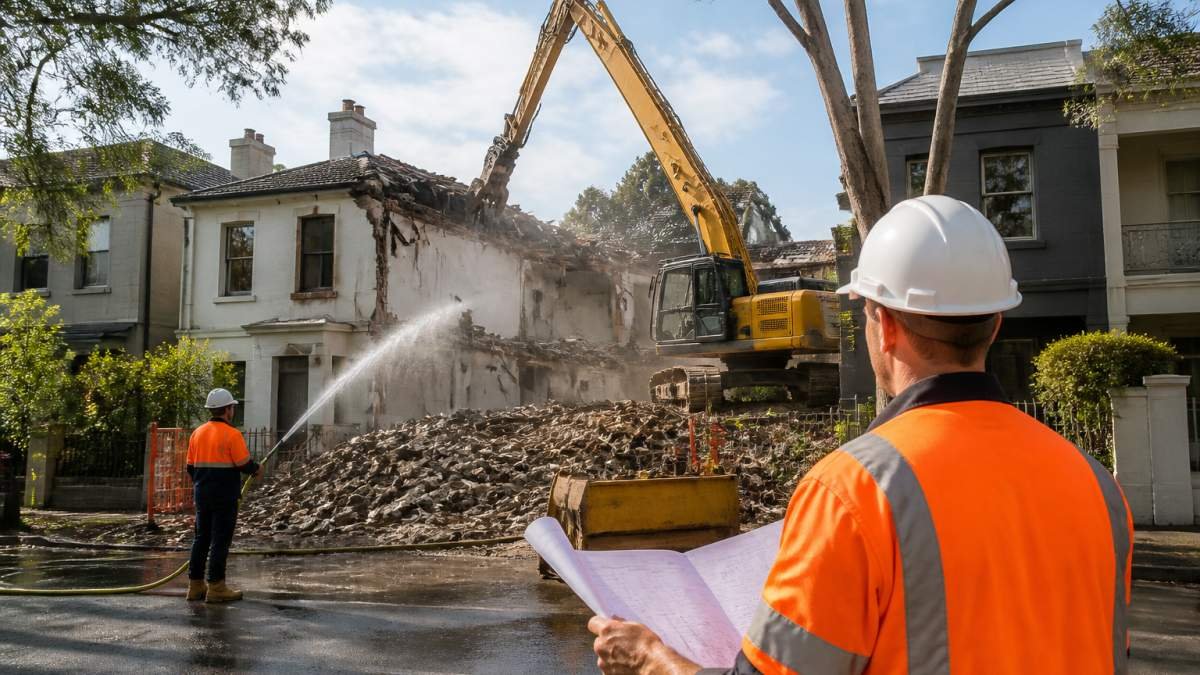
Standard Residential Demolition: Day-by-Day
Day 1, Site setup and safety. Fencing, signage, sediment controls, and dust suppression go up.
Day 2, Soft strip and salvage. Fixtures, fittings, floor coverings, and salvageable materials come out.
Day 3, Structural demolition. The excavator brings the structure down, working to the demolition plan.
Day 4, Debris processing and waste removal. Concrete, timber, metal, and general waste are sorted for recycling where possible.
Partial Demolition and Strip-Out: A Shorter Sequence
Partial demolition or internal strip-out compresses the same logic into fewer days. Soft strip and salvage dominate, structural demolition is limited to the agreed scope, and waste removal is smaller. The critical path is still approvals and hazardous-material clearance, but the on-site phase is shorter and less weather-dependent.
Hazardous-Material Projects: Where the Schedule Changes
If asbestos or other hazardous materials are present, removal happens before structural demolition and is regulated. That step adds days to the front of the schedule, not the middle. Removal must be done by a licensed contractor, and clearance documentation is required before demolition proceeds. Builders who treat asbestos as a mid-project discovery lose the most time.
What Can Run in Parallel
Fast-track planning is about knowing what can safely run alongside what. Approvals, hazardous-material surveys, and utility bookings can often be progressed in parallel. Fencing, traffic plans, and salvage planning can be arranged while approvals are pending. What cannot run in parallel: hazardous-material removal and structural demolition, and utility disconnection and demolition. Those are sequential by regulation and by safety.
Book your waste removal and recycling before demolition starts. Trucks arriving late is one of the most common reasons a fast schedule slips by a day or two. On constrained sites, book them for the afternoon of Day 3 and the morning of Day 4 so they are on site when the material is ready.
Handoffs That Decide the Timeline
The schedule is only as good as its handoffs. The three that matter most:
- Approvals to mobilisation. No excavator moves until permits and hazardous-material clearance are in writing.
- Utility disconnection to demolition. Written confirmation from each utility is the trigger, not a verbal assurance.
- Demolition to construction. The site is not construction-ready until footings are removed, waste is gone, and the handover inspection is signed off.
Larger jobs stretch these stages, but the sequence stays the same.
Get a Free Demolition And Asbestos Removal Quote →
Pre-Demolition Checklist for Builders: 12 Steps Before the Excavator Arrives
A pre-demolition checklist for builders keeps the critical path moving. Run these steps in order.
- Confirm planning approval and demolition permit are in place.
- Book a hazardous-material survey, including asbestos.
- Arrange licensed asbestos removal if required.
- Disconnect water supply, electricity, gas, and sewer.
- Get written confirmation from each utility.
- Arrange site access and any traffic management.
- Notify neighbours and document property condition.
- Confirm fencing, signage, and safety requirements.
- Plan salvage and soft-strip.
- Book waste removal and recycling.
- Agree the demolition plan and sequence with your contractor.
- Set a contingency buffer for weather and surprises.
- Approvals confirmed
- Hazardous-material survey done
- Utilities disconnected in writing
Demolition Approvals and Permits: What the Critical Path Depends On
Demolition approvals and permits are the most common cause of delay, and the most avoidable. Requirements vary by council and project, so confirm early.
What usually applies:
- A demolition permit from the local council.
- Planning approval for the rebuild, where relevant.
- Asbestos and hazardous-material requirements, which are regulated separately.
Your contractor should be able to tell you what documentation they provide. For the rules that apply to your site, check your council and the relevant state regulator directly.
Starting demolition before approvals are finalised can mean stop-work orders, fines, and a rebuild that cannot proceed. Confirm every approval in writing before the excavator mobilises.
Residential Demolition Site Clearance: Handover Criteria and Fast-Track Tactics
Residential demolition site clearance ends when the site is genuinely construction-ready, not just when the house is gone. That distinction separates fast projects from slow ones. A cleared block with footings still in the ground, unconfirmed utility isolations, or undocumented waste is not construction-ready, and mobilising onto it is how builders inherit someone else’s delay.
What ‘Construction-Ready’ Actually Means
A construction-ready site is cleared, level, and safe, with all debris, footings, and hazardous materials removed, and services isolated and documented. The key word is documented: verbal assurances do not survive a site inspection or council query.
Handover Criteria: What to Confirm Before You Mobilise
Use this as a verification checklist. Confirm each item in writing or by inspection before your trades arrive.
- Structure and footings removed to the agreed depth. Confirm the depth in the demolition plan and verify it on site. Footings left in place can stop piling or slab preparation.
- Site cleared, levelled, and accessible to construction plant. Check that the access route your construction vehicles need is actually clear, not just the block itself.
- Waste removed and recycling documented. Ask for the waste transfer documentation. It is your evidence that material left the site lawfully.
If any of these are missing, the site is not construction-ready, regardless of how it looks.
Fast-Track Tactics That Genuinely Save Time
Fast-tracking is not about rushing demolition. It is about removing avoidable waiting from the critical path.
- Run approvals, hazardous-material surveys, and utility bookings in parallel where allowed. These are separate processes and often do not depend on each other. Starting them at the same time is the single biggest time saver.
- Pre-book waste removal and recycling. Do not wait until the debris is on the ground. Book trucks against the schedule, not against the pile.
- Confirm access and traffic plans before mobilisation. Council or road authority approvals for traffic management can take time. Treat them as part of the critical path, not an afterthought.
The Builder’s Handover Walk
Before you release the demolition contractor, walk the site and confirm:
- Footings removed to agreed depth and verified.
- Site level and accessible for your construction plant.
- Waste gone and documentation provided.
- Utility isolations confirmed in writing.
That walk is the difference between a construction-ready site and a cleared block with problems buried in it.
Do not mobilise your trades onto a site that has not been signed off against the handover criteria. Footings left in place, unconfirmed utility isolations, or missing waste documentation can stop your construction phase before it starts.
Delays, Buffers, and Builder Coordination: Protecting the Schedule
Delays come from a short list of causes, and most are predictable. Weather, late approvals, unexpected hazardous materials, and utility delays top the list.
Builder coordination protects the schedule. Agree responsibilities up front:
- Builder: approvals, utility bookings, access, neighbour liaison.
- Demolition contractor: survey, removal, demolition, waste, handover.
Build in a contingency buffer. A few days of slack absorbs most weather and surprise delays without pushing your construction start.
Builders running knockdown rebuilds or tight urban sites who need a sequenced, construction-ready handover rather than just a cleared block.
Conclusion: Run Demolition on the Critical Path, Not Around It
The builders who hit their construction start dates treat demolition as the first stage of the build, not a separate errand.
Mission Demolition is a licensed and insured Sydney demolition company. We handle full and partial demolition, asbestos removal, strip-outs, and site clearance, with modern machinery and strict health and safety compliance.
Get a free demolition and asbestos removal quote and start your next build on the front foot.
Frequently Asked Questions
How long does a house demolition take from start to site clearance?
For a typical single-storey home, physical demolition usually takes two to five working days, and the full timeline from approval to a cleared, construction-ready site runs six to twelve weeks. That includes demolition approvals and permits, utility disconnection, hazardous-material removal, and site clearance. Larger or heritage structures, tight access, or asbestos finds extend the physical works. Your demolition contractor should give a written schedule with milestones so you can plan trades against it.
What can delay a residential demolition project?
The most common delays are late demolition approvals and permits, asbestos or other hazardous materials not identified in the pre-demolition survey, utility disconnection bookings, and weather. Access constraints on tight sites slow machinery movements, and unexpected structural complexity adds days. Builders reduce risk by lodging approvals early, booking utility disconnections as soon as the permit is issued, and holding a contingency buffer of one to two weeks on the program.
When can construction begin after demolition and site clearance?
Construction can begin once the site is certified construction-ready, which means the structure is fully removed, footings and slabs are broken out, the block is levelled and compacted, and the demolition contractor provides clearance documentation including waste disposal records. In practice, most builders start site establishment and set-out within a few days of handover. Confirm your demolition contract defines the handover criteria so there is no gap between demolition completion and your trades arriving.
How can builders reduce delays before demolition starts?
Use a pre-demolition checklist for builders: confirm planning and demolition approvals, book utility disconnections, complete a hazardous materials survey, arrange traffic and neighbour notifications, and agree the site access plan with your contractor. Running these tasks in parallel rather than sequentially can save several weeks. Also confirm the contractor’s licences and insurance, and ask for a written schedule with milestones so you can align your construction program with the demolition timeline.
