All forms of asbestos were banned in Australia from 31 December 2003, closing off manufacture, use, import, transport, storage and sale nationwide. That final ban followed two decades of phased state restrictions dating back to the 1980s. The law never forced removal of asbestos in buildings already standing, which is why it still turns up in many Australian homes today.
TL;DR:
- Asbestos mining in Australia ended by 1983, but full nationwide ban on manufacture and import only took effect on December 31, 2003.
- The 2003 ban prohibits asbestos and asbestos-containing materials from being imported, manufactured, used, transported, or sold, but does not require immediate removal from existing structures.
- Any building constructed or renovated before 1990 likely contains asbestos in common areas such as roofing, wall sheeting, or flooring; professional inspection is essential before renovation.
- Friable asbestos, which sheds dangerous fibers, must always be handled by licensed removal services, not DIY efforts, especially before demolition or sale.
- Despite the ban, millions of square meters of asbestos still remain in Australian buildings, making careful testing and licensed removal crucial during renovations.
Table of Contents
- How Australia’s asbestos ban actually happened
- What the 2003 ban actually covers
- Why asbestos was banned, and the health toll it left behind
- How the ban is enforced at the border today
- What this means if you own or renovate an older Australian home
- When licensed removal isn’t optional
- Where to check the rules yourself
- The gap between the law and the lived reality
- Sources
How Australia’s asbestos ban actually happened
Asbestos was everywhere in Australian construction through the mid-20th century, prized for being cheap, fireproof and durable. Fibro sheeting, pipe lagging, roofing and insulation all leaned on it heavily until the risks became impossible to ignore.
The wind-down happened in stages rather than overnight:
- Asbestos mining in Australia ceased by 1983, ending local extraction of raw fibre.
- From around 31 December 1984, most states and territories prohibited the mining, manufacture, import and installation of crocidolite and amosite, the two most dangerous fibre types.
- Chrysotile (white asbestos) stayed legal for longer, used in cement products and friction materials into the 1990s.
- The final piece fell into place when Commonwealth, state and territory governments agreed on a total, harmonised prohibition, taking effect on 31 December 2003.
That last date is the one worth remembering if you’re trying to pin down when asbestos was stopped in Australia for good. Everything before it was a partial patch job; 2003 closed every remaining loophole.
What the 2003 ban actually covers
The prohibition is broader than most people assume. It covers the manufacture, use, re-use, import, transport, storage and sale of asbestos and asbestos-containing materials across Australia, enforced through a mix of Commonwealth and state instruments.
- Customs Prohibited Imports/Prohibited Exports (PI/PE) Regulations block asbestos and ACMs crossing the border in either direction.
- Harmonised Work Health and Safety (WHS) laws in each state and territory back this up domestically, governing handling, disturbance and disposal.
- Narrow exceptions exist for research, museum specimens, hazardous waste already generated, and situations requiring ministerial permission.
What the ban does not do is mandate removal from existing structures. If your 1970s fibro garage still has its original sheeting, that’s legal. Disturbing it without proper controls is where the trouble starts.
Why asbestos was banned, and the health toll it left behind
There is no safe level of asbestos exposure. Even brief contact with airborne fibres can cause mesothelioma, asbestosis or lung cancer decades later, and the delay between exposure and diagnosis is often 20 to 40 years.
The scale of the legacy: Australia carries one of the highest reported per-capita rates of asbestos-related disease in the world, and the Asbestos Safety and Eradication Agency projects the country will keep recording new cases for decades yet, a direct echo of how widely the material was used before anyone fully grasped the danger.
That’s the real distinction to hold onto: banning new asbestos in 2003 stopped the bleeding, but it didn’t clean the wound. Every fibro home, every asbestos-cement pipe still in the ground, is a piece of unfinished business from an era when nobody thought twice about it.
How the ban is enforced at the border today
Australian Border Force enforces a zero-tolerance policy on asbestos imports, and it doesn’t care what the paperwork says. Imported goods, from building products to vehicle parts to décor items, get pulled and tested, and a positive result means seizure regardless of intent.
A few things trip up importers regularly:
- Foreign ‘asbestos-free’ labels are not reliable in Australia; trace fibre allowances allowed elsewhere can still lead to seizure under Australian testing, and ABF enforcement doesn’t grant exceptions for foreign compliance claims.
- The PI/PE Regulations apply to both import and export, so sending asbestos-containing waste or materials offshore is just as restricted as bringing it in.
- Ministerial exceptions exist but are tightly scoped, typically limited to research samples or specific hazardous waste handling, not commercial shipments.
- Importers carry legal responsibility for what they bring in, even when they genuinely didn’t know a product contained asbestos.
The practical upshot for businesses and tradespeople sourcing materials from overseas: if a supplier can’t produce Australian compliance documentation, don’t risk it. Seizure is the mild outcome. Penalties and supply chain disruption are the expensive ones.
What this means if you own or renovate an older Australian home
If your property was built or renovated before 1990, asbestos is a likely possibility, not a historical footnote. Common spots include corrugated roof sheeting, eaves and soffit linings, older bathroom and laundry wall sheeting, vinyl floor tiles and backing, and around wood heaters. Older homes across Queensland and beyond frequently turn up asbestos cement in exactly these locations.
Before drilling, cutting, sanding or demolishing anything in a pre-1990 structure, arrange for asbestos inspection. Don’t try to identify asbestos by eye or DIY-test a sample; friable and bonded ACMs look deceptively similar, and disturbing the wrong material is how exposure actually happens.
A straightforward sequence for renovating safely:
- Arrange a professional asbestos inspection before any work begins.
- Get suspect materials laboratory tested rather than guessing.
- If asbestos is confirmed, engage a licensed asbestos removal contractor for anything beyond very minor, non-friable work.
- Ensure waste goes to a licensed disposal facility, not general skip bins.
- Get clearance testing and certification once removal is finished before continuing renovation.
Pro Tip: Budget extra time before you commit to a renovation deadline. Licensed removal, waste disposal logistics and clearance certificates routinely take longer than homeowners expect, and rushing this step is how projects blow their timelines.
When licensed removal isn’t optional
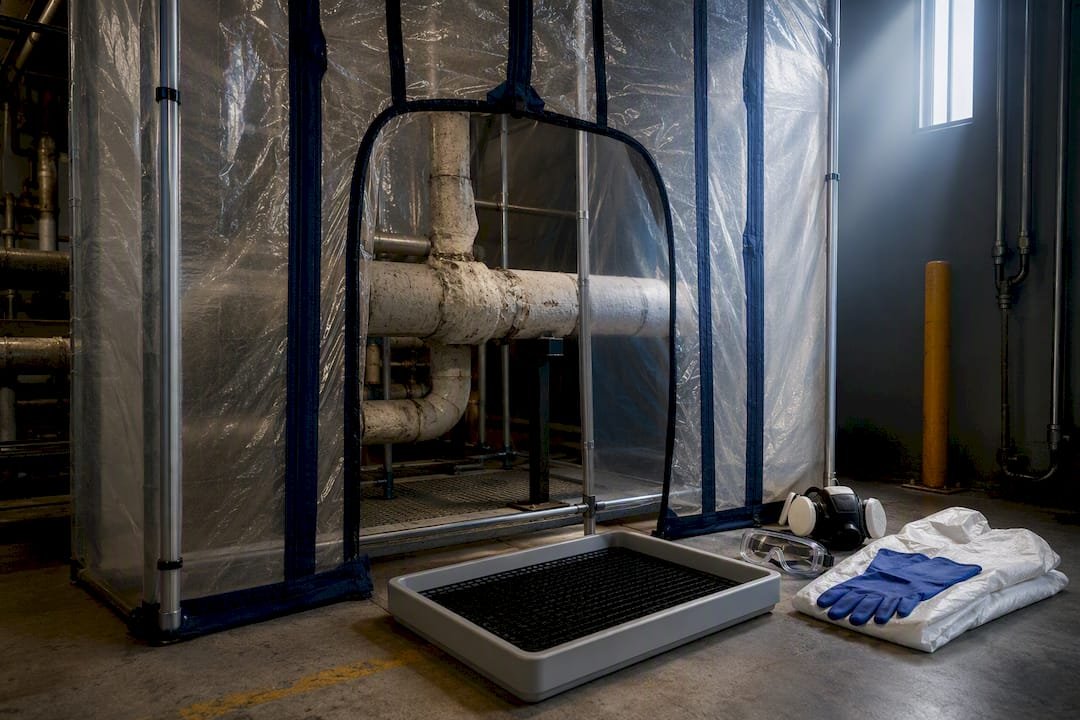
Friable asbestos, which sheds fibres and is found in old pipe lagging or damaged sheeting, requires licensed removal rather than DIY handling. Neither is anything involving demolition, large-scale sheet removal, or a property that needs a clearance certificate before sale or occupation. These situations sit squarely inside WHS licensing requirements, not personal discretion.
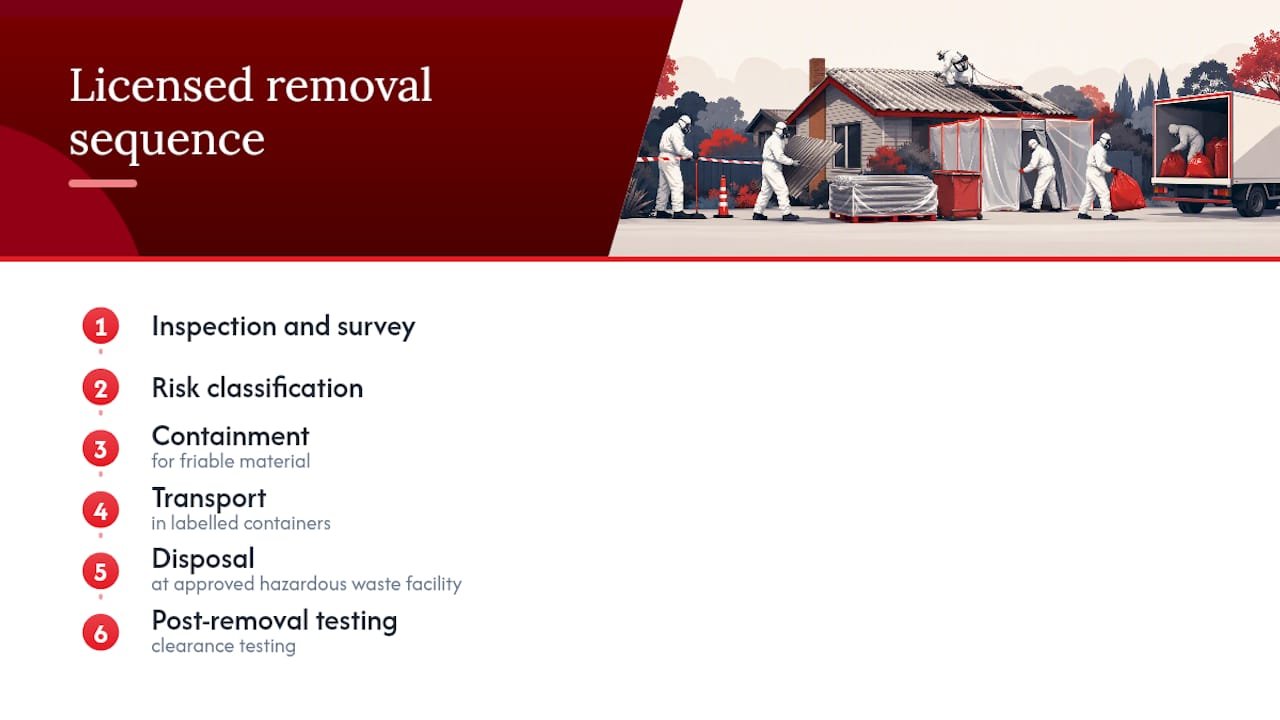
A properly licensed removal service runs a set sequence: inspection and survey, risk classification, containment for friable material, transport in labelled containers, disposal at an approved hazardous waste facility, and post-removal clearance testing. Mission Demolition has handled thousands of demolition and remediation projects across Sydney under exactly that framework, pairing licensed asbestos handling with the structural demolition work that often goes hand in hand with it on older properties.
Where to check the rules yourself
For the legislation itself, Asbestos NSW and the Asbestos Safety and Eradication Agency are the most reliable starting points. Border and import questions sit with the Australian Border Force enforcement guidance, while the Parliamentary inquiry report covers the regulatory detail. State regulator sites list licensed removalists in your area.
The gap between the law and the lived reality
Australia got the legal side of this right in 2003. What the conventional advice glosses over is how little that date actually protects you day to day. The ban stopped new asbestos entering the supply chain; it did nothing about the millions of square metres already bolted, glued and painted onto Australian buildings.
Most homeowners treat the 2003 cutoff as reassurance rather than a warning. Wrong instinct. If your place predates that line, or even sits close to it, the ban is background information, not a safety guarantee. The real decision point is what you do the moment you plan to drill into a wall or pull down a shed.
My honest read: too many renovation disasters come from people testing their own luck instead of testing the material. Get the inspection first. It costs less than you think and far less than a contaminated site does.
— Tarek
This article is general information, not a substitute for advice from a qualified doctor. Consult a qualified healthcare professional about your own circumstances before acting on anything here.
Sources
- When was asbestos banned in Australia? | Asbestos NSW
- What is asbestos? | Asbestos Victoria
- Asbestos Safety and Eradication Agency (ASEA)
- Chapter 2 – Parliament of Australia: Australia’s asbestos ban
