
Pick grubbing when the site needs to be build-ready, or when a new gas line, pool, or garden bed can’t tolerate leftover roots. Pick stump grinding when you want the eyesore gone fast, without digging a crater in the lawn. The caveat: any excavation near a boundary, driveway, or service pit calls for an underground-utility locate first, and anything beyond a small backyard stump is safer left to a licensed operator with the right gear.
Before you do anything else:
- Walk the site and note access points, slopes, and nearby structures.
- Arrange a utility locate (the Australian equivalent of “dial before you dig”) before any digging starts.
- Get two or three quotes that specify method, depth, and disposal, not just a price.
Key Takeaways
Grubbing suits build-ready sites and construction, while stump grinding suits fast, cosmetic fixes where the root system can stay buried.
| Point | Details |
|---|---|
| Match method to purpose | Choose grubbing for construction or replanting sites; choose grinding for cosmetic lawn fixes. |
| Always locate utilities first | Arrange an underground-utility locate before any digging or excavation begins. |
| Compaction prevents settlement | Backfill in staged, compacted layers to avoid sunken patches appearing months later. |
| Roots persist after grinding | Ground stumps leave root systems in place that can take several years to decay. |
| Hire licensed operators for larger jobs | Mission Demolition provides licensed excavation, grubbing, and waste disposal for construction-ready sites. |
Table of Contents
- What’s the difference between stump grinding and grubbing?
- When should you choose grinding over grubbing?
- The grubbing process, from site check to backfill
- How does stump grinding actually work on the day?
- What safety mistakes cause the most damage?
- Getting the site ready for turf, planting, or a slab
- What should a licensed contractor bring to the job?
- What experience actually teaches about this job
- Ready to clear the site properly? Here’s how Mission Demolition helps
- Sources
What’s the difference between stump grinding and grubbing?
Stump grinding chews the visible stump down using a rotating cutter wheel with carbide teeth. Horizontal grinders typically remove the top 80 to 250 millimetres of wood and surrounding root flare, turning it into a pile of chips. Most of the root system, often extending metres beyond the trunk, stays buried and simply rots down over the following years.
Grubbing is different. It’s full extraction: the stump, the root ball, and the major structural roots all come out of the ground, usually to a moderate depth depending on the tree and soil. What you’re left with is a hole, not a mulch pile.
- Grinding = fast, cosmetic, cheaper, roots remain underground.
- Grubbing = slower, disruptive, pricier, but the site is genuinely clear.
Choose based on what happens to that ground next, not just how the stump looks today.
When should you choose grinding over grubbing?
Run through this before ringing a contractor:
- What’s going where next? Building a slab, laying a pool, or trenching for services all demand grubbing, because decomposing root mass under a structure causes uneven settlement down the track, a problem Four Brothers Land Clearing flags as a core reason grubbing exists as its own trade phase. Lawn repair or a garden bed refresh usually only needs grinding.
- Can machinery get in? Tight courtyards and narrow side access favour a compact grinder. Open blocks with a driveway wide enough for an excavator make grubbing straightforward.
- Will it resprout? Species like camphor laurel, privet, and some eucalypts throw up suckers from leftover root fragments, which pushes the case toward grubbing if you never want that tree back.
- What’s your budget and tolerance for mess? Grinding is generally quicker and cheaper; full removal costs more and takes longer because of the added excavation, hauling, and backfill work.
Pro Tip: If you’re on the fence, ask what’s planned for that exact spot in the next two years. That answer decides the method more reliably than anything else.
The grubbing process, from site check to backfill
Grubbing is a construction task, not a gardening job, and it runs in a fixed sequence.
1. Site assessment and utility locate. A competent operator walks the block, marks the stump’s likely root spread, and organises an underground-utility check before touching the ground. Skipping this step is how people hit gas lines and irrigation mains.
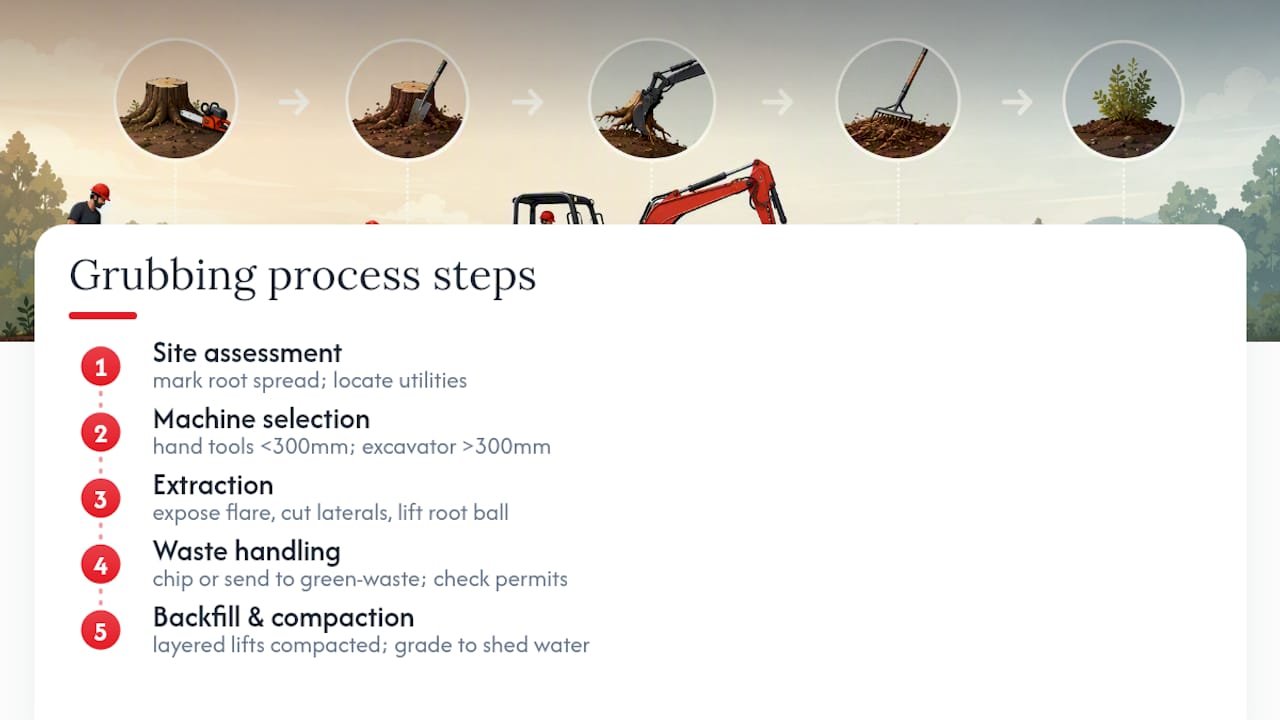
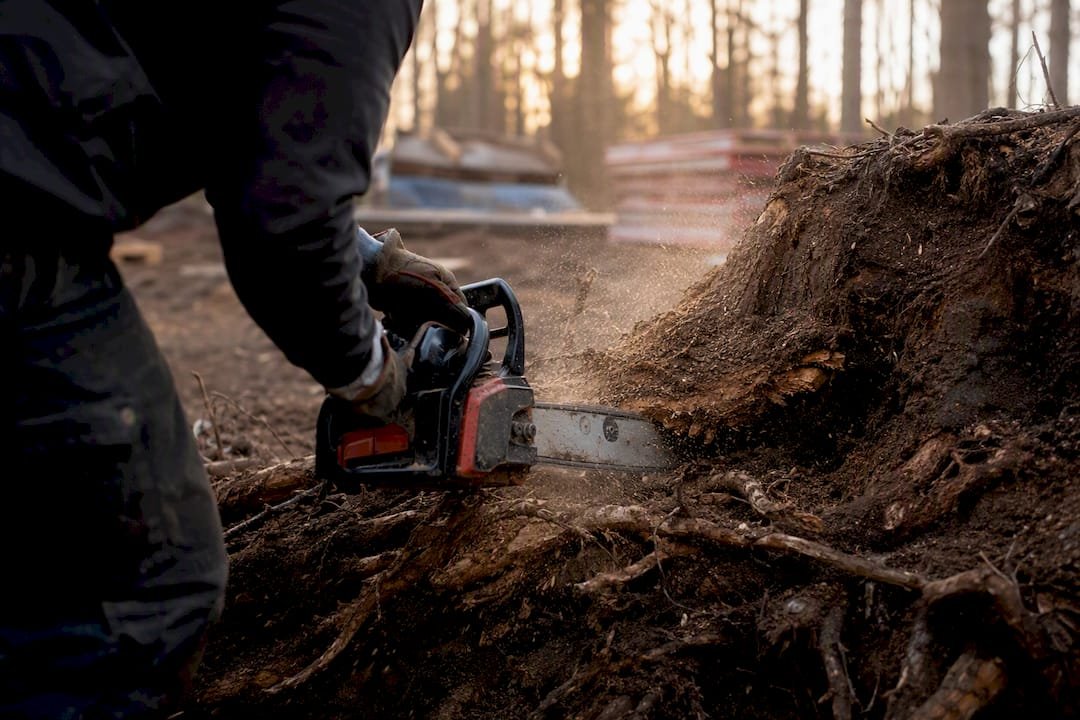
2. Machine selection. Small stumps might come out with a mattock and a strong back, but anything over 300 millimetres in diameter usually needs an excavator or backhoe fitted with a root rake or thumb attachment. A chainsaw trims exposed roots first to speed up the pull.
3. Extraction. The operator exposes the root flare, severs the main lateral roots with the attachment or chainsaw, then lifts the whole root ball clear. Roots extending beyond the immediate hole get traced and pulled out to whatever radius the job specifies, typically matching the canopy’s old drip line.
4. Waste handling. Extracted timber and roots go to a green-waste facility or get chipped on-site for reuse. Some council areas add permit conditions for protected species, so check local rules before removal on a heritage-listed or significant tree.
5. Backfill and compaction. This is the step DIYers skip and regret. Fill goes in layered lifts, each one compacted before the next goes down, finishing with a graded surface that sheds water away from structures.
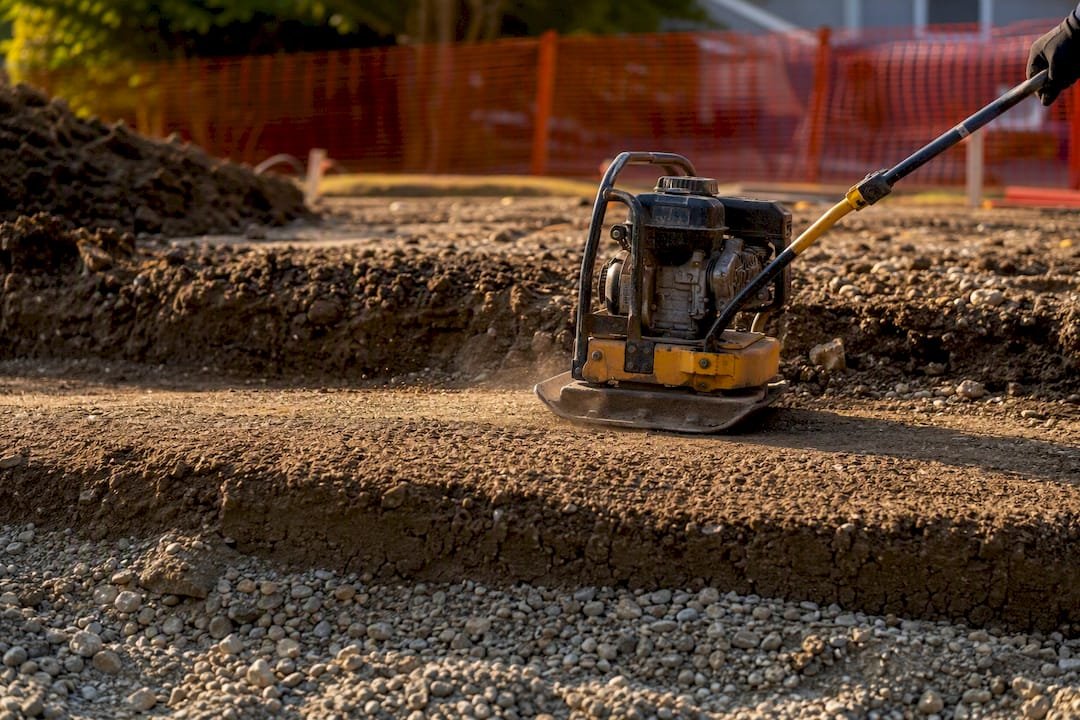
Done properly, this whole sequence is what prevents the soil settlement that shows up a year later as a sunken patch or a cracked path. Skip the compaction stage and you’re guaranteed a dip forming exactly where the root ball used to sit.
How does stump grinding actually work on the day?
Grinder size depends entirely on the stump. Walk-behind units suit backyard jobs with tight gates; larger self-propelled or track-mounted grinders handle bigger trunks and better access.
Set-up matters more than people expect:
- Mark an exclusion zone; flying chips and splinters travel further than most homeowners assume.
- Protect nearby paving, garden edging, and irrigation lines from the cutter wheel and debris.
- Wear eye protection, hearing protection, and sturdy footwear regardless of stump size.
The grinder makes repeated passes across the stump face, working down and outward. Depth depends on the goal: a lawn patch might only need 80 to 100 millimetres below grade, while a spot getting replanted might need closer to 250 to 300 millimetres to give new roots clean room. Either way, the lateral root system stays in the ground.
Afterwards, you’ve got a decision on the chip pile: rake it out and reuse as mulch elsewhere, or remove it and backfill the void with topsoil. Leaving loose chips in the hole looks tidy short-term but settles as they break down.
A straightforward backyard stump takes an hour or two. Multiple large roots, rocky ground, or a stump tangled in old fencing all stretch that out considerably.
What safety mistakes cause the most damage?
The single biggest failure point is skipping the utility locate. Safe Work Australia sets the national guidance on excavation and plant use precisely because striking a buried service with an excavator bucket is a common, entirely preventable incident.
Timing matters more than most homeowners realise too. Working a grubbing job in wet conditions bogs machinery and chews up surrounding lawn and paths, so experienced operators schedule these jobs for drier windows wherever the calendar allows.
The recurring DIY mistakes:
- No utility check before digging, ever.
- Underestimating how far roots actually spread, then re-digging when they hit resistance.
- Backfilling without compacting each layer, leaving a soft spot that sinks months later.
- Treating a large stump as a solo weekend job when it genuinely needs an excavator and a licensed operator.
Pro Tip: If you can see a root thicker than your wrist near a fence line or path, assume it runs metres further than you think, and dig test holes before committing to a removal line.
Getting the site ready for turf, planting, or a slab
Backfill goes in stages: a base layer, compacted, then successive lifts each compacted in turn, rather than one deep fill dumped and walked over once.
For replanting, wait until the fill has settled and add organic matter to rebuild soil structure the excavation disturbed. For construction, most sites need a compaction test before a slab or footing goes anywhere near the old stump location.
Roots left behind after grinding can take several years to fully break down, which matters if you’re planning to build in that footprint rather than just replant it.
Before calling the job finished, check for:
- Compaction test results or at minimum a firm, even surface underfoot.
- No visible depressions or soft spots.
- Drainage running away from the house, not pooling where the stump used to be.
What should a licensed contractor bring to the job?
Mission Demolition handles stump grubbing as part of broader site clearance and demolition work, which means the crew arrives with excavators, root-rake attachments, and the licences to run them, not a rented grinder and a Saturday afternoon.
Ask any contractor quoting the work for these specifics:
- Confirmed underground-utility locate, in writing, before machinery arrives.
- A clear access and haul plan for getting equipment on and off site.
- A disposal plan, ideally with a docket showing where extracted timber and roots ended up.
- Compaction method and, for construction-adjacent jobs, test results.
- Current insurance and licensing for plant operation.
Hiring a licensed operator costs more upfront than a DIY weekend, but it removes the two risks that actually cost money later: a struck service line, and a settling patch you discover after the turf’s already down.
What experience actually teaches about this job
Most advice on stump removal treats it as a binary: grind it or dig it out. The more useful question is what happens to that ground in twelve months, and conventional guides skip that almost entirely.
The overlooked risk isn’t the stump itself, it’s the compaction step everyone rushes. A contractor can grub out a stump perfectly and still leave a client with a sunken patch six months later because the backfill went in as one lazy dump instead of staged, compacted lifts. That’s not a grubbing failure, it’s a finishing failure, and it’s completely avoidable.
If there’s one thing homeowners should prioritise above cost or speed, it’s asking exactly how backfill will be compacted, not just whether the stump will be removed. Anyone can pull a root ball out of the ground. Fewer operators put the same care into what goes back in. That’s the gap between a job that looks finished and one that stays finished.
Ready to clear the site properly? Here’s how Mission Demolition helps
Grubbing a stump correctly means coordinating machinery, utility locates, waste disposal, and compaction, which is exactly the kind of multi-step site work Mission Demolition runs every week across residential and commercial jobs.

Beyond stump grubbing, the team handles the earthmoving and excavation that usually comes with it, from grading a slab-ready pad to trenching for new services, plus licensed waste removal so extracted roots and green waste don’t become your problem to haul. When you request a quote, ask specifically for utility checks, a disposal plan, and compaction testing; a contractor who answers all three without hesitation is one worth hiring.
If your project is heading toward construction rather than a lawn patch-up, start with Mission Demolition’s demolition services page and request a quote that covers the full site prep, not just the stump.
Sources
- Safe Work Australia
- Stump grinder — Wikipedia
- What grubbing is and why it matters on every site development project — Four Brothers Land Clearing

One Response