Household quantities go to a Household Chemical CleanOut or Community Recycling Centre. Businesses must use licensed commercial operators and comply with tracking rules under the Integrated Waste Tracking Solution. Never pour hazardous chemicals down the drain, bin them, or dump them on site. If you’re unsure which category applies, call the NSW EPA or a licensed contractor before you touch the material.
TL;DR:
- Most household hazardous waste defaults to classified as “hazardous” without assessment, increasing disposal costs and regulatory complexity.
- Household Chemical CleanOut events and recycling centers only accept residential quantities, and commercial waste requires licensed operators and proper tracking.
- Commercial hazardous waste must be handled by licensed contractors, with adherence to strict documentation, sampling, and transport regulations.
- Accurate waste classification before removal is critical to avoid penalties, cost overruns, and improper disposal, especially for asbestos or scheduled chemicals.
- Early sampling and lab assessment ensure proper classification and compliance, reducing downstream risks and disposal expenses for both households and businesses.
Table of Contents
- What counts as hazardous waste in NSW
- Household disposal routes: CleanOut events and recycling centres
- Business and commercial hazardous waste: obligations and disposal pathways
- Waste tracking rules: IWTS, consignment authorisations and transport certificates
- Preparing hazardous waste for collection or transport
- How licensed contractors handle complex hazardous waste jobs
- What actually matters once you cut through the regulatory detail
- Get a licensed contractor to handle the hazardous waste for you
- Sources
What counts as hazardous waste in NSW
Hazardous waste isn’t just paint tins and old batteries, though those are the ones people recognise fastest. Under NSW EPA waste classification guidelines, waste is either pre-classified or has to be chemically assessed against defined hazard characteristics before anyone can legally move it. Skip that assessment and the regulation defaults the waste to “hazardous,” which usually means it can’t go anywhere near a standard landfill without treatment first.
That default classification catches a lot of people out, particularly on demolition and renovation sites where nobody has bothered to test what’s actually in a drum or tank.
Common household items requiring careful handling include:
- Paints, solvents, and adhesives
- Pesticides and herbicides
- Household batteries and vapes
- Gas bottles and fire extinguishers
- Fluorescent tubes and light globes
- Waste oils and pool chemicals
Two categories deserve extra caution. Scheduled chemical wastes under Chemical Control Orders often have no approved disposal pathway in NSW at all and must be stored safely until one exists. Asbestos is the other. Both need specialist handling rather than a DIY approach, and both are exactly where licensed contractors earn their fee.
Household disposal routes: CleanOut events and recycling centres
The Household Chemical CleanOut program is a free, drive-through service that rotates through NSW council areas throughout the year. You drive in, hand your chemicals to trained staff, and drive out. No paperwork, no cost.
- Check accepted items before you load the car. Paints, solvents, pool chemicals, gas bottles, and batteries are standard, but limits apply. Typical caps are set to limits that restrict the quantity per single item to a moderate household amount.
- Confirm the date and location for your council area through the EPA’s CRC and CleanOut finder, since events move around and regional councils sometimes run their own rules on top of the state program.
- Use a permanent Community Recycling Centre if you can’t wait for a CleanOut event. These operate year-round and take common problem wastes like batteries and paint on an ongoing basis.
- Transport everything in its original, sealed container, upright, and secured so nothing spills or mixes in the boot on the drive over.
Businesses can’t use either service. If you’re running a trade or managing a commercial site, CleanOut and CRC eligibility stops at the residential quantities the program is designed for, and staff will turn commercial loads away.
Business and commercial hazardous waste: obligations and disposal pathways
Businesses sit under a different set of rules entirely. Commercial hazardous waste has to go through licensed operators or a dedicated business recycling pathway, such as those listed through businessrecycling.com.au. There’s no free community drop-off equivalent for a trade generating chemical or asbestos waste as part of normal operations.
- Engage a licensed waste contractor for anything beyond small household-scale quantities.
- The waste generator carries legal responsibility for correctly characterising the waste before it moves, not the transporter.
- Keep records of every consignment, including where it went and who handled it.
- Get quotes and confirm licensing status before committing, especially for scheduled chemicals or large volumes.
Non-compliance isn’t a paperwork slap on the wrist. The Protection of the Environment Operations (Waste) Regulation 2014 sets out enforceable duties around transport and disposal, and EPA enforcement action for illegal dumping or unlicensed handling can include significant fines for both individuals and companies.
Pro Tip: Get your waste sampled and lab-assessed early in project planning. An unassessed load defaults to “hazardous” under EPA guidelines, which can inflate disposal costs well beyond what a proper characterisation would have cost.
Waste tracking rules: IWTS, consignment authorisations and transport certificates
The Integrated Waste Tracking Solution is the digital backbone for tracking hazardous and regulated waste in NSW. It replaced the older WasteLocate and Online Waste Tracking systems, and it’s built to support consistent hazardous waste tracking across the state.
Under the Waste Regulation, certain wastes must carry a consignment authorisation and transport certificate before they move. Responsibility for accurate tracking is shared between the waste producer, the transporter, and the facility that receives it, which means one weak link anywhere in that chain creates compliance exposure for everyone else in it.
- Request the CA and TC documentation before waste leaves site, not after.
- Verify the receiving facility actually holds current authorisation for that waste type.
- Confirm your transporter is registered under IWTS, since many asbestos and hazardous waste movements now require registered transporters and unregistered operators can hold up an entire job.
- Retain all consignment records; the EPA can request them well after the job is finished.
Contact the EPA’s IWTS support line directly if you hit a system error or need help linking a consignment. Chasing this up before a load moves is far cheaper than untangling it afterwards.
Preparing hazardous waste for collection or transport
Getting the paperwork right means nothing if the load itself is a hazard on wheels. A few basics prevent most incidents.
- Keep chemicals in their original containers with lids sealed and labels intact. Relabelling into unmarked containers is one of the most common mistakes households and small operators make.
- Segregate incompatible wastes. Acids, oxidisers, and flammables should never share a box or a boot.
- Store everything away from children, pets, and ignition sources until collection day.
- Secure the load in transit. Gas bottles stay upright and out of the passenger cabin, never loose in the back seat.
- Bring product labels or safety data sheets where you have them. Staff at CleanOut events and CRCs use these to sort waste correctly and quickly.
Businesses have one extra obligation here: the transport certificate has to physically accompany any tracked load. A driver turning up without it can be turned away at the gate, which is an expensive way to learn the rule.
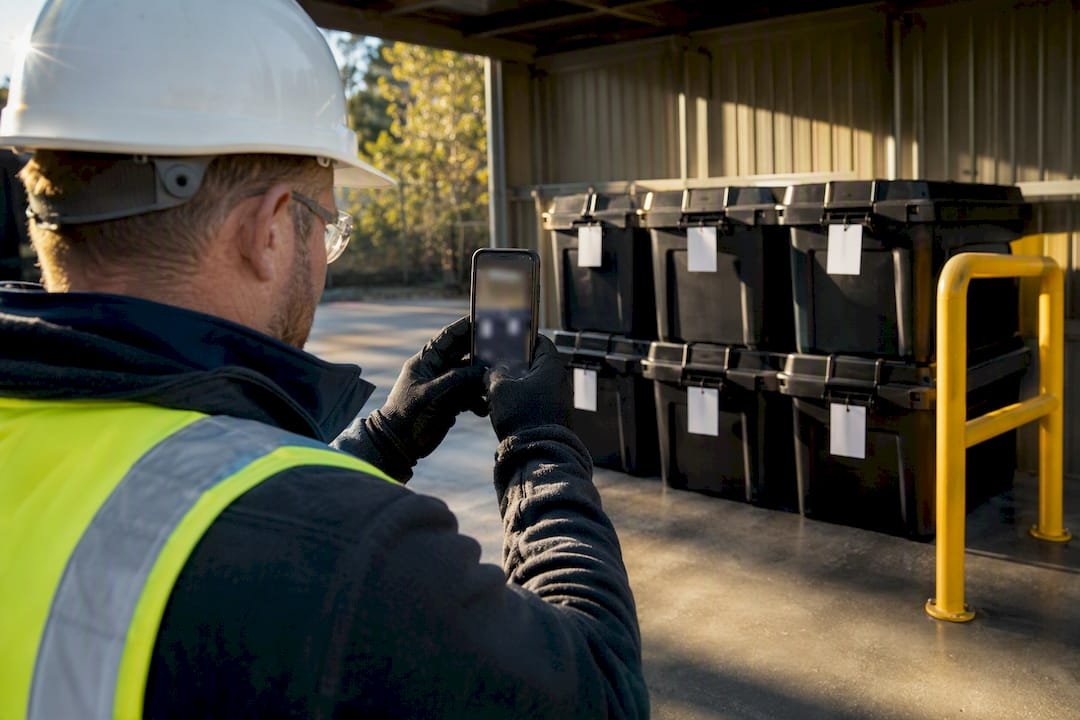
Pro Tip: Photograph your stored waste and its labels before collection day. If a dispute ever arises over what was handed over, that record settles it fast.
How licensed contractors handle complex hazardous waste jobs
Once a job involves asbestos, scheduled chemicals, large volumes, or the possibility of an immobilisation approval, DIY disposal stops being realistic. This is where a licensed contractor earns its place in the process.
- Site assessment and waste characterisation before anything is removed
- Sampling and lab testing to avoid an unnecessary “hazardous” default classification
- IWTS consignment handling, including CA and TC paperwork
- Compliant transport and disposal, plus direct liaison with the EPA where approvals are needed
Missiondemolition brings licensed asbestos removal, modern site equipment, and full project management to jobs like these, drawing on thousands of completed projects across residential, commercial, and industrial sites.
What actually matters once you cut through the regulatory detail
Most guidance on hazardous waste treats every rule as equally urgent, and that’s where it goes wrong. The rule that actually changes outcomes is the classification step. Get that wrong at the start, whether through laziness or genuine ignorance, and every decision downstream compounds the mistake, from cost blowouts to landfill rejection to EPA enforcement.
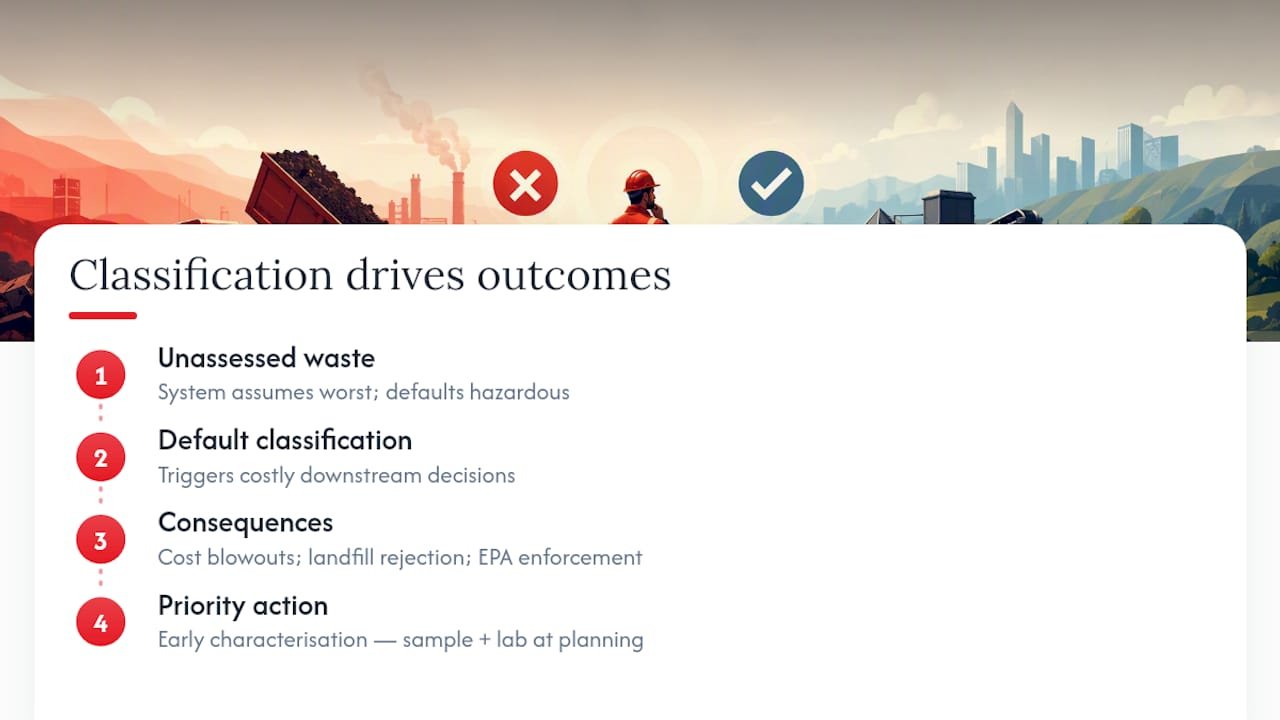
The conventional advice tells residents and businesses to “check the rules” without saying which rule carries the most weight. It’s this one: an unassessed waste defaults to hazardous under EPA classification guidelines, full stop. That single default clause explains why so many small renovation and demolition jobs end up paying far more for disposal than they expected. Nobody tested the material early, so the system assumed the worst.
If you take one thing from this guide, prioritise early characterisation over speed. A quick sample and lab assessment at the planning stage, before waste leaves the site, is worth more than any checklist about drums, labels, or drop-off locations. Everything else in this guide matters, but it matters less than getting that first call right.
— Tarek
Get a licensed contractor to handle the hazardous waste for you
If reading through classification rules, IWTS paperwork, and consignment certificates has convinced you this isn’t a weekend job, you’re right for a lot of commercial and demolition scenarios. Missiondemolition exists precisely for that gap between what households can do themselves at a CleanOut event and what a licensed operator has to manage on a demolition or strip-out site.
Licensed contractors handle site assessment, waste characterisation, IWTS consignment tracking, and licensed asbestos removal as part of full project management, so you’re not left chasing transport certificates or wondering if a receiving facility is properly authorised. This service fits property owners, builders, and site managers who need a demolition or strip-out job done without becoming experts in waste regulation along the way.
If your project involves asbestos, scheduled chemicals, or hazardous waste you’re not confident classifying, get in touch with Missiondemolition for a quote and have the compliance side handled from the first site visit.
Sources
- Integrated waste tracking solution | EPA
- Protection of the Environment Operations (Waste) Regulation 2014
