
A kitchen strip out means removing cabinets, benchtops, splashbacks, appliances and flooring back to the bare walls and services. You need a full strip out when you’re changing the layout or moving plumbing and electrical points, but a cosmetic refresh can skip it entirely. Budget roughly within the typical range for demolition costs, expect one to three working days on site, and before anything starts, get an asbestos test and a written quote from a licensed contractor.
TL;DR:
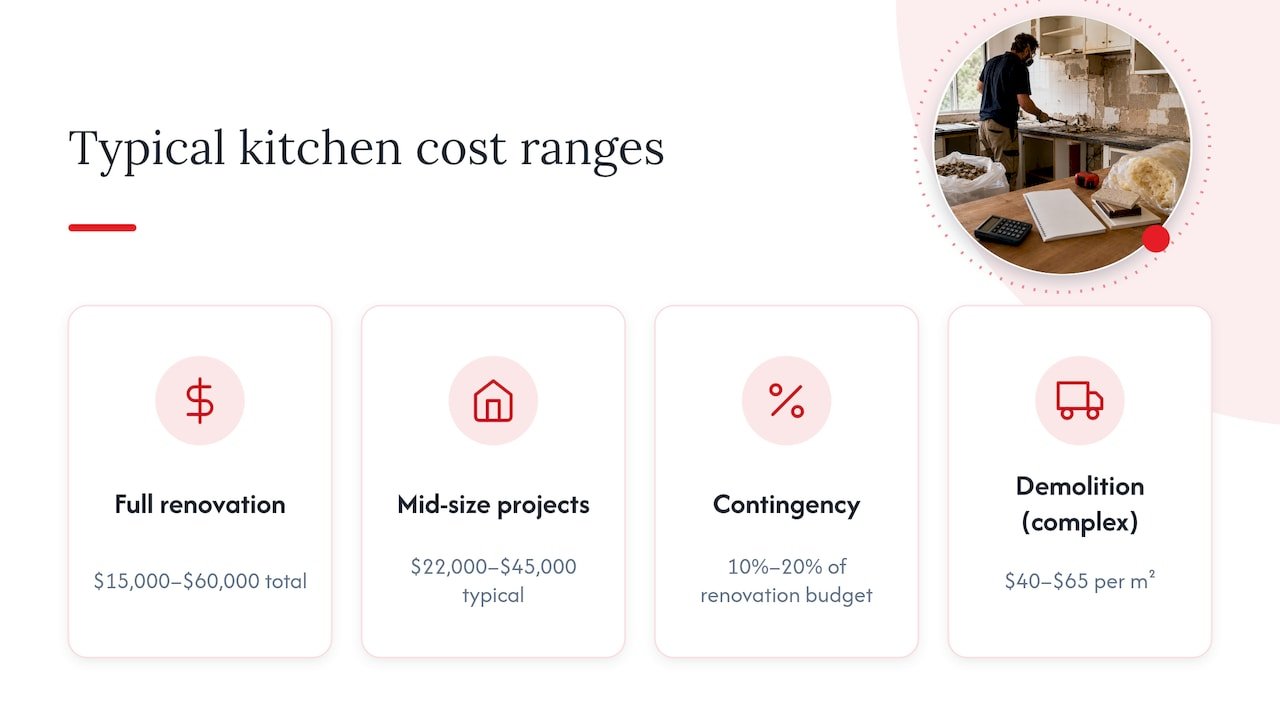
- The cost of a kitchen strip out depends on size, access, asbestos presence, and extent of layout changes, ranging from $40 to $65 per square meter for complex jobs.
- The process typically takes a few days for removal but can extend several weeks if asbestos removal, damage repairs, or permits are required.
- Asbestos testing is essential for homes built before 1990, with licensed removal necessary for friable or large quantities, impacting project timeline and safety.
- Proper preparation, including utility disconnection and sealing off the area, reduces dust and disruption during demolition.
- Always obtain a fixed-price quote covering scope, waste disposal, asbestos testing, and removal, and verify licencing and insurance to ensure safety and compliance.
Table of Contents
- What a kitchen strip out includes
- Typical costs and a component cost breakdown
- How long does a kitchen strip out actually take?
- Asbestos, testing and licensed removal in Australia
- Preparing your home before the crew arrives
- Who to hire: licences, questions and red flags
- Waste, recycling and legal disposal in Australia
- Avoiding scope creep once demolition starts
- A demolition provider’s view on getting this right
- Get a fixed-price quote from a qualified demolition provider
- FAQ
- Sources
What a kitchen strip out includes
A standard strip out clears everything down to the structural walls, floor slab and existing services. Contractors typically remove base and wall cabinets, benchtops, splashbacks, the sink and tapware, cooktop and oven, rangehood, and the floor covering if it’s being replaced. Anything fixed to the walls or floor, including old tiling, comes out too.
Whether walls, floors or ceilings get opened up depends on what you’re changing. If you’re keeping the existing layout, plumbing and electrical, the strip out stays contained to fixtures and finishes. If you’re moving the sink, relocating a cooktop to an island, or adding new power points, the plasterboard around those areas gets opened so plumbers and electricians can access the rough-in pipework and wiring before the new kitchen goes in.
Gas, water and electricity need to be isolated before demolition starts. On most jobs, the demolition contractor coordinates isolation with a licensed plumber or electrician, but it’s worth confirming this at quote stage rather than assuming it’s included.
It helps to understand where a strip out sits on the spectrum of demolition work:
- Strip out: removes fixtures, cabinetry and finishes while leaving the structure, external walls and roof intact.
- Partial removal: takes out a single element, such as just the cabinetry or just the flooring, usually for a lighter refresh.
- Structural demolition: removes load-bearing walls, changes the building’s footprint, or takes down an entire room or structure, and requires engineering input and council approval in most cases.
Most residential kitchen jobs fall into the first category. Our interior strip out services in Sydney cover this exact scope for homeowners and property managers planning a renovation, with the demolition and disposal handled as one job rather than several separate trades turning up on different days.
Typical costs and a component cost breakdown
Demolition and removal for a kitchen strip out commonly runs within the typical range for this work, with the figure driven by kitchen size, access to the site, whether asbestos is present, and how much of the layout is changing. A small, easy-access kitchen with no asbestos sits at the low end; a large kitchen with limited access, an upstairs location, or asbestos sheeting under the old tiles pushes towards the top of the range, according to TradieVerify’s 2026 renovation cost guide.
That demolition line item sits inside a much larger renovation budget. A full kitchen renovation across Australia typically costs between $15,000 and $60,000, with most mid-size projects landing in the $22,000 to $45,000 range, according to KitchenQuote’s cost guide. Smaller kitchens can cost more per square metre than larger ones because some fixed costs are distributed across fewer square metres.
These ranges come from TradieVerify and KitchenQuote. Homeowners often underestimate the hidden costs that only surface once demolition is underway: rotten subfloor sections, old wiring that doesn’t meet current standards, or asbestos sheeting behind the splashback. A contingency of 10% to 20% on top of your renovation budget covers most of these surprises.
A genuine fixed-price quote for strip out work should spell out what’s included: labour, waste removal, asbestos testing (or a clear note that it’s excluded), skip bin or truck hire, and any making-good of walls or floors after removal. If a quote is vague on disposal or silent on asbestos, that’s where blow-outs happen.
Pro Tip: Ask every contractor whether their quote includes waste disposal fees, because some quotes list only labour and leave disposal as a separate, uncapped cost.
As a rough guide for larger or more complex interior demolition, costs can run from $40 to $65 per square metre, which gives you a sanity check against a lump-sum quote.
How long does a kitchen strip out actually take?
Strip out work itself is fast. Most kitchens’ strip out work completes within a few working days, assuming there’s no asbestos complication and the crew has clear access limitations are manageable. The full renovation around it is a different story: a cosmetic refresh generally takes about one to two weeks, while a full renovation with strip out, layout modifications, and rebuild often spans several weeks, according to the 2026 Australian renovation market report.
Several things stretch that timeline out:
- Asbestos removal adds days for testing, licensed removal and clearance certification before demolition can continue.
- Hidden damage such as rotten subfloor or water-damaged walls, found once cabinetry comes out, needs remediation before the rebuild starts.
- Layout changes that move plumbing or electrical require inspections and sign-off at specific stages.
- Approvals and trades availability can add weeks if council permits are needed or your preferred plumber and electrician are booked out.
After strip out, the usual trade sequence is plumber and electrician for rough-in, waterproofing where required, then tiling, cabinetry installation, benchtop templating and fit, and finally appliance connection. Build a buffer of at least one to two weeks into your schedule for inspections and unexpected findings. Booking trades back to back with no slack is the single biggest cause of renovation delays.
Asbestos, testing and licensed removal in Australia
Asbestos was commonly used in Australian homes built before the late 1980s, and kitchens are a frequent hiding spot: under vinyl flooring, behind splashbacks, in wall sheeting and in the backing material behind tiles, according to asbestos safety guidance for householders. Disturbing these materials can release fibres that cause serious, irreversible lung disease. If your home predates 1990, assume asbestos is present until testing proves otherwise.
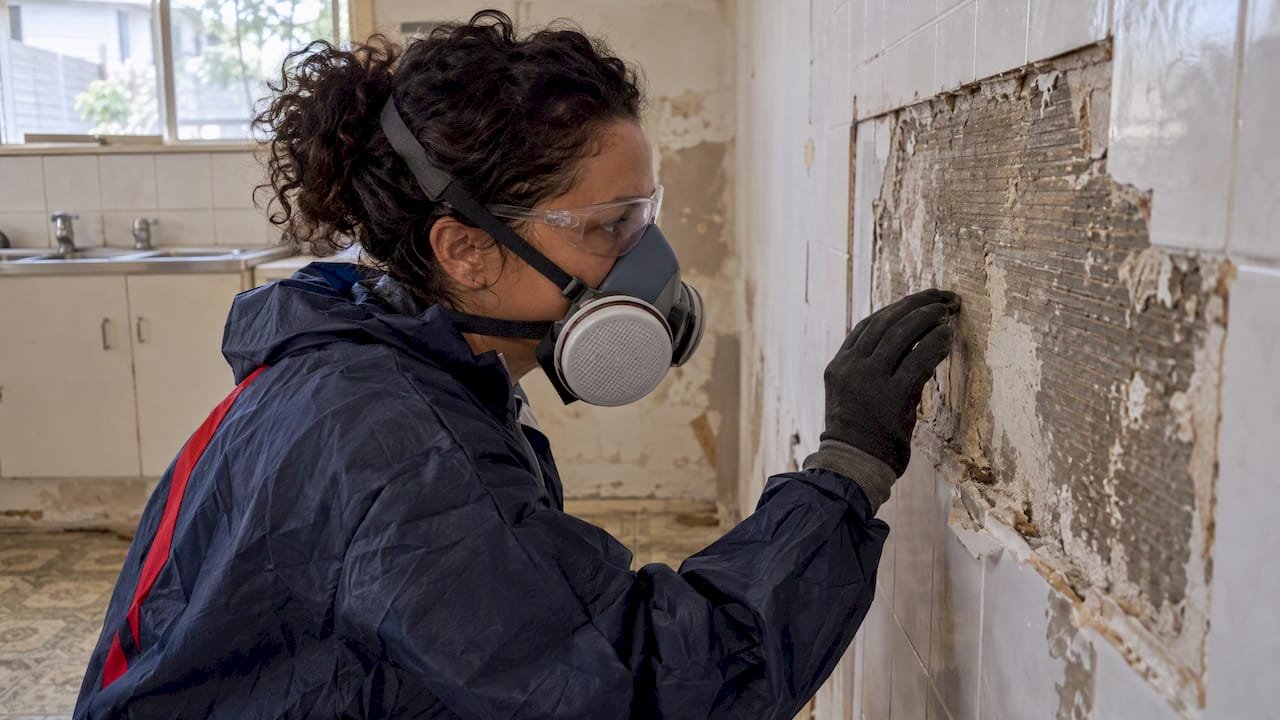
Asbestos testing typically incurs a modest cost within a common range according to TradieVerify, a small outlay against the health and legal risk of disturbing hazardous material unknowingly.
Whether removal needs a licensed contractor depends on the type and amount involved, under the Safe Work Australia model code of practice:
- Non-friable asbestos up to 10 square metres total may be removed by a non-licensed person, provided safe work methods and adequate training are used.
- Non-friable asbestos above 10 square metres requires removal by a contractor holding a class B licence.
- Friable asbestos (crumbly material that releases fibres easily) must be removed only by a contractor holding a class A licence, regardless of quantity.
- Clearance documentation, including a clearance certificate and waste disposal dockets, must be provided once removal and disposal are complete.
Until testing confirms what you’re dealing with, the safest approach is to leave suspect material alone: no drilling, sanding, scraping or forceful removal, and keep the area isolated from household traffic. We handle asbestos inspection and testing as a standard first step on older properties, because the removal method, cost and schedule all depend on that result. Asbestos removal adds time to a project, both for the testing turnaround and for the enclosed, wet-method removal process itself, but it also protects you from a far more expensive and dangerous problem down the track.
Preparing your home before the crew arrives
Good preparation keeps dust, debris and disruption contained to the kitchen rather than spreading through the rest of the house.
- Seal off the work area with plastic sheeting over doorways, cover air vents and return air grilles, and switch off ducted air conditioning or fans that could pull dust through the house.
- Disconnect utilities in advance: gas, water and power to the kitchen circuit should be isolated by a licensed trade before demolition starts, not during it.
- Clear the space of anything you want to keep, including pantry items, small appliances and personal belongings; contractors move and dispose of fixed cabinetry and fittings, not your possessions.
- Set up a temporary kitchen with a microwave, kettle and bar fridge in another room if you’re living on site during the works.
- Notify neighbours if you’re sharing a driveway, wall or access point, and confirm parking arrangements for the contractor’s truck or skip bin.
Check that your home and contents insurance covers renovation works in progress, and confirm your contractor carries public liability insurance in case of accidental damage to shared walls or neighbouring property.
Pro Tip: Photograph the kitchen and surrounding rooms before work starts, so there’s a clear record of the pre-existing condition if any dispute arises later.
Who to hire: licences, questions and red flags
Choosing the right contractor matters more for a kitchen strip out than almost any other part of the renovation, because this is where hazardous material exposure and structural issues first surface.
- Verify licences and insurance before signing anything: a current asbestos removal licence (class A or B as relevant), public liability insurance, workers compensation cover, and any trade-specific licences for plumbing or electrical work.
- Ask about the asbestos plan specifically, including whether testing is included in the quote, what happens if asbestos is found, and which licensed removalist handles it.
- Confirm what’s included in the fixed price: labour, waste removal, skip or truck hire, and any making-good of surfaces after demolition.
- Ask about the variation process so you know in writing how extra costs get approved if something unexpected turns up once walls are opened.
- Request references or examples of similar kitchen strip out jobs, particularly in homes of a similar age to yours.
Red flags worth walking away from include a contractor who won’t provide a written quote, can’t produce proof of insurance, or gives a vague or dismissive answer when you ask about asbestos. Comparing quotes on price alone misses the bigger picture: a safety plan, a clear written scope and a contractor willing to answer detailed questions are worth more than a slightly cheaper number with gaps in it.
Waste, recycling and legal disposal in Australia
Most fixed-price strip out quotes include waste removal as part of the job, with the contractor arranging a truck or skip and taking debris to a licensed facility. Some homeowners instead hire their own skip bin and manage disposal separately, which can work for a straightforward job with no asbestos, but it shifts the legal responsibility for correct disposal onto you.
- General waste such as old cabinetry, benchtops and tiles goes to a licensed waste facility or transfer station.
- Asbestos waste must be double-wrapped, labelled and transported to a facility specifically licensed to accept asbestos, under the Safe Work Australia code of practice.
- Salvageable items, including good-condition appliances, tapware or timber benchtops, can sometimes be sold or donated rather than dumped, cutting your overall waste cost.
- Documentation you should receive includes waste disposal dockets and, where asbestos was involved, a clearance certificate confirming the area is safe to re-enter.
Keep these records with your renovation paperwork. If you ever sell the property, proof of licensed asbestos removal and correct disposal reassures buyers and their building inspectors.
Avoiding scope creep once demolition starts
Scope creep is one of the most predictable ways a kitchen renovation blows its budget. Owner-initiated changes made after demolition, such as deciding on a different benchtop or moving the sink location once the old cabinetry is gone, drive roughly 40% of mid-project cost increases according to industry renovation data.
- Lock your layout, plumbing and electrical positions before the strip out begins, not after.
- Choose your finish tier early, including benchtop material, tapware and cabinetry style, so trades aren’t waiting on decisions.
- Document every change order in writing, with the cost and timeline impact noted before work proceeds.
- Treat demolition day as the deadline for design decisions, not the start of them.
As a worked example: if you decide to move the sink from the existing plumbing point to an island bench after the walls are already closed up, you’re paying for a second round of plasterboard removal, new pipework, and repair, on top of the cost you’d have paid if that decision had been made before strip out. Say the original plumbing relocation would have cost $600 as part of the initial scope; doing it as a change order afterwards often costs more once you add reopening walls and repairing them again.
Pro Tip: Ask your contractor to include a decision freeze clause in the contract, capping any owner-requested change costs unless you’ve authorised them in writing first.
A demolition provider’s view on getting this right
The single biggest mistake we see is treating asbestos testing as optional because a house “looks fine”. Age is the only reliable indicator, not appearance, and the cost of a test is nothing against the cost of exposure or an illegal disposal fine.
An approach favoring a licensed asbestos removal process and a transparent fixed-price quote over a cheap number with gaps in it is advisable, because the gaps are where disputes and delays come from. As a rule of thumb, DIY has a place in small, genuinely cosmetic tasks, pulling off old handles, repainting a wall, that sort of thing, but anything involving cabinetry removal, wall opening or a pre-1990 kitchen belongs with a licensed contractor.
— Tarek
Get a fixed-price quote from a qualified demolition provider
If you’re weighing up a kitchen strip out, the fastest way to get a real answer is a site inspection rather than another online calculator. We handle the asbestos check, the scope of demolition, and the disposal as one job, so you get a fixed price instead of a list of exclusions to discover later.

What to expect from an inspection with us:
- An asbestos check before any pricing is finalised, so the quote reflects what’s actually behind your walls and under your flooring.
- A written scope covering exactly what’s removed, what’s disconnected, and how waste is disposed of.
- A fixed price and a realistic timeline, agreed before work starts rather than adjusted part way through.
Our interior strip out services in Sydney cover this process end to end for homeowners and property managers, and our asbestos inspection and testing service is available as a standalone step if you want certainty before you even get quotes for the rest of the renovation. Get in touch through Missiondemolition to book a site inspection and a written quote.
FAQ
Which renovations devalue homes in Australia?
Renovations that devalue a home are usually ones that over-capitalise for the suburb, such as a premium kitchen in an entry-level property, or poor-quality DIY work that a buyer’s inspector flags. Spending well beyond the typical finish level for comparable homes nearby, around 5% to 7% of the home’s value on a kitchen is a reasonable upper guide, rarely returns that money at sale.
How to increase home value by $50,000 in Australia?
There’s no single renovation that reliably adds a fixed dollar figure to every property, since the return depends heavily on suburb, property type and the quality of the work. A well-executed kitchen renovation in the $22,000 to $45,000 mid-size range, done to a standard that matches the rest of the home, is one of the renovations most likely to lift value meaningfully.
What are strip outs?
A strip out is the removal of fixtures, cabinetry, finishes and fittings from a room or building, leaving the structural walls, floor and services largely intact. In a kitchen, that means cabinets, benchtops, splashbacks, appliances and flooring come out, with walls opened only where plumbing or electrical work needs to change.
What is the cheapest way to demolish a house?
For a whole-house demolition, cost depends heavily on site access, size and whether asbestos is present, which a licensed contractor assesses during a site inspection and written quote. For a kitchen specifically, the cheapest approach is a straightforward strip out with no layout changes, which keeps plumbing and electrical work to a minimum and avoids the cost of relocating services.
Sources
- Asbestos safety for householders and home renovators (ASEA)
- Model Code of Practice: How to safely remove asbestos
- Kitchen Renovation Cost Australia 2025-2026 | TradieVerify Australia
- Kitchen Renovation Cost Australia 2026 – Full Guide | KitchenQuote
