
Quick Summary
The demolition permit process in NSW depends on what is being demolished and where the property sits, so first decide between exempt development, a complying development certificate (CDC) and a development application (DA). Most straightforward house demolitions can use a CDC, but heritage listing or other site constraints usually mean a DA is needed.
- Work through a decision tree to choose exempt, CDC or DA before lodging anything.
- Heritage items and heritage conservation areas are typically excluded from the CDC route.
- Every registered owner on the title must sign the owner consent.
- Houses built before the late 1980s often contain asbestos, so get a licensed assessment early.
- Utility disconnection is often the longest single delay, so book it early.
Table of Contents
- Choosing the Right Approval Pathway: Exempt, CDC or DA
- Demolition Approval Checklist: Documents You Need Before You Apply
- Asbestos Inspection Before Demolition: Who Checks, When and Why
- Step-by-Step Demolition Permit Process in Sydney
- Demolition Complying Development Certificate: How It Works
- House Demolition Timeline: From Approval to Site Clearance
- Booking Your Demolition With Mission Demolition
- Frequently Asked Questions
Choosing the Right Approval Pathway: Exempt, CDC or DA
Last Updated: November 22, 2026
Most homeowners in New South Wales assume every house demolition needs the same paperwork. It does not. The demolition permit process depends on what you are knocking down, where the property sits and whether a planning control applies. Choosing the wrong pathway wastes weeks, so get this step right first.
Demolition work is generally regulated under the Environmental Planning and Assessment Act 1979 (NSW), which sets out three main routes: exempt development, complying development and a development application (DA). The NSW Planning Portal guidance on demolition approvals explains which route fits your project. The practical detail sits in three instruments you should open before you decide: the State Environmental Planning Policy (Exempt and Complying Development Codes) 2008 (the Codes SEPP), the local environmental plan (LEP) that zones your land, and your council’s development control plan (DCP). For a full breakdown of the NSW approval timeline and the documents that most often cause delays, see NSW demolition timeline and approval delays.
A Simple Decision Tree for Your Property
Work through these questions in order. Stop at the first “yes” that applies and confirm the answer with your council or an accredited certifier before you lodge anything.
- Is the structure minor and listed as exempt development? Small sheds, carports, fences and similar structures can fall under the exempt development provisions of the planning rules, in which case no approval may be needed, but only if the structure meets every development standard that applies, including setbacks, height and heritage exclusions. Exempt development is not a blanket permission; if any standard fails, the work is not exempt.
- Does the work meet the complying development standards? Most straightforward house demolitions can use a complying development certificate (CDC). The applicable planning rules set out the demolition standards, and the CDC route also requires the site to be free of the exclusions in those rules, for example, heritage items, draft heritage items, certain bushfire-prone land and some flood planning areas. A registered certifier, not the council, usually issues the CDC.
- Is the property heritage listed, in a heritage conservation area, or subject to a draft heritage listing? Expect a DA. Heritage items and conservation areas are excluded from the CDC route, and the DA will need a heritage impact statement and often a conservation management plan.
- Is the site affected by another constraint the code does not cover? Steep blocks, easements, significant trees protected under the LEP or a tree preservation order, contaminated land notations, or coastal and riparian controls can all push the project to a DA. Check the LEP mapping and your council’s DCP before committing to a route.
- Is the site unusual in a way none of the above captures? If the answer to every question is unclear, treat the project as a DA until a certifier or council planner confirms otherwise. A DA is the slower route, but it is the only route that can approve work outside the code.
Watch out: Councils interpret these rules differently, and a CDC issued on a site that should have been excluded may be invalid. Confirm the pathway with your council or an accredited certifier before lodging anything, and keep a written record of the advice you receive.
What Changes the Answer in Practice
The pathway is not just about the building. In established suburbs, the two constraints that most often flip a project from CDC to DA are heritage and trees. A heritage item or a property inside a conservation area is typically excluded from the complying development route, and a significant tree protected by the LEP or a council tree preservation order can require its own approval before any demolition starts. Bushfire-prone land and flood planning areas are the next most common triggers. Before you book an asbestos assessor or a demolition contractor, pull the LEP mapping for the property and read the council’s DCP, that is where the local controls that override the code are written down. Because these site constraints can also shape the design and energy performance of a replacement home, getting a BASIX certificate is another approval step to factor into the project.
Demolition Approval Checklist: Documents You Need Before You Apply
Gather your paperwork before you apply. Our NSW utility disconnection checklist and evidence pack shows which services to cut and what proof to keep. Incomplete applications are the most common reason for delay, and a resubmission can add weeks to a CDC or a DA.
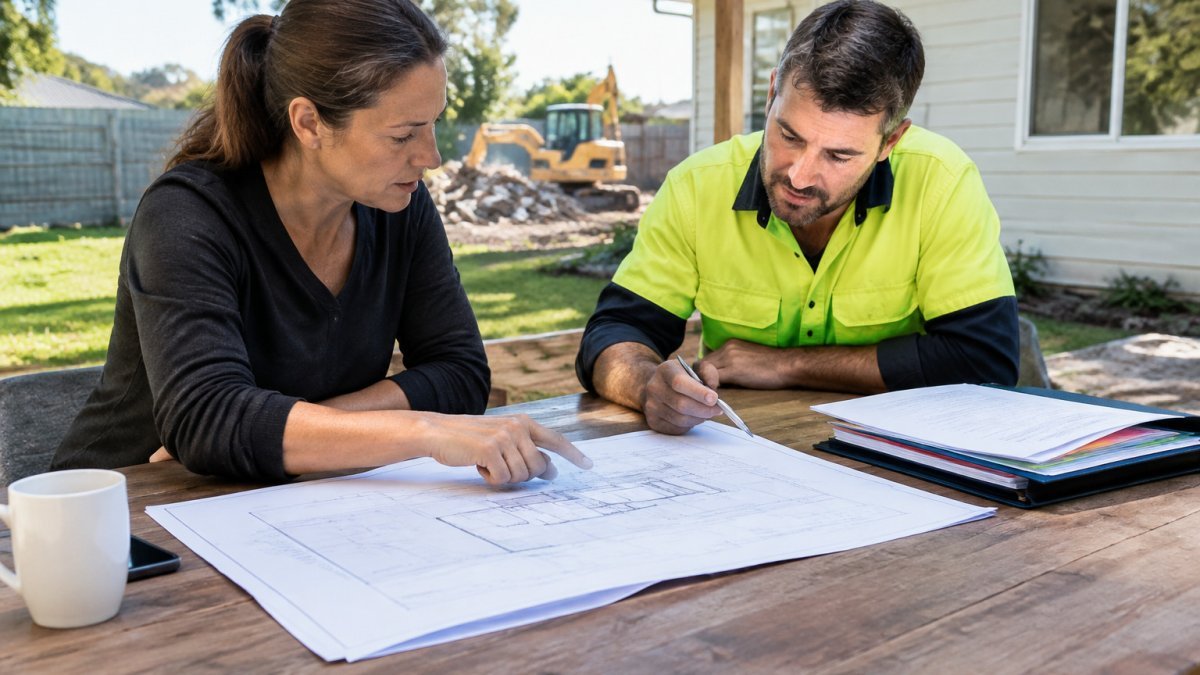
- Site plan showing the building to be demolished and boundary dimensions. The plan should be to scale, show all boundaries and their measured lengths, mark the structure to be demolished, and note any easements or significant trees on the lot. A sketch without dimensions is the most common reason a plan is rejected.
- Owner consent, signed by all registered owners. Every owner on the title must sign. If the property is jointly owned or held in a company or trust, check the title search and have the correct legal entity sign, a consent signed by one of two owners will not pass.
- Asbestos assessment report, where the building may contain asbestos. The report should identify the location, type and condition of any asbestos-containing material, and state whether removal is bonded or friable. A report that only says “asbestos present” without a register or removal scope is not enough for the certifier or the removalist.
- Demolition work plan from a licensed contractor. The plan should set out the sequence of work, the plant to be used, the exclusion zones, and how dust, noise and traffic will be managed. It should name the licensed contractor and the supervisor responsible for the site.
- Evidence that essential services will be disconnected. Obtain written confirmation from each utility, electricity, gas, water and telecommunications, that disconnection has been arranged or completed. Verbal assurances are not accepted, and utility lead times are often the longest single delay in the process.
- Neighbour notification details. Keep a record of the properties notified, the date of notification and the method used. Some councils require notification as a condition of consent, and a written log is the evidence you will be asked for.
- Site fencing and safety signage plan. Show the fence line, the location of signage and the pedestrian and traffic controls. The plan should reflect the safety requirements for the site and the council’s conditions.
- Waste management and recycling plan. Set out the estimated waste volumes, the destination facility for each waste stream, and how asbestos waste will be tracked and disposed of at a licensed facility. Keep the disposal receipts, they are the evidence of compliance after the work is done.
Keep copies of every document. Your principal certifier will ask for them later, and the same pack is what you will rely on if a council or SafeWork NSW inspector requests records after the demolition. A common pattern is for homeowners to assemble the pack once and reuse it for the contractor, the certifier and the utility providers, build it properly the first time and the rest of the process runs on the same paperwork.
Asbestos Inspection Before Demolition: Who Checks, When and Why
Houses built before the late 1980s often contain asbestos. A licensed assessor should check before any demolition starts. Only a licensed asbestos removalist can remove bonded or friable asbestos in NSW. If you are weighing a DIY approach, read our step-by-step asbestos sampling procedure for Australian homes before deciding. SafeWork NSW sets the licensing and work health and safety rules that apply, so check the SafeWork NSW asbestos guidance before you book.
The inspection should happen early, because removal can change your timeline and your costs. To find a licensed check near you, see certified asbestos inspectors in Sydney.
Step-by-Step Demolition Permit Process in Sydney
Follow these steps in order:
- Confirm the pathway. Use the decision tree above.
- Get an asbestos assessment. Book a licensed assessor.
- Prepare your documents. Use the checklist above.
- Lodge the application. Apply through the NSW Planning Portal or your council.
- Respond to requests. Councils often ask for extra information.
- Receive approval. Read every condition carefully.
- Notify SafeWork NSW. Lodge a demolition work notification before work starts.
- Disconnect services. Cut electricity, gas, water and telecommunications.
- Demolish and clear the site. Keep records of waste disposal.
Demolition Complying Development Certificate: How It Works
A complying development certificate (CDC) is a fast approval route for work that meets set standards (Complying Development | Planning Portal). A registered certifier, not the council, usually issues it. Most residential demolitions that meet the standard controls can use a CDC.
The certifier checks your plans against the rules. If they pass, you receive the certificate and can start work. If the site has constraints the rules do not cover, a DA is usually required.
Watch out: A CDC still needs accurate plans. An error in the site plan can void the certificate.
House Demolition Timeline: From Approval to Site Clearance
Timelines vary, but a rough plan helps you schedule contractors and utilities.
- Approval: A CDC is typically faster than a DA. A DA can take considerably longer, depending on council workload and whether further information is requested.
- Asbestos assessment and removal: Allow time for this step, which depends on what is found.
- Service disconnection: Utility providers can take time to act, so book early.
- On-site demolition: Duration depends on the size and condition of the building and the site access.
Add buffer time for council questions and weather. Most delays come from paperwork, not the physical work.
Booking Your Demolition With Mission Demolition
Once your approval is in place, you are ready to book. Mission Demolition handles full and partial house demolitions, asbestos removal and site clearance across Sydney. Our team is fully licensed and insured, and we follow strict health and safety compliance on every job.
Pricing depends on the size of the building, the amount of asbestos found and the site access. Contact Mission Demolition for a free demolition and asbestos removal quote for current pricing and to talk through the approval steps.
Frequently Asked Questions
Do I need approval to demolish a house?
Most houses in Sydney need some form of approval before demolition starts, but the route depends on the work. Some minor structures may fall under exempt development, while a complying development certificate (CDC) or a development application (DA) is needed for many full house demolitions. Your local council or a principal certifier can confirm which pathway applies to your property, and you should check planning controls and heritage listings before lodging anything.
How long does it take to get demolition approval?
Timeframes vary by pathway and by council workload. A complying development certificate is generally faster than a development application, which can take several months if it is notified or needs further information. Lodging a complete application with all supporting documents is the best way to avoid delays. Allow additional time for utility disconnections and asbestos work, which often run alongside the approval process.
Do I need an asbestos inspection before demolishing a house?
Yes, if the house was built before the late 1980s or may contain asbestos materials. A pre-demolition asbestos assessment identifies where hazardous materials are present so they can be removed by a licensed asbestos removalist before general demolition begins. SafeWork NSW requires specific notifications and safe work practices for this type of work, and the findings should be recorded and kept with your compliance documents.
Can I demolish my own house?
Homeowners can sometimes arrange demolition themselves, but the approval, asbestos, safety and waste obligations still apply. Work involving asbestos must be carried out by licensed people, and demolition work usually needs a licensed demolition contractor and notification to SafeWork NSW. Engaging a licensed contractor such as Mission Demolition helps keep the project compliant and reduces the risk of liability if something goes wrong. For current pricing, contact Mission Demolition for a quote tailored to your site.