Definitive asbestos identification in Australia requires analysis by a NATA-accredited laboratory using recognised microscopy methods. Polarised light microscopy (PLM) is the primary technique for bulk samples under AS 5370:2024, with transmission or scanning electron microscopy (TEM/SEM) reserved for trickier matrices, and approved air-monitoring methods used for clearance work. Visual inspection alone, no matter how experienced the inspector, cannot rule asbestos in or out.
That single fact shapes everything else in this article. Whether you’re a homeowner eyeing a 1970s bathroom reno or a builder scoping a demolition, the path to a legally defensible answer runs through:
- A NATA-accredited laboratory for the actual analysis
- PLM as the default bulk sample method, referencing AS 5370:2024 (which supersedes the older AS 4964-2004)
- TEM/SEM when fibre content is very low or the material is complex
- Licensed removalists or occupational hygienists to collect the sample safely
According to guidance from the National Guide for Asbestos Surveys, laboratory analysis by an accredited facility is the only method that stands up to scrutiny in Australia. Everything else is a guess dressed up as an inspection.
Key Takeaways
Reliable asbestos identification in Australia depends on NATA-accredited laboratory analysis using PLM as the primary method, with TEM/SEM and licensed sampling filling the gaps standard testing can’t cover.
| Point | Details |
|---|---|
| PLM is the default | Bulk samples are tested via PLM under AS 5370:2024, the current Australian standard. |
| Escalate for complexity | TEM/SEM analysis is needed for low-content or matrix-embedded materials PLM can’t resolve. |
| Leave sampling to licensed pros | Occupational hygienists and licensed removalists avoid contamination risks DIY sampling creates. |
| Demand a complete report | Valid lab reports state method, analyst, NATA accreditation, and fibre result clearly. |
| Budget for the whole workflow | Inspection, sampling, and lab fees are typically bundled, with TEM and rush jobs costing extra. |
Table of Contents
- Asbestos testing methods: what PLM, TEM, SEM and air testing actually do
- Who should collect samples and what Australian rules require
- The testing workflow from sampling to a valid lab report
- Reading the result: what a positive finding actually means
- What asbestos testing actually costs in Australia and how long it takes
- How Mission Demolition runs a compliant testing project
- Why the “just get it tested” advice misses the point
- Sources
Asbestos testing methods: what PLM, TEM, SEM and air testing actually do
Most Australian bulk samples get tested with PLM. A technician mounts a small fragment of material, exposes it to polarised light, and uses dispersion staining to identify fibre type based on how light bends through it. It’s fast, relatively cheap, and accurate enough for the vast majority of building materials, which is why AS 5370:2024 keeps it as the backbone method, having modernised the old PLM procedures from AS 4964-2004 and aligned them with the international ISO 22262 framework.
PLM has a ceiling, though. When asbestos content is very low, when fibres are bound tightly into a resin or cement matrix, or when a definitive fibre-type call is contested, labs escalate to TEM or SEM. These electron microscopy techniques resolve fibres far smaller than PLM can detect, which matters for materials like some vinyl floor tiles or certain textured coatings where fibres are essentially entombed.
Air testing is a different discipline entirely. It doesn’t test a chunk of material. It measures airborne fibre concentration, usually via phase contrast microscopy for a quick fibre count, with TEM required if fibre typing in the air sample is needed. This is the method behind clearance certificates after removal work, not a substitute for bulk sampling before it.
- PLM: bulk sample, primary method, fast turnaround
- TEM/SEM: bulk sample, low-content or complex matrices, higher cost
- Air monitoring (PCM/TEM): airborne fibres, used for clearance and worker exposure checks
Pro Tip: If a sample comes back “no asbestos detected” but the material looks or feels suspicious, ask the lab which method they used. Sometimes a PLM result on a heavily painted or aged sample prompts additional TEM testing before final reliance.
DIY test kits and field screening exist, and for intact, non-friable materials in low-stakes situations they’re not entirely without merit as a first-pass check. But DIY sampling carries real contamination and misidentification risk, and none of it replaces a NATA-accredited result if the finding needs to hold up for a renovation approval, a sale, or a workplace safety obligation.
Who should collect samples and what Australian rules require
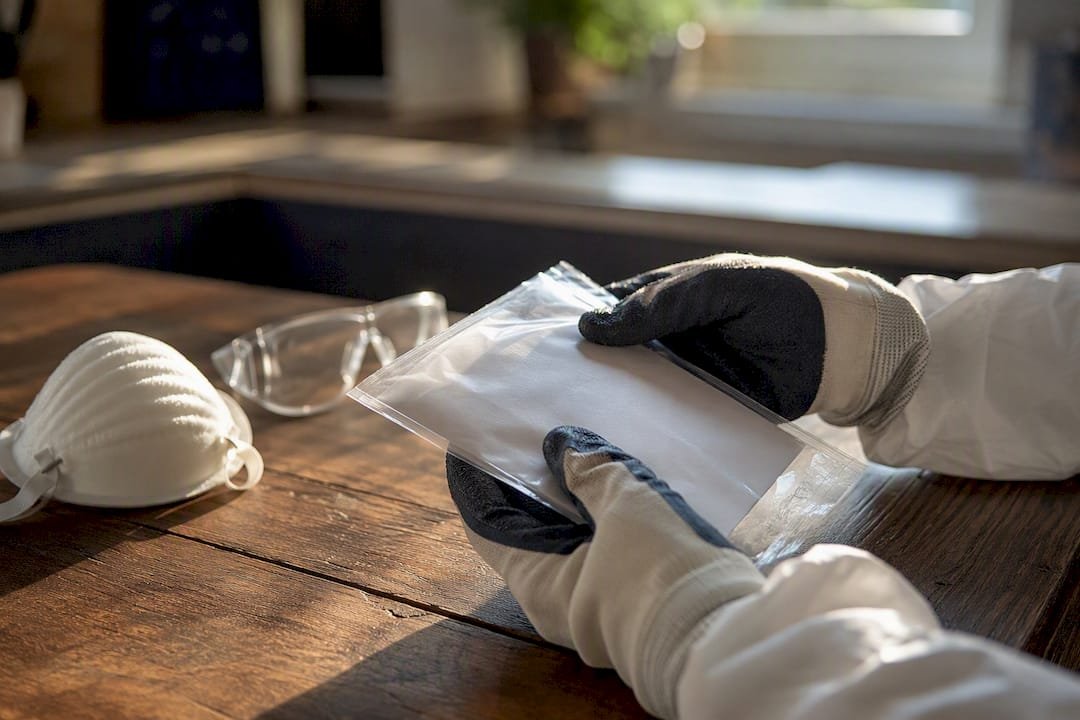
Collecting the sample is arguably the riskiest part of the whole process, and it’s the step property owners most often get wrong. Disturbing a suspect material to get a fragment for testing can release exactly the fibres you’re trying to identify, which is why Asbestos Victoria and equivalent state bodies recommend licensed removalists or occupational hygienists handle it, not the property owner.
- Check duty-holder obligations first. Anyone commissioning renovation or demolition on a pre-1990 structure typically has a legal obligation to identify asbestos risk before work starts, under state-based work health and safety frameworks, as explained in detail in what tenants and landlords should know about asbestos in rental properties.
- Verify the lab’s NATA scope. Accreditation is method-specific and material-specific, so confirm the laboratory is accredited for the exact test you need, not just accredited generally.
- Use correct PPE and containment. Licensed samplers use disposable coveralls, respirators rated for asbestos fibres, and wet-wipe techniques to suppress dust during extraction.
- Know when to walk away. Friable material, samples in inaccessible roof voids, or anything near live electrical services are red flags for DIY attempts of any kind.
Pro Tip: If a tradesperson or removalist can’t tell you which NATA scope number covers their lab’s asbestos testing, that’s a fair reason to ask for a different provider.
The testing workflow from sampling to a valid lab report
A compliant asbestos test follows a fairly predictable sequence, and knowing the steps helps you spot a shortcut before it costs you.
Sampling starts with a strategy, not a hammer. A competent sampler photographs the material in context and up close, notes its exact location, and takes a genuinely representative fragment rather than the easiest bit to reach. Surveyors often use light tapping and prodding across a surface to detect texture variation, because visually identical materials can have very different compositions just centimetres apart. Each sample gets labelled, logged, and tracked under a chain of custody from site to laboratory, protecting the result if it’s ever challenged.
At the lab, the sequence typically runs stereo microscopy for a first visual screen, then PLM with dispersion staining for identification, escalating to TEM or SEM where the sample demands it.
| Report element | What it should show |
|---|---|
| Analyst identity | Named analyst responsible for the result |
| Method used | PLM, TEM, or SEM, stated explicitly |
| Accreditation statement | NATA scope reference covering that method |
| Sample location | Matches your photos and labelling |
| Fibre type and result | Detected/not detected, with type if positive |
A report missing any of these items isn’t one you should accept at face value.
Reading the result: what a positive finding actually means
A “detected” result on a PLM report means the laboratory identified asbestos fibres in that specific sample, at that specific location, full stop. It doesn’t automatically tell you the material is friable, how much is present as a percentage in every case, or whether the whole building is affected. Fibre type (chrysotile, amosite, or crocidolite) matters for risk assessment, since some forms behave differently when disturbed.
- Confirmed ACM means lab-tested and positive. It goes straight into your asbestos register.
- Presumed ACM means you’re treating an untested but suspect material as if it were asbestos, a legitimate interim strategy but not a substitute for eventual testing.
- Removal versus management in place depends on condition, not just presence. Intact, undisturbed material in good condition can often be managed and monitored rather than removed immediately.
- Clearance air testing becomes necessary after any removal work, confirming fibre counts have dropped to acceptable levels before an area is reoccupied.
Every confirmed or presumed material belongs in a written asbestos register, updated whenever new testing changes the picture.
What asbestos testing actually costs in Australia and how long it takes
Costs vary with scope, but most Australian jobs bundle a site inspection, sample collection, and laboratory PLM analysis into a single quoted fee, with per-sample lab pricing on top if extra materials turn up mid-inspection. Expect the bill to climb when TEM analysis is required, when the site is rural or hard to access, or when you need results turned around faster than the standard few business days.
- Standard PLM turnaround is typically a matter of several business days
- Rush or priority processing is usually available at a premium
- TEM/SEM adds both cost and time compared to standard PLM
- Under-sampling to save money is a false economy: missing one suspect material can halt a renovation or demolition entirely once work exposes it
Budgeting properly for testing upfront, rather than treating it as an afterthought, is consistently cheaper than a stop-work order mid-project. Mission Demolition’s asbestos testing services page breaks down how inspection and lab fees are typically structured for Sydney and broader Australian jobs.
How Mission Demolition runs a compliant testing project
A typical Mission Demolition job starts with site scoping to identify suspect materials, followed by managed sampling carried out by a licensed crew or occupational hygienist rather than the property owner.
Samples go to a NATA-accredited lab for PLM analysis, with TEM escalation where the material warrants it. Depending on the result, the next step is either documented management in place or licensed removal, finishing with clearance air testing before the area is signed off for reoccupation.
- Licensed crews handle sampling PPE, containment, and chain of custody as standard practice
- Clients receive lab reports with full method and accreditation detail, not a verbal summary
- Mission Demolition’s site resources, including its guide to asbestos testing services and its explainer on why inspection matters before renovation, cover the process in plain language for property owners
If you’re weighing up independent testing versus a licensed firm, the deciding factor is usually risk: intact material in a low-stakes spot might be fine with an independent sampler, but anything involving demolition, large-scale removal, or friable material calls for a firm like Mission Demolition’s asbestos removal service from the outset.
Ready to get a suspect material properly identified before your next renovation or demolition? Mission Demolition arranges licensed sampling, NATA-accredited lab analysis, and full clearance testing across Sydney and greater Australia through its asbestos removal services, so you get one accountable contact from first inspection to final sign-off.
Why the “just get it tested” advice misses the point
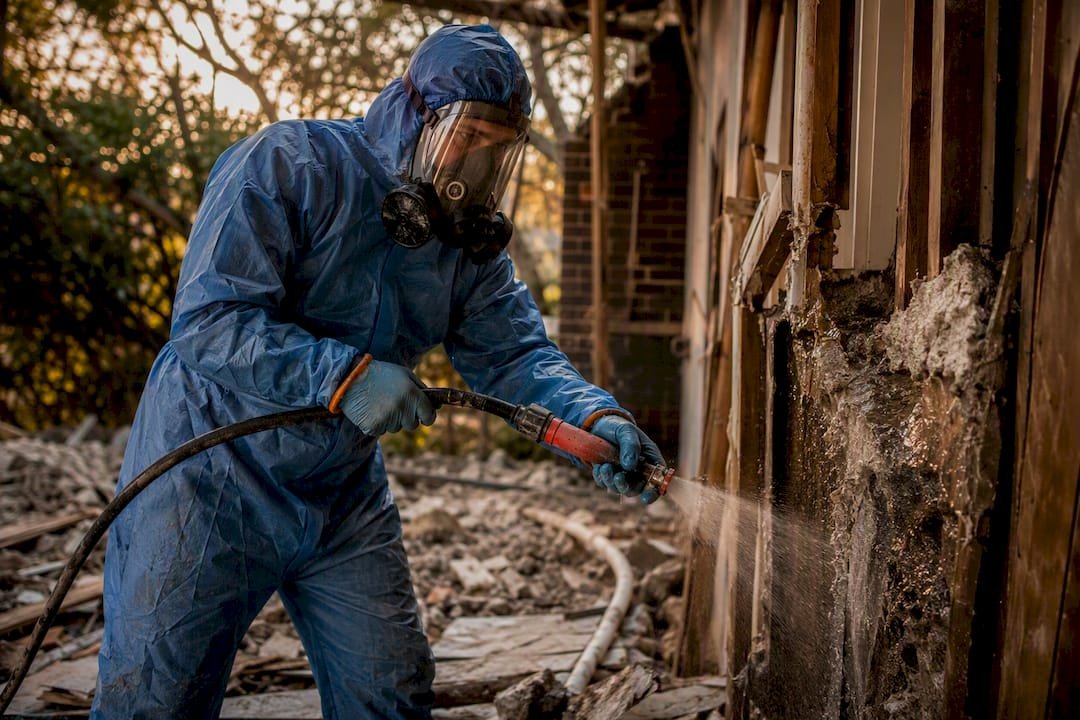
Most guidance on asbestos testing stops at “hire a professional,” as if that alone guarantees a reliable outcome. It doesn’t. The real leverage point is matching the method to the material, and that’s where a lot of otherwise diligent property owners get caught out, accepting a PLM “not detected” result on a sample that genuinely warranted TEM escalation.
The conventional advice also underplays sampling technique. A lab can only analyse what it’s given, and a poorly chosen or non-representative sample produces a technically accurate but practically useless result. That’s not a laboratory failure. It’s a sampling failure, and it happens more often than the industry likes to admit.
If there’s one thing worth prioritising above all else, it’s asking the sampler why they chose that particular spot and that particular method, before the sample ever leaves the site. That single question filters out a surprising amount of bad practice.
— Tarek
Sources
- National Guide for Asbestos Surveys (ASSEA)
- Spotlight on: AS 5370:2024 — Standards Australia
- Finding and identifying asbestos — Asbestos Victoria
Always verify a laboratory’s current NATA scope directly before relying on its results for compliance purposes.
